Category: Adventure

  • My Life: Certainly not looking for a fight with these guys

    By David Rogers. BLOWING ROCK, N.C. — In the early 1980s, I went to a friend’s wedding in San Diego, where I was living and working at the time. It was a California-casual event in the early summer at a country club, so I was dressed in an all-white outfit: a short-sleeve golf shirt and long Canterbury trousers, with white tennis shoes.

    I had some champagne at the reception but not that much, really, because I usually worked on Sunday, doing some pretty intense stock market research. So I wasn’t looking for any kind of distraction, even if it was the weekend.

    On the way home from the wedding reception, I decided I was hungry for some Mexican food from my favorite drive-up eatery a little south and west of downtown. Operated by a family from south of the border, it was pretty authentic fare and really good.

    Next door to the restaurant was a non-descript bar, a dark gray building with no windows and little in the way of lights or signage to beckon a visitor. I had never been interested in setting foot in the place but as I was waiting for my food, up walked a young woman I had met before while waiting for my tacos and burritos. It turns out, she worked as a waitress at the bar and after some banter back and forth she invited me to drop into where she worked.

    After I finished my meal, I ventured over to the bar. Now I knew nothing about this place, but when I walked in it was very dark, with the only real light coming from floodlights pointed at a dance floor in the back of the room. It may have been very dark but it didn’t take me long to realize that I, in my all-white outfit, was the only Caucasian in the place. The waitress was Hispanic and this was San Diego, after all, so it never occurred to me that I would be stumbling into any kind of special nightclub.

    It didn’t bother me that I was in what was obviously an African-American establishment, although I did get a few curious stares. It would be an understatement to say I stood out in my all-white garb. A young Black woman approached and chatted for awhile before asking me to dance.

    I was having a good time, movin’ and groovin’ to the music and talking with my new friend when the waitress came up, tapped me on the shoulder and whispered in my ear, “Those gentlemen over there at the first table would like to speak with you.”

    Suddenly, I became more aware of my surroundings and grew nervous. Thoughts raced through my mind: Had I offended someone? Was I dancing with someone’s girlfriend?

    My anxiety grew as I approached the table and the three men stood up to seemingly tower before me. While I was not tiny in stature, these guys struck me as huge, broad-shouldered and very muscular, looking to be in their 30s or 40s.

    The guy closest to me extended his hand in greeting and said with a big smile, “We just had to meet you. You have some cojones and you look like you are having fun.”

    When I responded that I was having a good time but hoped I was not offending anyone he said, “Oh no. My name is Ken Norton. This is Ernie Shavers and Joe Frazier.”

    I am pretty sure I got the names right. In turn, I was shaking hands with three of the world’s greatest heavyweight boxers of all time.

    They invited me to sit with them and I did but don’t remember much about the conversation. I had to admit to them that I wasn’t much of a boxing fan, but certainly was a sports junkie already by that time in my life and knew who they were. What I didn’t know, of course, was how terrific they were as individuals. Gone were the menacing snarls in the boxing ring. They were just everyday people, out having a good time.

    I grew up in a very bigoted culture, in Oildale, California, just north of Bakersfield. But beginning with my freshman year in college when my best friend was a nationally ranked quarter miler and through experiences like this one in San Diego, I grew to realize that we all have more similarities than differences. We are all people with joys, problems, accomplishments, goals and passions coursing through the highs and lows of life.

    And life is good… if we just allow it to be.


  • Carving out fun for the human spirit

    By David Rogers. NARRAGANSETT, R.I. — Spring had not quite arrived when we visited High Country-based golf course architect Ron Cutlip’s latest creation, South Shore Golf Course, carved out of the rocky hills, vales, woods and marshes of a picturesque, historic farm in New England. Even so early in the season, the “greening” had begun and a golfer’s zeal was palpable.

    For best photography viewing on a desktop monitor or laptop, please click on any image for Slide Show mode.

    Golf course architecture is a multi-science, multi-discipline profession. Understanding the topographical features impacting hydrology, drainage, agronomy, turfgrasses, physics, geometry, civil engineering, soil sciences, botany, psychology and a tract of land’s natural systems are all part of the endeavor. In Cutlip’s hands, so is understanding the history of the venue and its surrounding region.

    Golf course architect Ron Cutlip, left, greets Geronimo Narizzano, of Buenos Aires, Argentina and a member of the University of Rhode Island men’s golf team. Photographic image by David Rogers

    Decisions about where to carve out a fairway, place a tee box or craft a bunker are seldom arbitrary.  For Cutlip, who has worked on almost two dozen courses across New York, Rhode Island, New Jersey, North Carolina, South Carolina, Ohio and Pennsylvania, course design is about appealing to — and challenging — the human spirit.

    A good design provides an escape from the golfer’s normal day.

    “When the player finishes a round, I want them to feel like they have conquered something.  Let’s face it, this is a recreational market, so the courses need to look tough but maybe play easy from the proper tees,” said Cutlip as we walked over a rise in the No. 8 fairway and down to a sculpted green nestled against the woods.

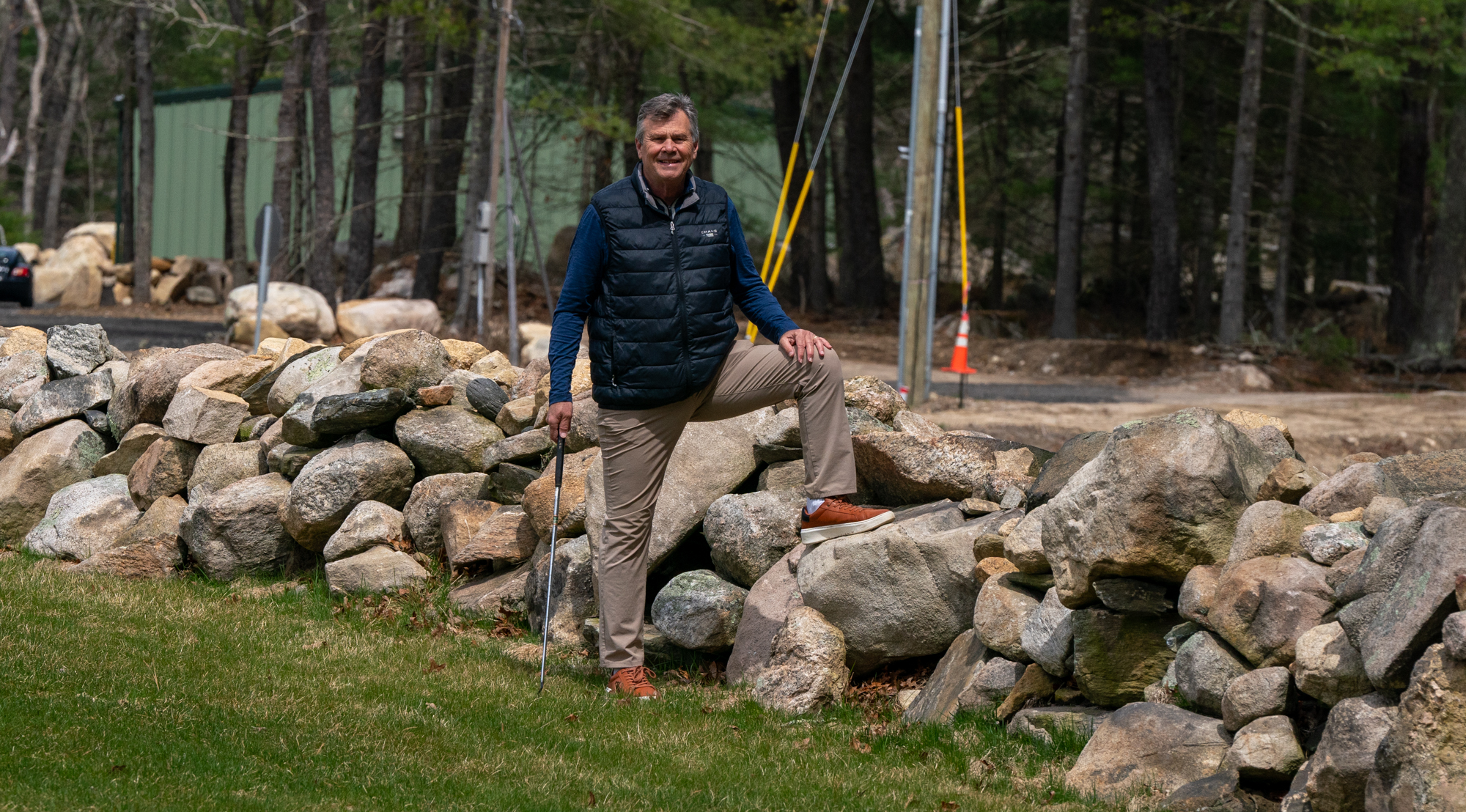
    A rock wall dating back to early Colonial days in the 1600s serves as backdrop to Hole No. 5 at South Shore Golf Course, Ron Cutlip’s latest design. Photographic image by David Rogers

    “And yet, the course still needs to provide a test to the player who desires a challenge,” he added. “A good design creates an escape from a person’s normal day. The golfer needs to be presented with both the game and the dramatic beauty of nature during the round. Long-term, the golfer should feel good about their experience and return again and again whether they’re a professional or a weekend warrior.”

    A unique course feature is a rock wall dating back to early Colonial times.

    The South Shore course is a 9-hole, central feature of a new, 55-plus housing development, South Shore Village, in South Kingstown. The development is just minutes from the sun, sand and sea of Rhode Island’s beaches. The custom-built homes are all one-level, which frequently appeals to residents whose hair is beginning to gray.

    The subdivision is built on the historic, Jerry Brown Farm. No, it is not related to the former governor of California, but traces back to a tract of land owned by Jeremiah Brown in the 1700s. Dotting the landscape throughout the region are rock walls dating back as far as the 1600s where settlers cleared land of the boulders and repurposed them to keep livestock from running away.

    Photographic image by David Rogers

    Cutlip uses one of these ancient walls as the backdrop to the green at the No. 5 hole.
    “When you think about the history of this land and the rugged lives experienced by the inhabitants who worked this area, I think it is important to memorialize that history by preserving this wall,” said Cutlip, one foot elevated to a spot on the wall, the other planted in the nearby grass.
    Golf course designs are usually a mixture, a combination, of the natural topographical features of the land as well as artificial constructs.

    Hole No. 9 at South Shore Golf Course is protected by a rocky ‘moat’. Photographic image by David Rogers

    “I’d say most of my courses are 70 percent to 80 percent natural,” said Cutlip. “Even where there are artificial features, I like to take a natural characteristic and accentuate it. That big boulder? Use it as a natural hazard, a challenge for the golfer to get around. That bump of a hill? Build it up to frame the green, visually. I don’t think I have any holes that are less than 50 percent usage of the natural features. Sure, you have to cut down some trees to create fairways, but it is not just to clear land. You do it with creative purposes in mind.”

    A good testimony as to the quality of golf played at South Shore is that it has become one of the favorite tracts for the University of Rhode Island men’s golf team to play and practice. On the day we toured the course, the URI team was already there, getting in some practice swings, and were eager to discuss various features with the course designer.

    Each collegian had a favorite hole, all for different reasons. Made up of four freshmen, a sophomore, a senior and a graduate student in terms of their eligibility, they arrived at Rhode Island from a variety of locales, including Beijing, China; Alberta, Canada; and Buenos Aires, Argentina, as well as Massachusetts, Florida, New York, Vermont and one local young man, from Narragansett.

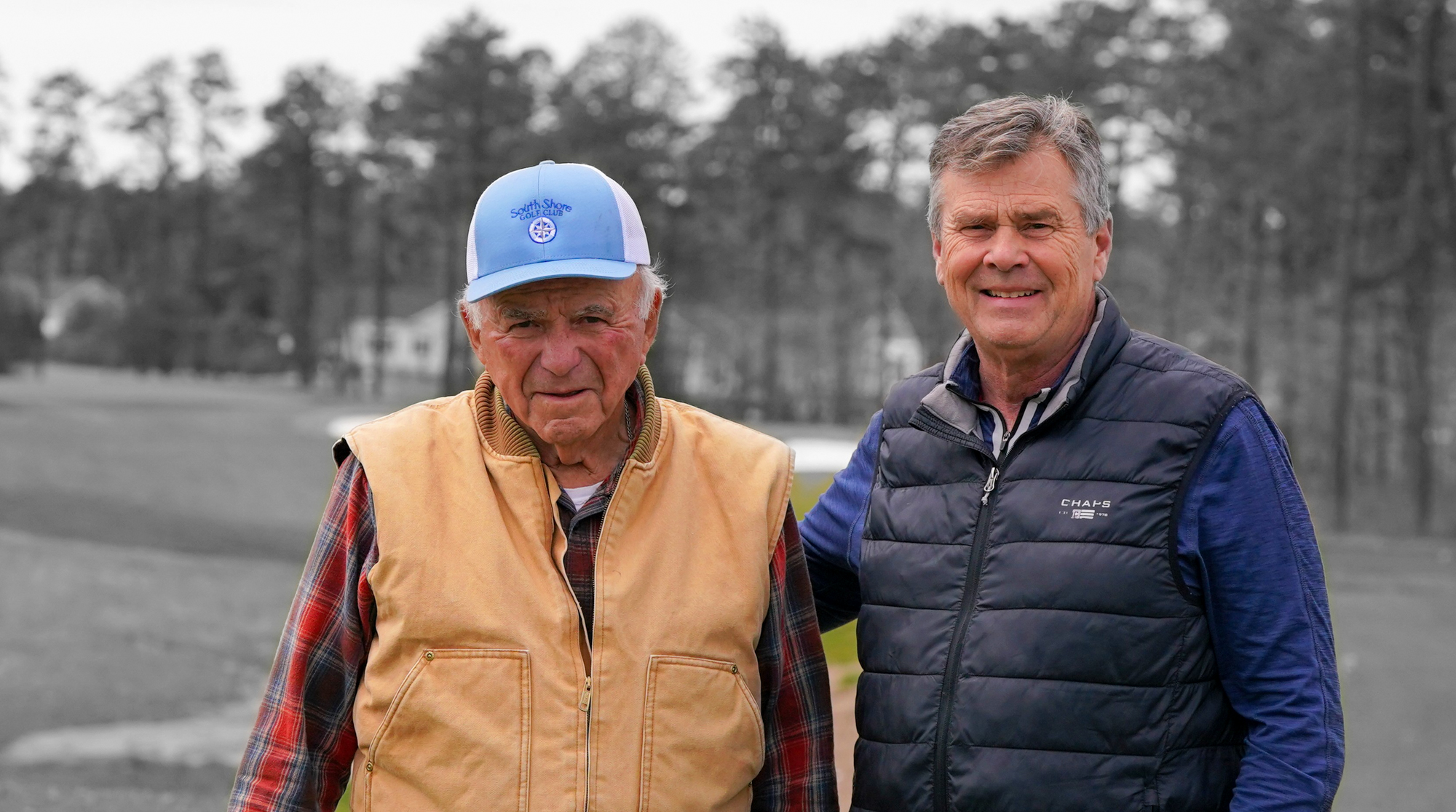
    Larry LeBlanc, left, is the developer of South Shore Village, a 55+ residential subdivision in South Kingstown, Rhode Island, for which Ron Cutlip of Blowing Rock was hired as the golf course architect. Photographic image by David Rogers
  • Project Dance lights up New York City

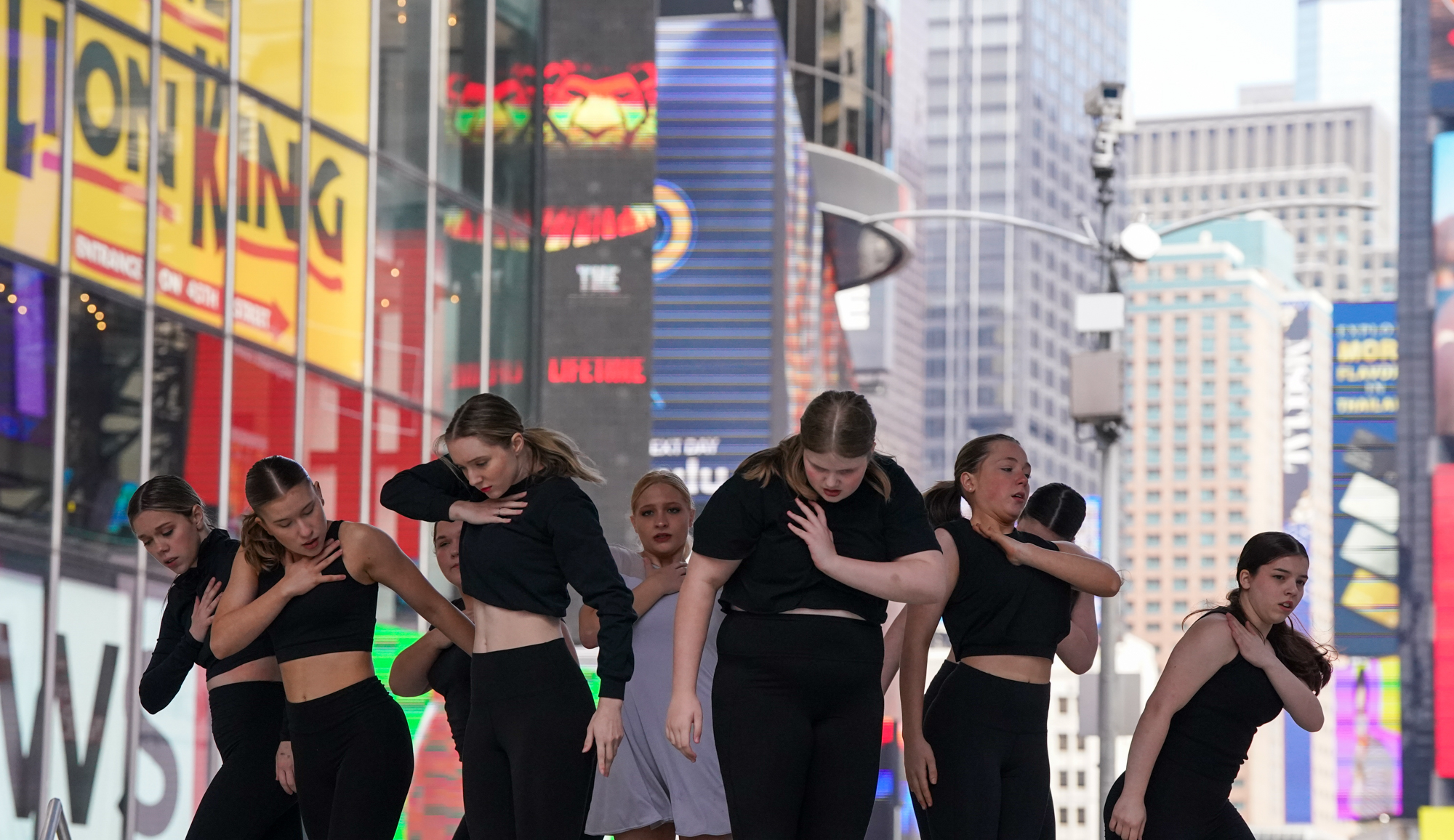
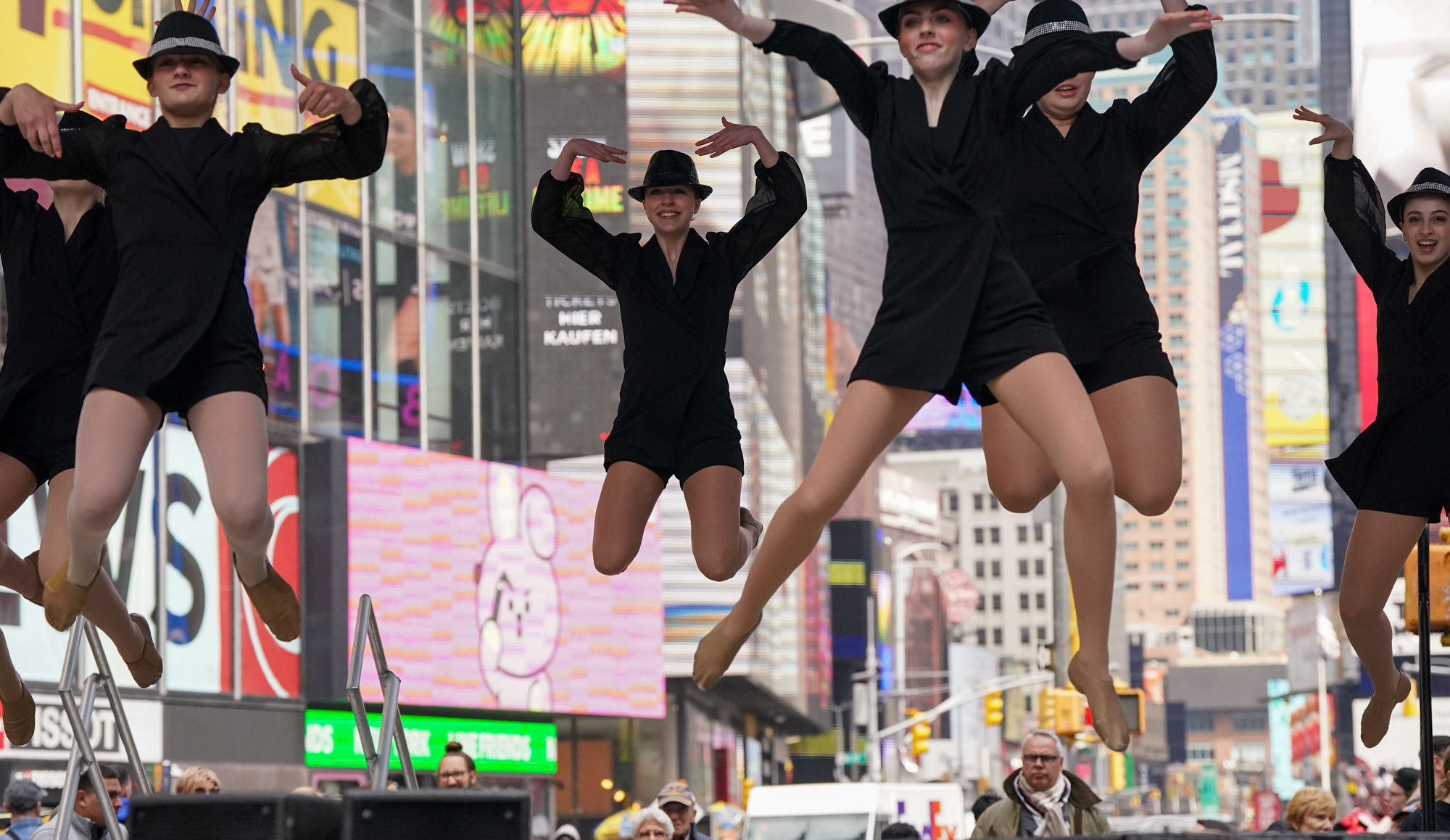
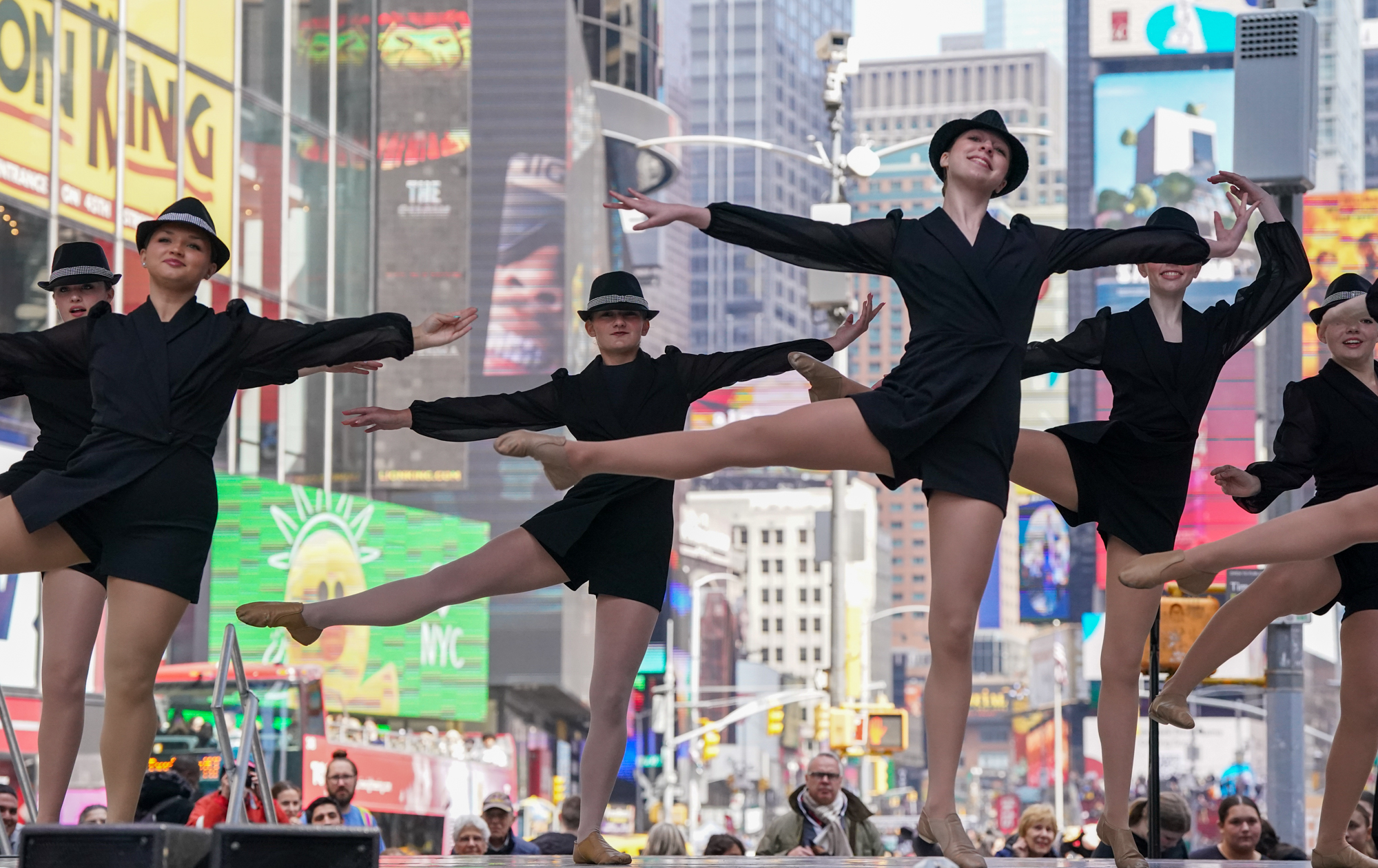
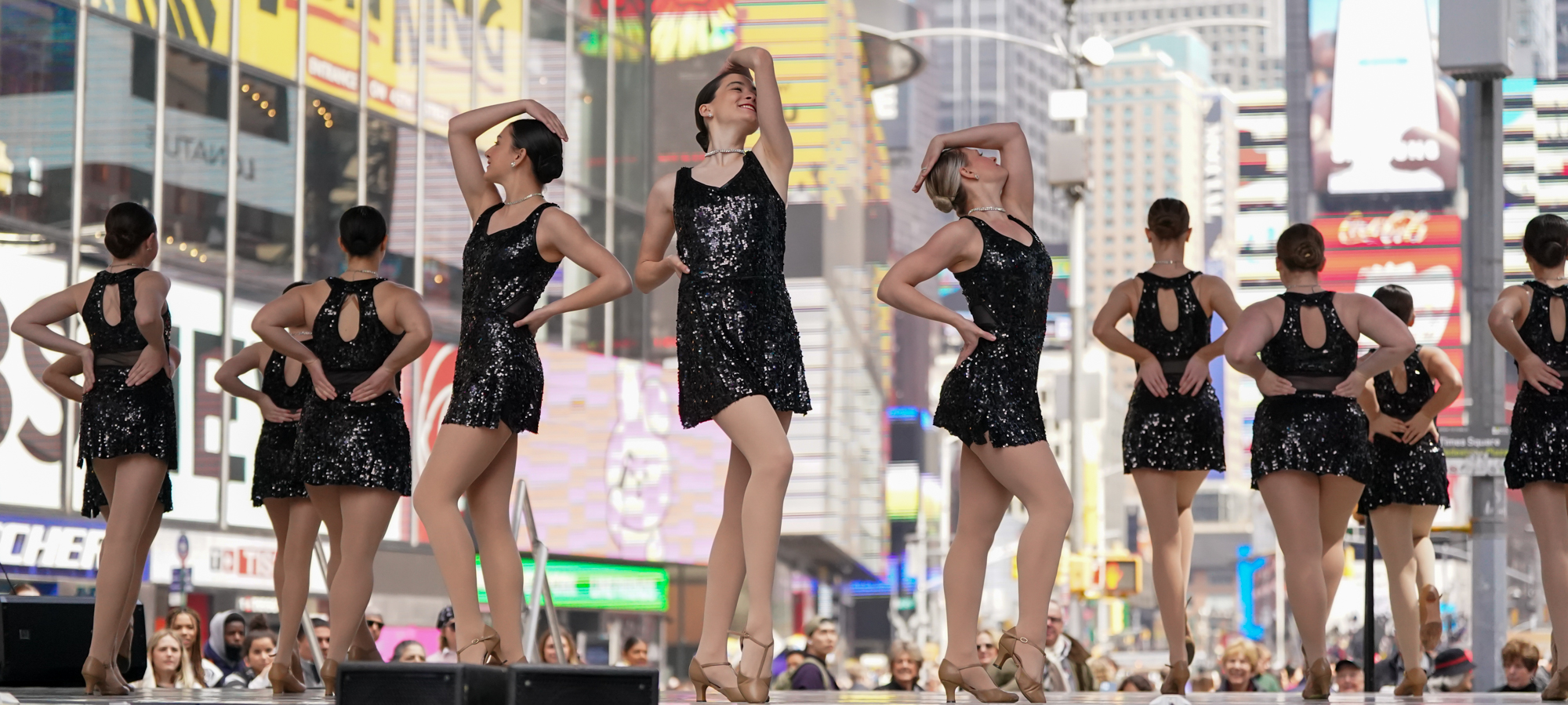
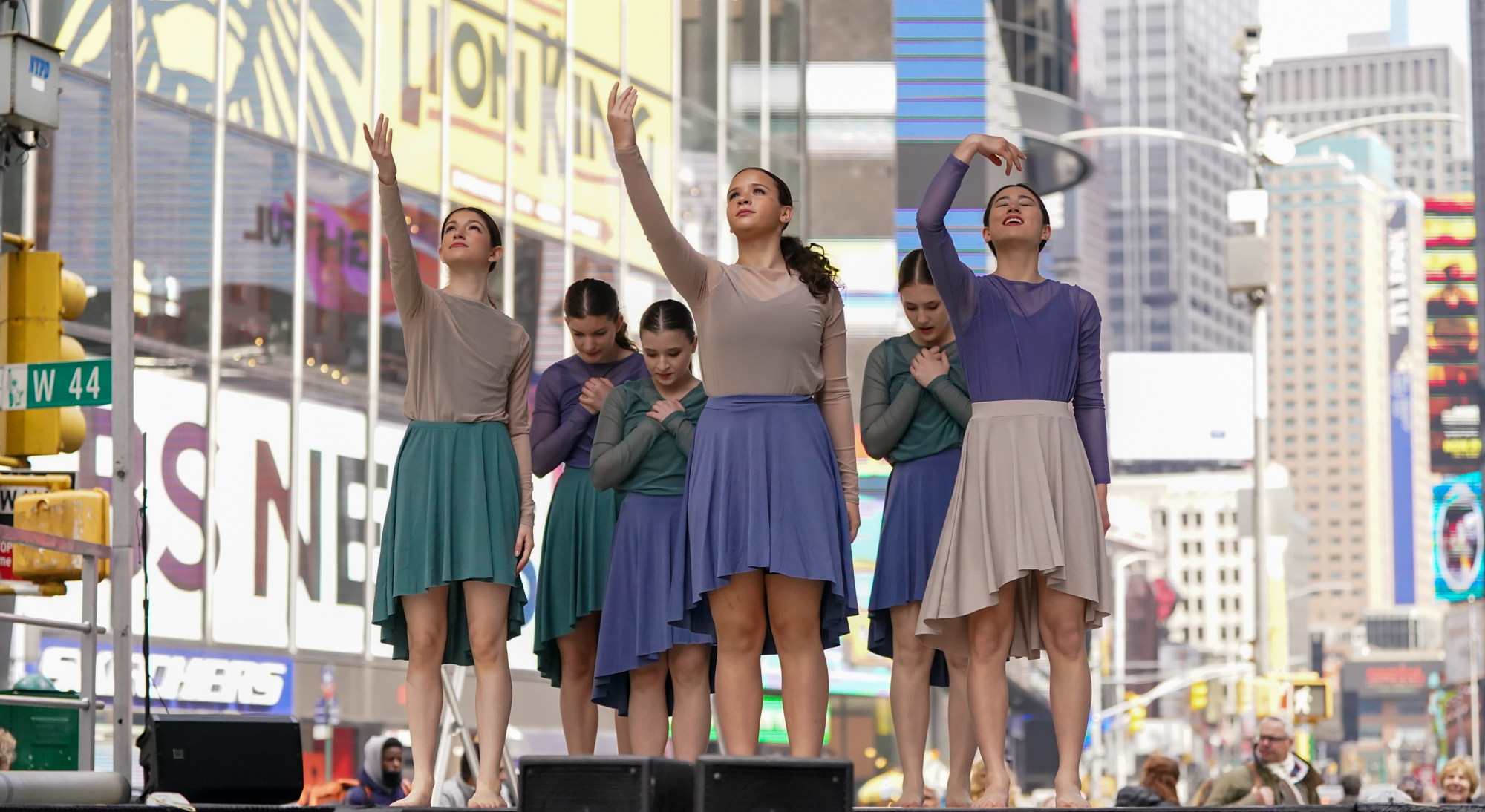
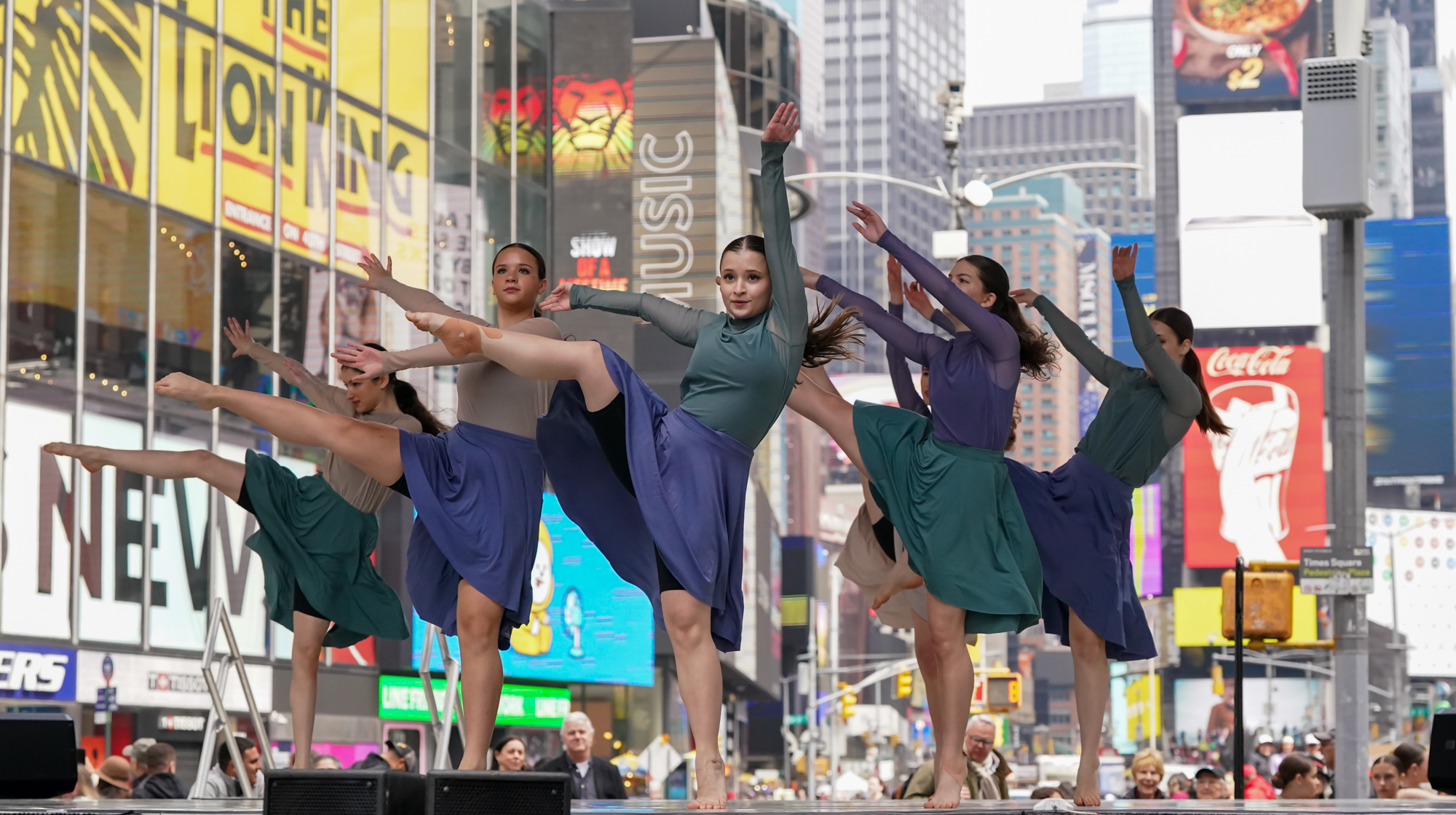
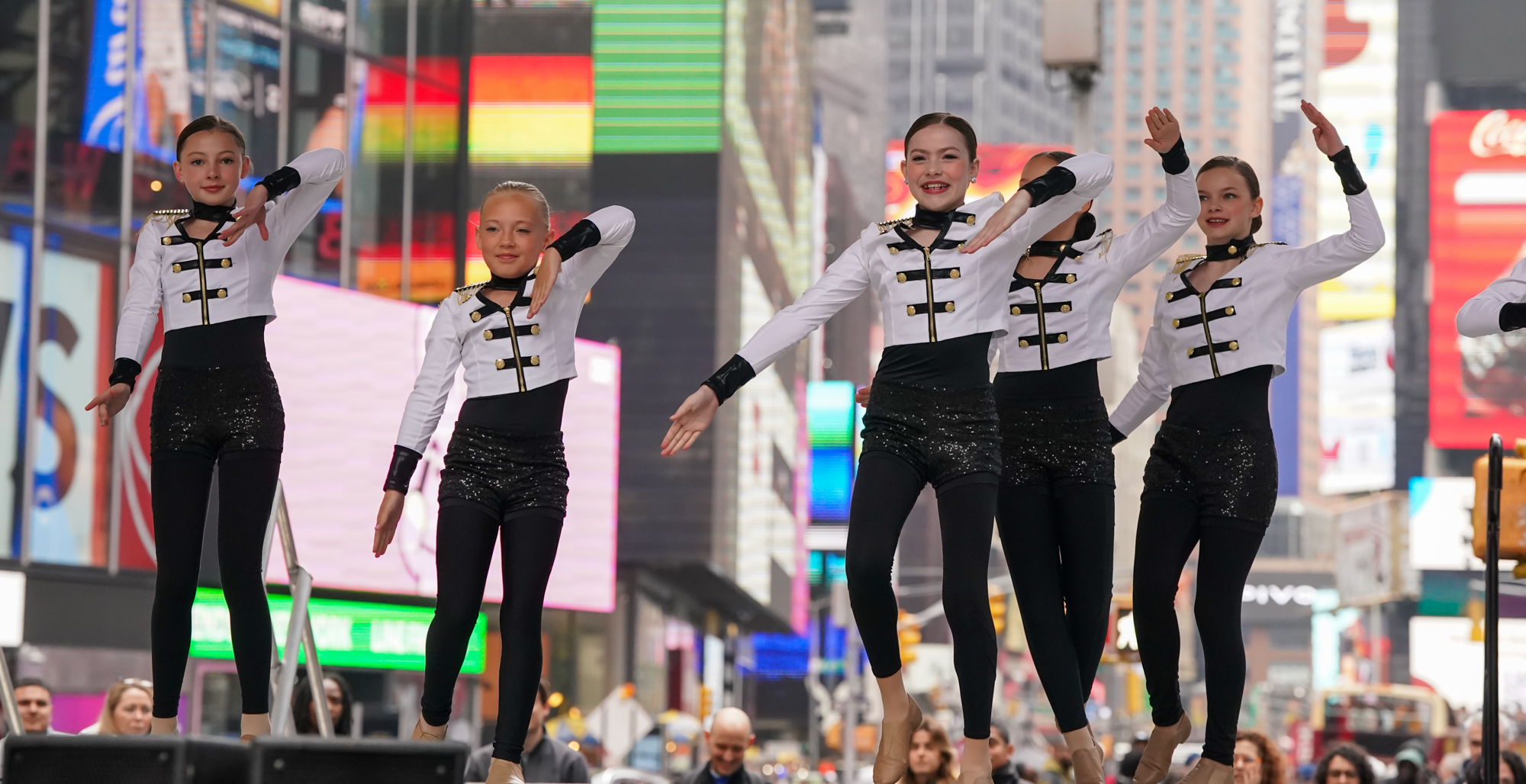
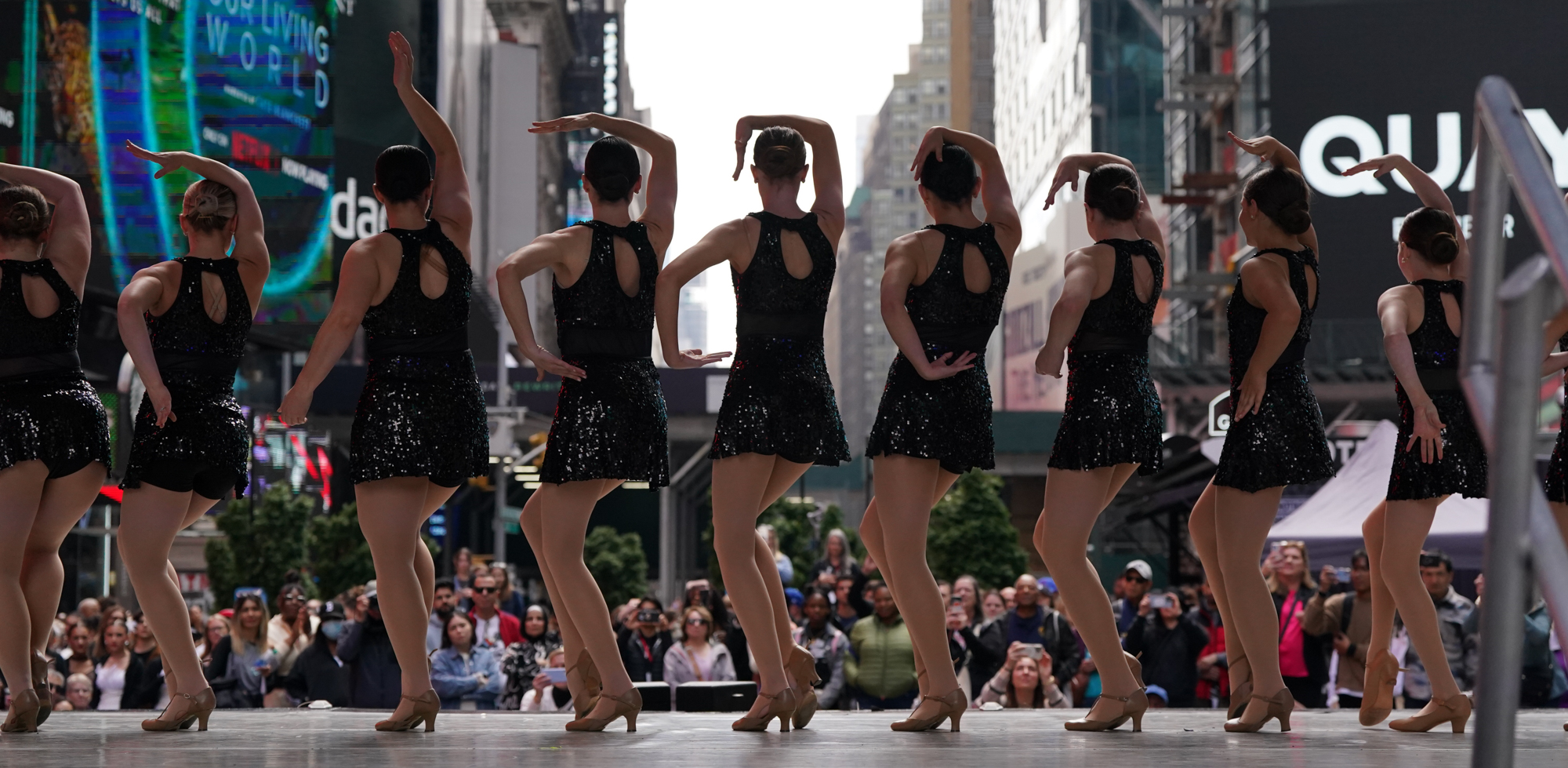
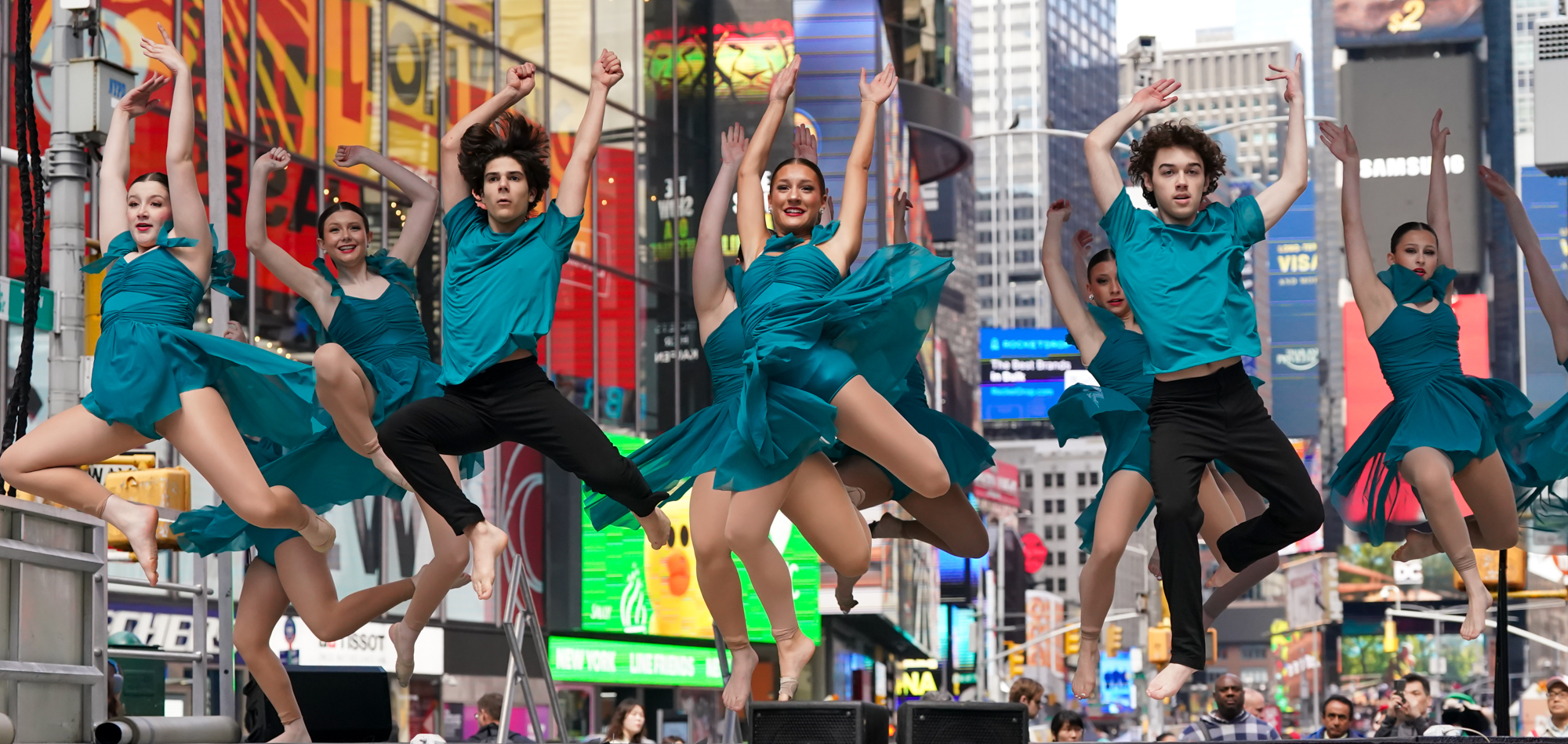
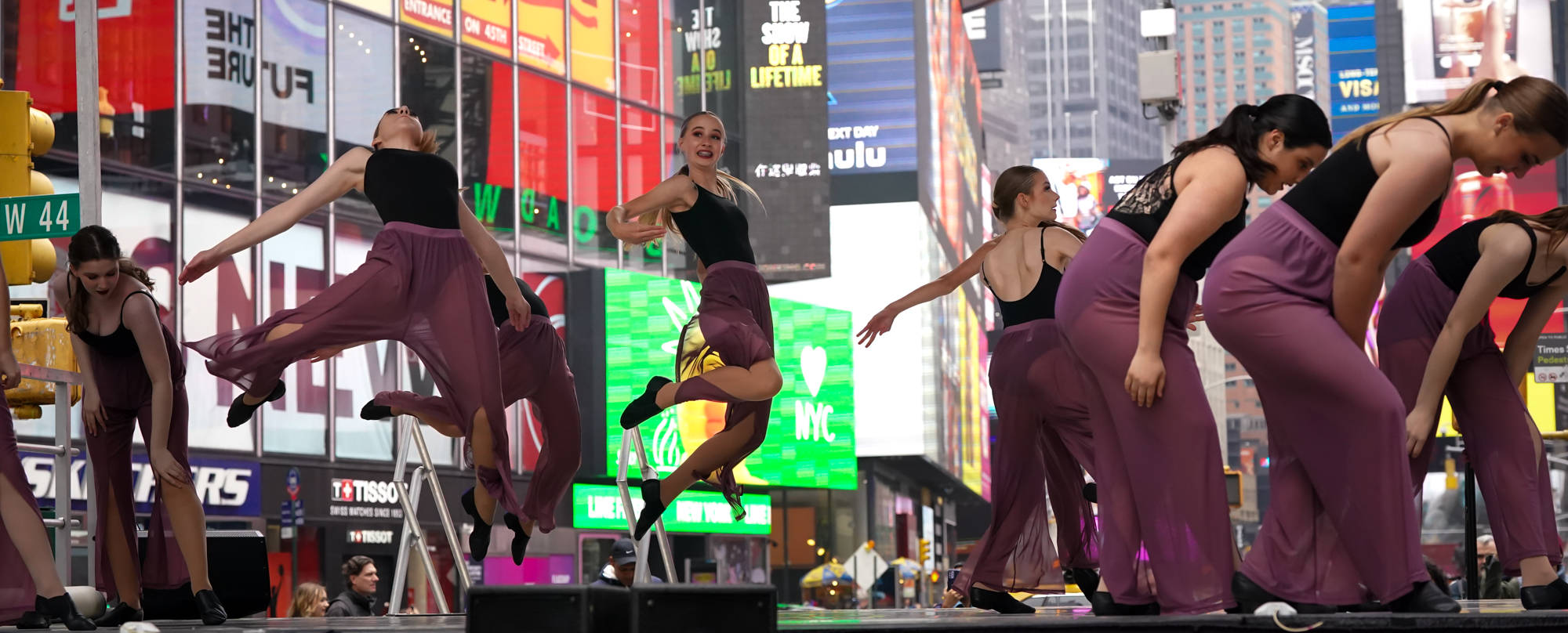
    By David Rogers. NEW YORK CITY — Let it be known that the Carolina Snowbelles and SnowFlurries were among more than 250 young performing artists stealing the hearts of people in The Big Apple on April 20. And they executed this “larceny” in broad daylight — in the very heart of Times Square. The larceny was grand, indeed!

    BONUS PHOTOS AT BOTTOM OF ARTICLE

    FOR BEST VIEWING, CLICK ON ANY IMAGE FOR ‘SLIDESHOW’ MODE

    All photographic images by David Rogers for High Country Sports.

    At 22 years, Project Dance may well be the longest-running show on Broadway. Sure, it is only performed once a year on the third Saturday of April and there was a three-year hiatus while the world dealt with the COVID-19 pandemic, but when a show is this good who cares about details?

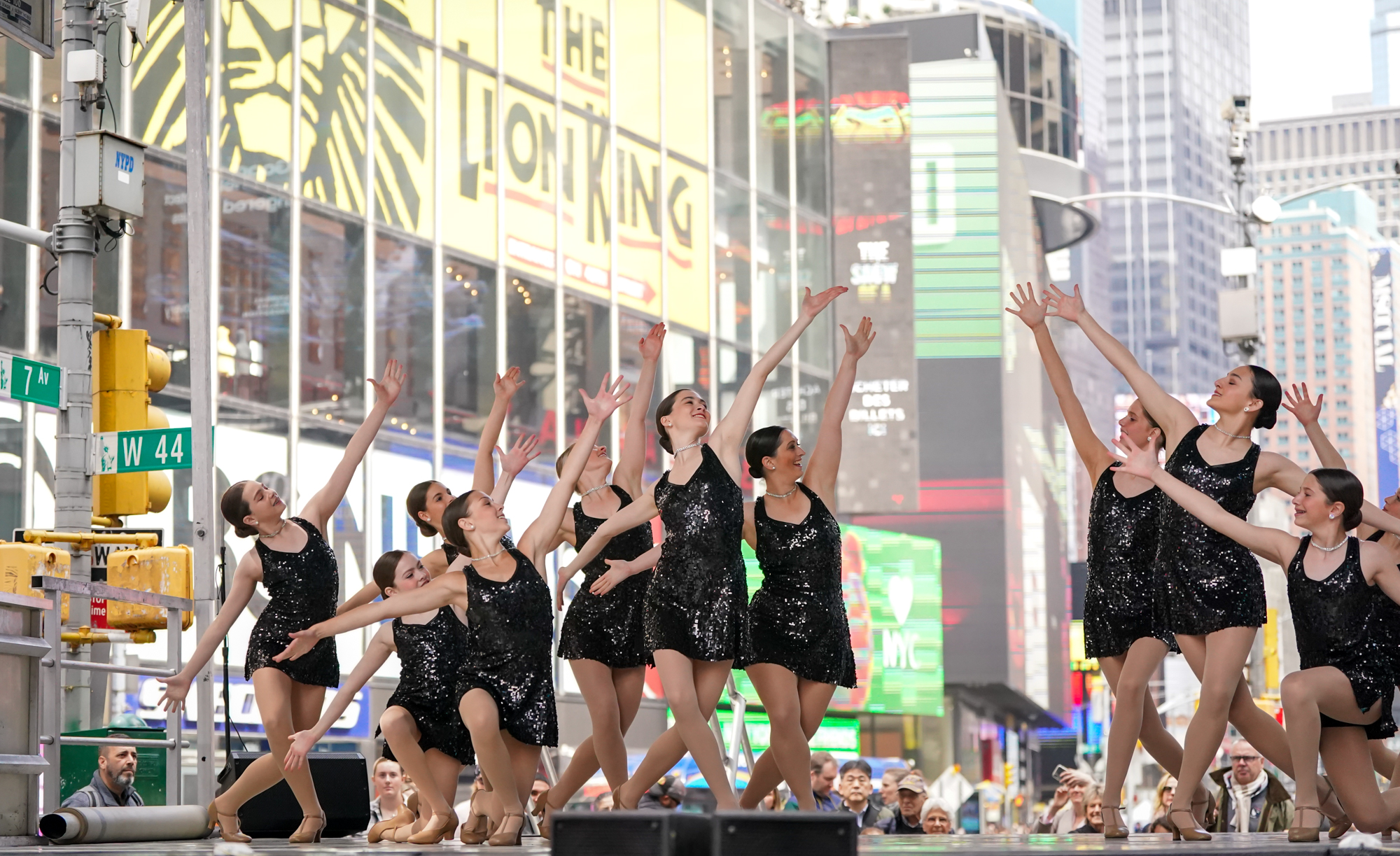
    The Carolina Snowbelles perform in Times Square on April 20 as part of Project Dance. Photographic image by David Rogers

    Launched in 2002 by the Project Dance Foundation as a way to help the city “heal” after Sept. 11, 2001, Project Dance has now inspired people in more than 30 cities in 13 countries around the world with a series of open-air, free dance concerts that go for almost eight hours on a single day. In New York City, the event is performed on a popup stage where 44th Street, Broadway Avenue, and 7th Avenue intersect.

    The Project Dance Foundation principal and founder is Cheryl Cutlip, now with ties to Boone and Blowing Rock, but who spent 15 years with the Radio City Music Hall Rockettes as a performer and, later, administrator. Through her High Country studio, The Space at Project Dance, Cutlip formed the Snowbelles and SnowFlurries as a way for young people, especially girls, to find themselves through dance and performing. Although the New York contingent included some two dozen performers and their families, Cutlip’s dance school has grown to more than 100 dancers from all over the High Country.

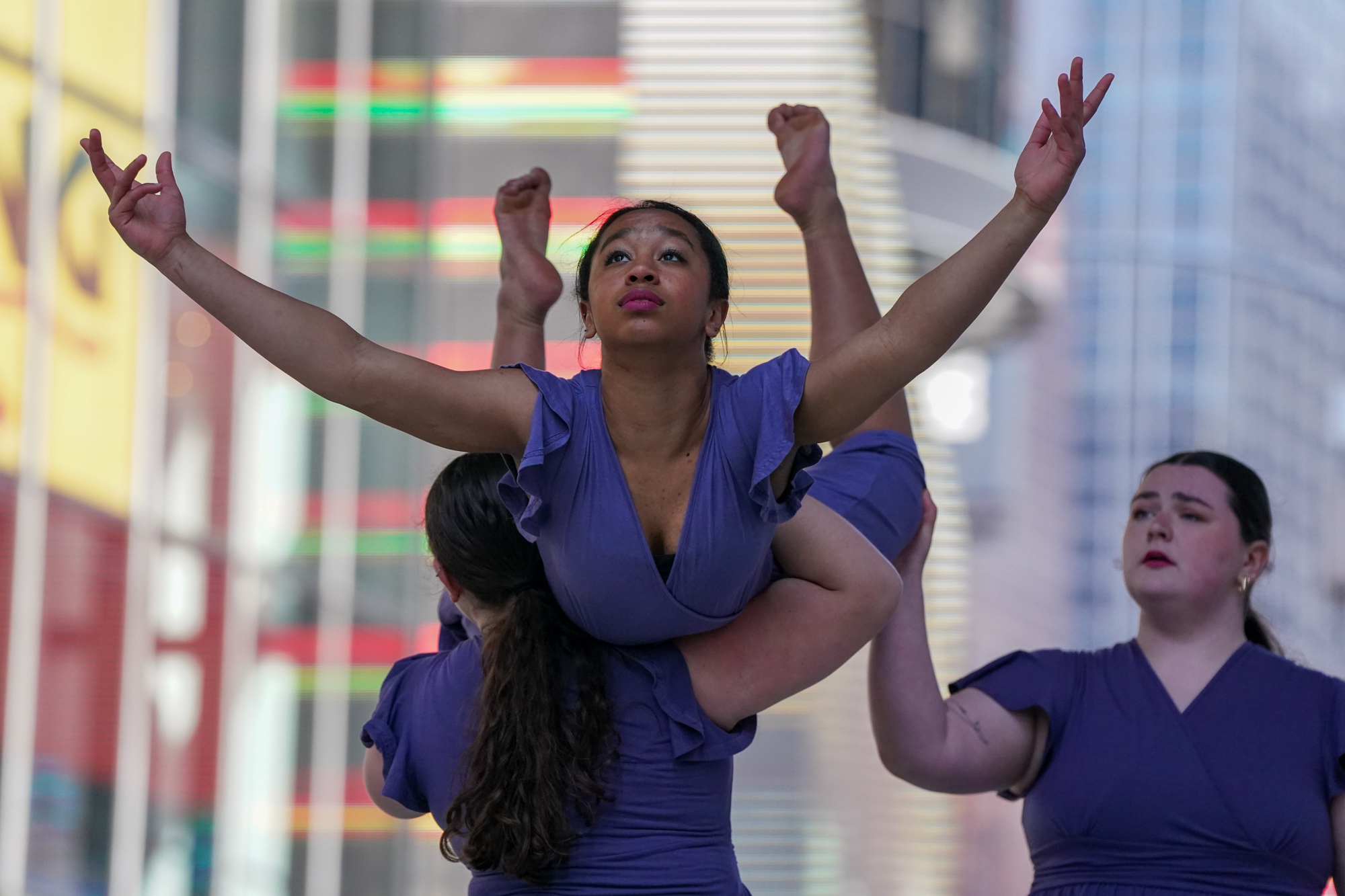
    The High Country’s SnowFlurries perform April 20 as part of Project Dance in New York City’s Times Square. Photographic image by David Rogers

    In fact, The Space at Project Dance has outgrown their current rented space with Cutlip and her supporters looking to move into a purchased building in the near future.

    For Project Dance on April 20, some 30 dance troupes from all over the U.S. took turns performing with ensemble, duo and solo acts, from 10 a.m. to almost 5 p.m. The weather gods knew Project Dance was coming, sending a morning rain shower during the event setup before 9 a.m., but clearing the skies for the rest of a “Chamber of Commerce” day.

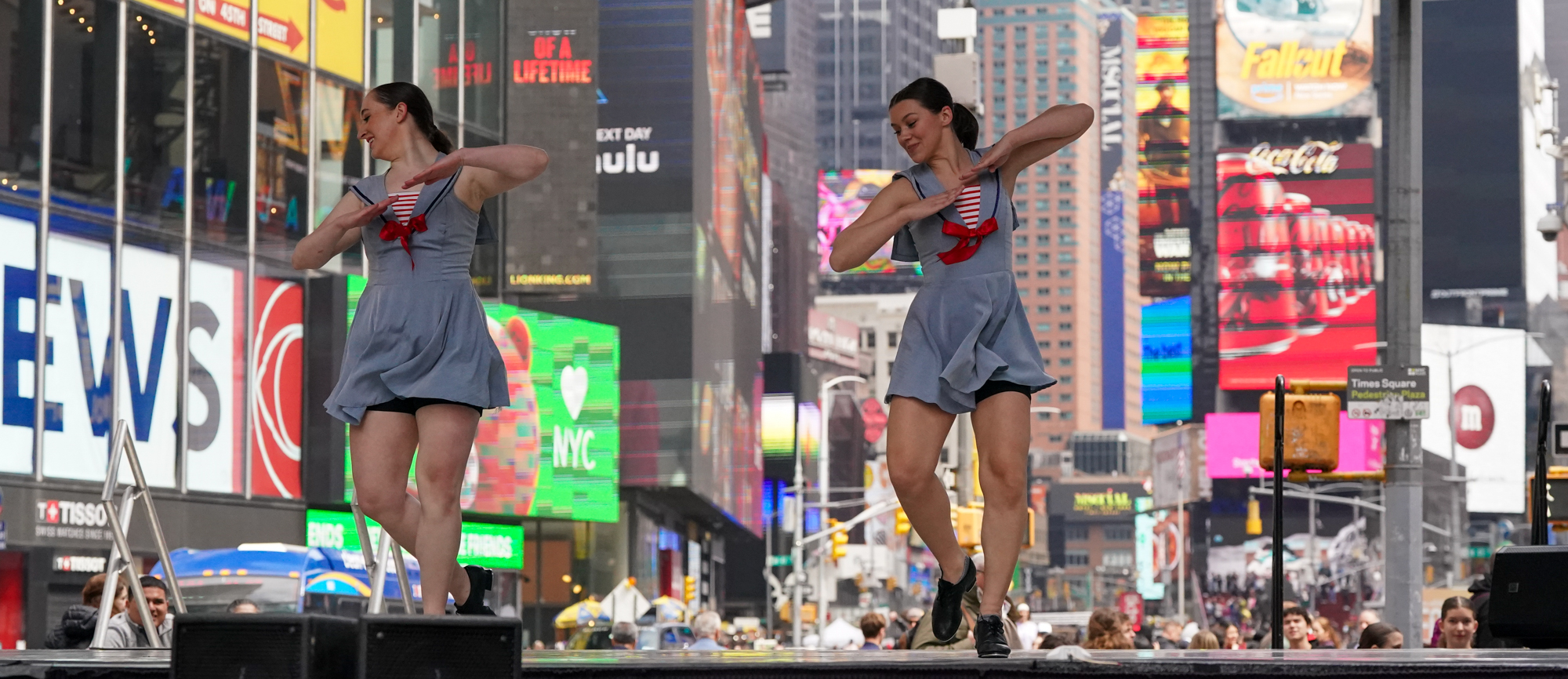
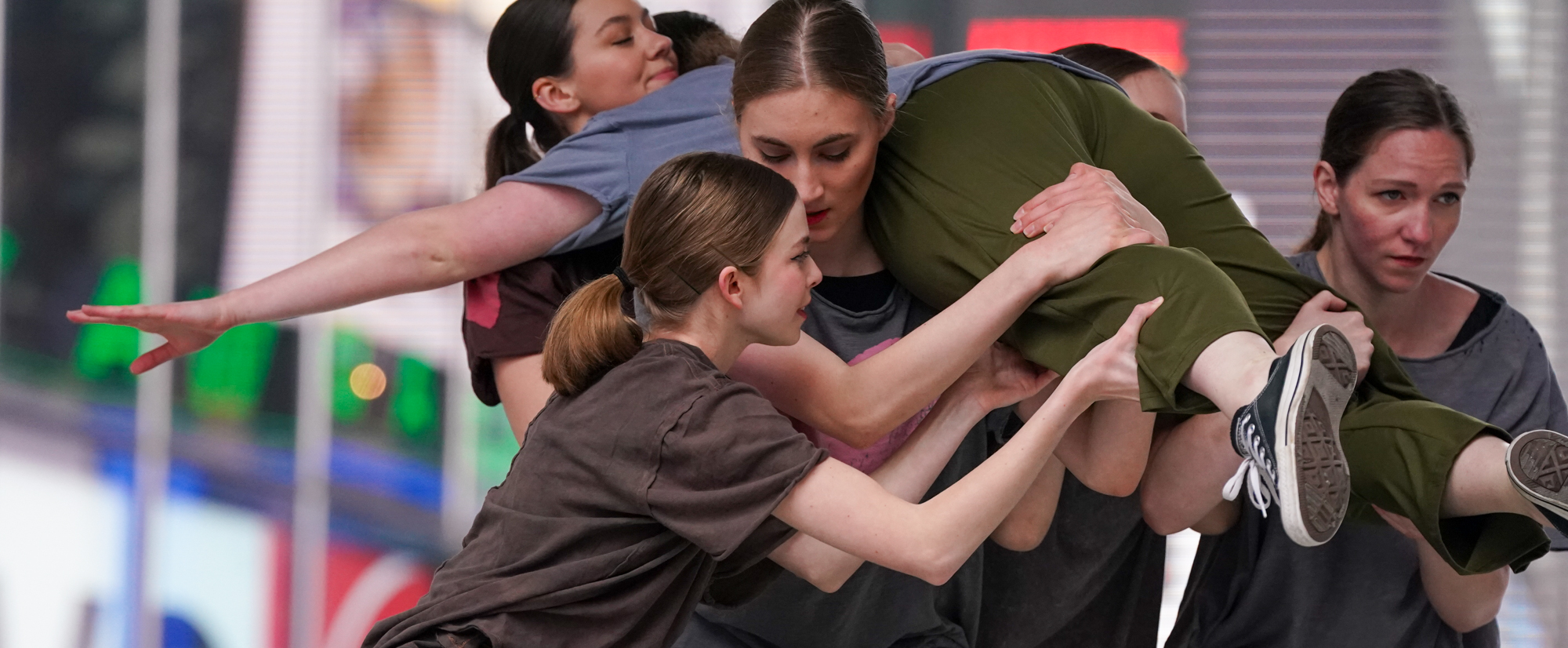
    Few artistic performances are as striking as the cacophony of beautiful, often inspirational and spiritual music against the backdrop of horns, sirens, and a multitude of vehicles rumbling over manhole covers. And visually, seeing the dancers perform juxtaposed against the neon lights and iconic signage for which Times Square is so famous may well be incongruous, but the energy and excitement of the moments are something to behold.

    And behold they were, the individual performances often inviting whoops and hollars of encouragement but always drawing enthusiastic applause.

    Project Dance 2024 in New York City’s Times Square, April 20. Photographic image by David Rogers

    The High Country’s Snowbelles performed two routines and the SnowFlurries one, as well as special performances by two High Country based dance teachers and a solo performance by a young member of the Snowbelles.

    DIFFERENT DRUM (SnowFlurries)
    Choreography by: Emma Pinnix
    Evie Jolly
    Everlie Powell
    Henley Brinker
    Hollis Brinker
    Emery Reed
    Shepherd Gray
    Avery Willingham
    Addy Salley
    Vera Kwong
    SING (Carolina Snowbelles)
    Choreography by: Cheryl Cutliip
    Vera Kwong
    Avery Willingham
    Everlie Powell
    Maggie Schlake
    Anasofia Salinas
    Rachel Witmer
    Carly Watson
    Brooke Church Handy
    Emma Pinnix
    Luci Pedroni
    Journey Lockhart
    Genevieve Goff
    Cameron Parker
    HAPPY (Carolina Snowbelles)
    Choreography by: Claudia Palta
    Maggie Schlake
    Anasofia Salinas
    Rachel Witmer
    Carly Watson
    Emma Pinnix
    Luci Pedroni
    Journey Lockhart
    Genevieve Goff
    Cameron Parker

    Without You, Without Them
    Choreographed and Performed by Emma Pinnix and Brooke Church Handy


    In addition, Snowbelles member Journey Lockhart performed a solo routine, Columcille, choreographed by Randall Flinn.

    BONUS PHOTOS

  • Forty-four years and counting, Trout Derby is a hit

    By David Rogers. BLOWING ROCK, N.C. — At 44 years, the Blowing Rock Trout Derby is the second longest, continuous running event in town behind only the six decades of Art in the Park — and if the trout weren’t exactly jumping on the fishing tackle April 6, there was plenty of angler action and loads of family fun.

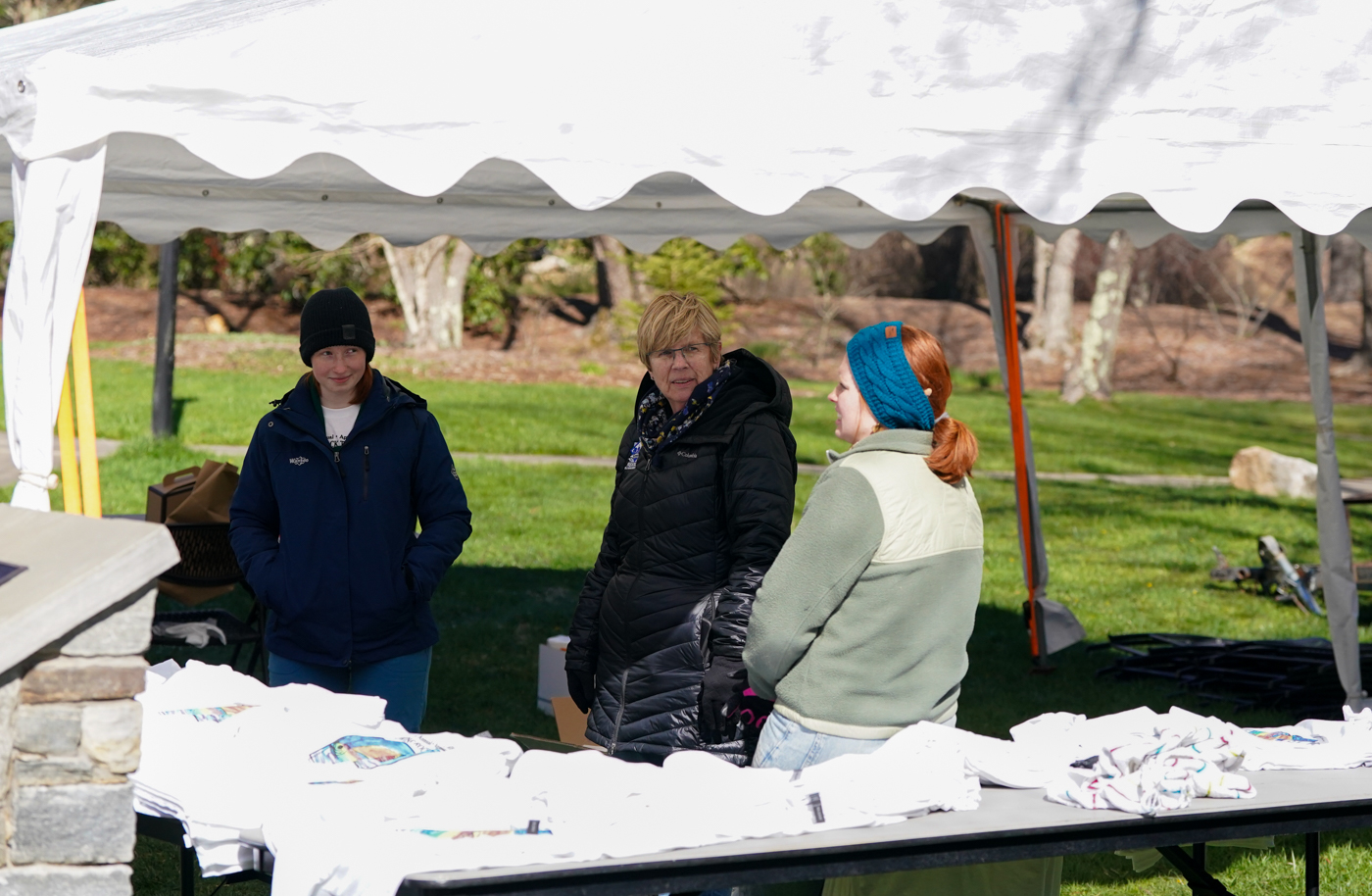
    In moving the event headquarters to a tent setup on the north end of Broyhill Lake, event director Kim Rogers and her merry band of volunteers Mike Calhoun, Tom Shelley, Maddie Parker, Anabel Parker and representatives of co-sponsor The Speckled Trout Outfitters were kept busy throughout the day by the “small fry” and their families lining the banks of the historic lake to the west of the American Legion Building. They loaded up on Trout Derby T-shirts and free, richly supplied tackle boxes, all aimed at promoting fishing among young people — just like the original sponsors of Trout Derby more than four decades ago. They included Rogers’ father, Elmer Jenkins (Jenkins Realtors), Earl Trexler (Village Hardware), James Marsh (Northwestern Bank), and Wayne Underwood (Mystery Hill).

    Blowing Rock Trout Derby can be a terrific family affair, as evidence by the multiple generations of the Rooney family. Photographic image by David Rogers

    While the morning started out blustery with sub-freezing temperatures and estimated 30 miles per hour winds, it hardly dampened the spirits of young and old alike happy to be celebrating the opening day of trout fishing season.

    Young Asher Boyd turned the proverbial “hat trick” as a triple winner on the day. He registered the First Fish at 7:46 a.m., captured first place in the “Catch and Release” small fry division, and won the art contest. For the latter, his art will be showcased on next year’s event T-Shirt and promotional posters.

    Mason Rush and Charlotte Hill each won $25 for catching one of the tagged fish. In the 16 and older “Traditional” (harvest) division, James Rooney captured first place with a 21.5″ trophy fish. Meredith Cavalier was close behind with a 20.5 incher. And Gene Hodges rounded out the top 3 with a 19.5-inch fish that would fit nicely on any dinner plate.

    Lots of families enjoyed the warming sun mid-morning on April 6 at Broyhill Lake, the headquarters for Blowing Rock Trout Derby. Photographic image by David Rogers

    In the “Catch and Release” 16 and older division, Tripp Nazziola reeled in 437 inches of bait catchers, followed by No. 2 Phillip Jamison’s 378 inches and No. 3 Ben Milam’s 225.5 inches.

    In the Traditional division, Price Lake proved the source of two of the three largest species categories. For Brook trout, Grayzlyn Douglas took top honors with a 13.25-inch specimen from Price Lake. For Brown trout, Meredith Cavalier won the prize at 20.5 inches (Watauga River). And for Rainbow, James Rooney hauled in a 21.5 incher out of Price Lake.

    Following Boyd’s first place effort in the “Catch and Release” Small Fry division were second place Ethan Boyd and third place Joey Sexton.

    Event director Kim Rogers (center) discuss the big morning turnout for Trout Derby on April 6 with volunteer granddaughters Anabel Parker (left) and Maddie Parker. Photographic image by David Rogers.

    In the Traditional Small Fry division, Palmer Jordanhaby was No. 1 at 16.75 inches, Lucy Vandenhazen was No. 2 at 15.5 inches, and Grayzlyn Douglas picked up some more hardware at No. 3 (13.25-inches).

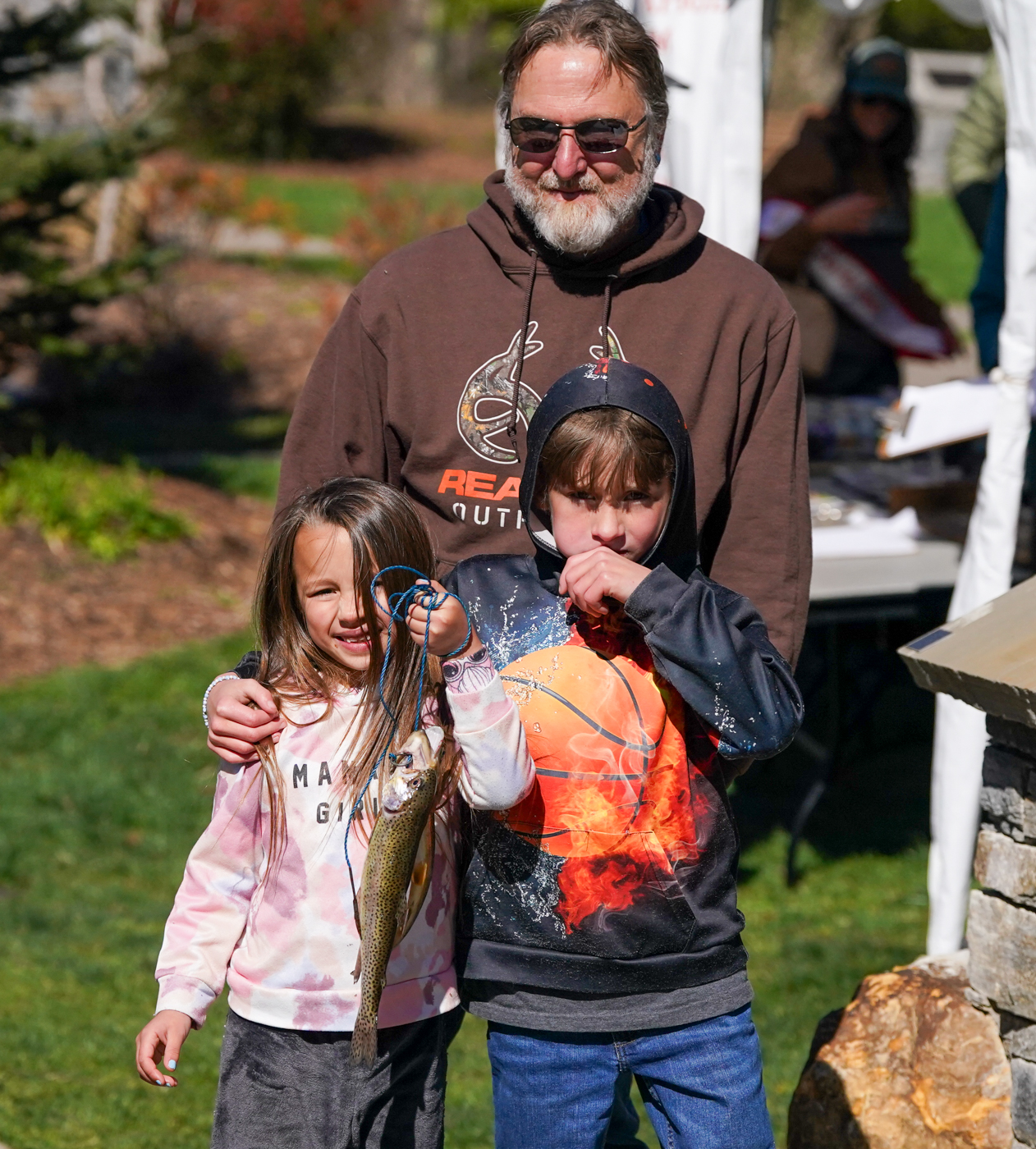
    Grayzlyn Douglas (left) holds up her family’s morning catch on April 6 during Blowing Rock Trout Derby. Photographic image by David Rogers

    Sponsors of this year’s event included First Citizens Bank, the North Carolina Wildlife Resources Commission Division of Inland Fisheries, the Blowing Rock Chamber of Commerce, Jenkins Realtors, The Speckled Trout Restaurant and The Speckled Trout Outfitters, Hollars Construction, Omega Tees, Town Tavern, Chetola Mountain Resort, Cheeky, Mountaineer Maintenance, Booneshine Brewing, Edmisten Heating & Cooling, Scientific Anglers, 4 Forty Four Construction, Jim Allen Home Solutions, Snake Mountain Iron Works, A-1 Termite and Pest Control, Riversmith Boulder Colorado, Wingo Outdoors, High Country Professional Cleaners, Free Fly, The Village Foundation of Blowing Rock, Thomas & Thomas, Stickboy Bread, Lamson, Food Lion and Bush Carpet Cleaning.


  • End of a journey? Or launchpad to another?

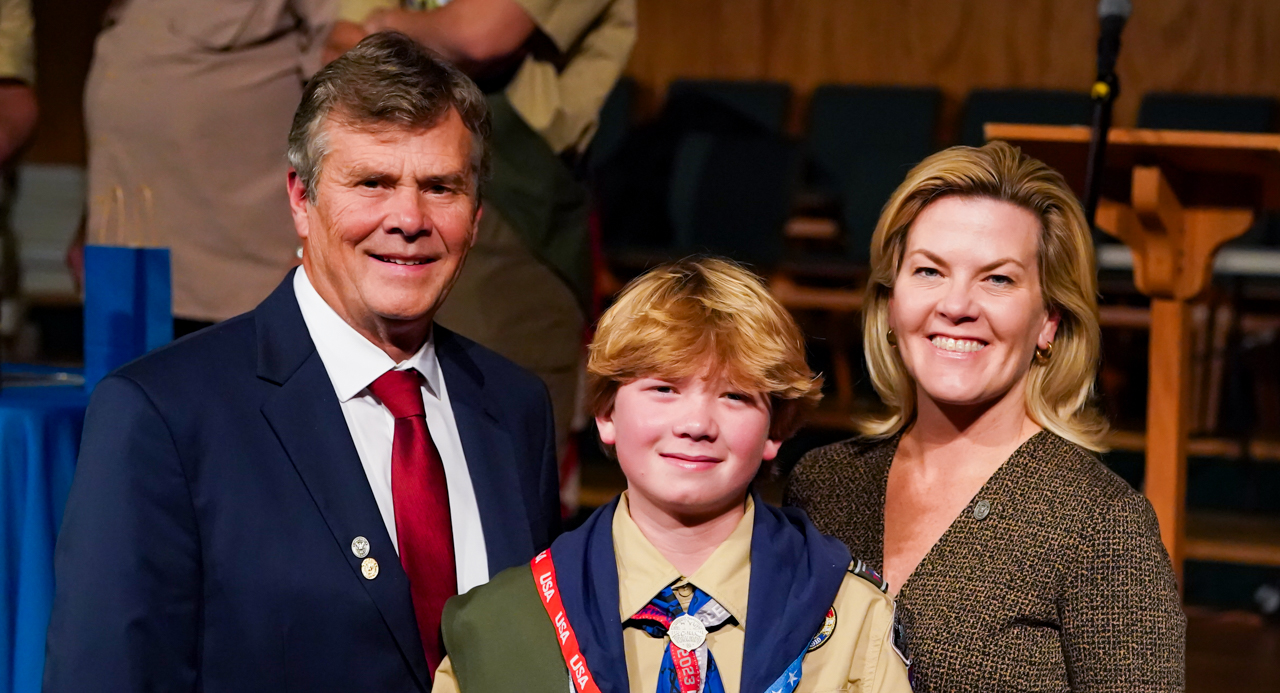
    By David Rogers. BLOWING ROCK, N.C. — Now a freshman at Watauga High School, Blowing Rock School alum Evan Cutlip will undoubtedly remember Oct. 17 as the culmination of an early life journey. It was on that evening at Boone United Methodist Church that Troop 109 celebrated him as the High Country’s latest Eagle Scout, the highest rank in Scouting.

    As Arvil Sale, one of the Scoutmasters proclaimed during the solemn ceremony recognizing young Cutlip’s accomplishments, “There is nothing in Scouting doctrine or practice that says you WERE an Eagle Scout. No, once you attain it, you ARE an Eagle Scout for the rest of your life with all the responsibilities that go with it.”

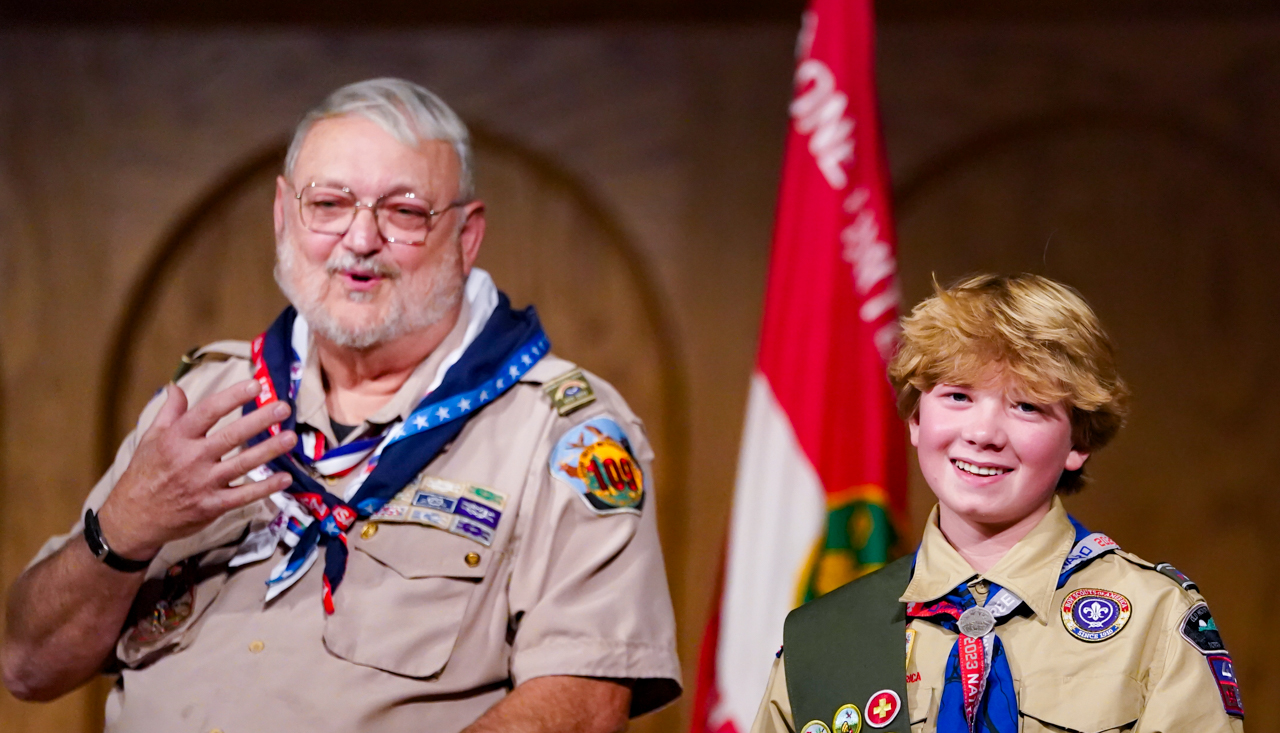
    Scoutmaster Arvil Sale introduces new Eagle Scout, Evan Cutlip. Photographic image by David Rogers

    For Cutlip, the final step in achieving Eagle Scout status was completing a community service project. His was ambitious, requiring him to stand before the Blowing Rock Town Council, request the rights to a small parcel of land adjacent to Davant Field, and persuade the board of commissioners to let him design and build Blowing Rock Bike Park.

    Then, of course, he had to marshal together the resources to get it done. The parcel — filled with a tangle of rhododendron bushes, trees and even a small stream — would not be a proverbial “piece of cake” to transform it into a biking asset. It required ingenuity and a lot of hard, physical labor.

    Evan Cutlip enjoys a first ride on his Eagle Scout community service project, the Blowing Rock bike Park. Photographic image by David Rogers

    In fact, the Scoutmasters reported, Cutlip’s project required more than 600 hours of labor provided by Cutlip, his family members, friends, other Eagle Scouts, and community members. Without question, young Cutlip was in command of his vision for the Blowing Rock Bike Park, considering unforeseen challenges as they presented themselves, approving some suggestions, deflecting others as not in keeping with what he hoped to achieve.

    To marshal together the material and volunteer labor resources, as much as anything Cutlip was the consummate salesperson with his energy and enthusiasm for what the project could mean for the community. This was not just a matter of calling in favors but of persuading people to get on board with the mission. And the mission was not to become an Eagle Scout. The mission was to build Blowing Rock Bike Park for the enjoyment of the community.

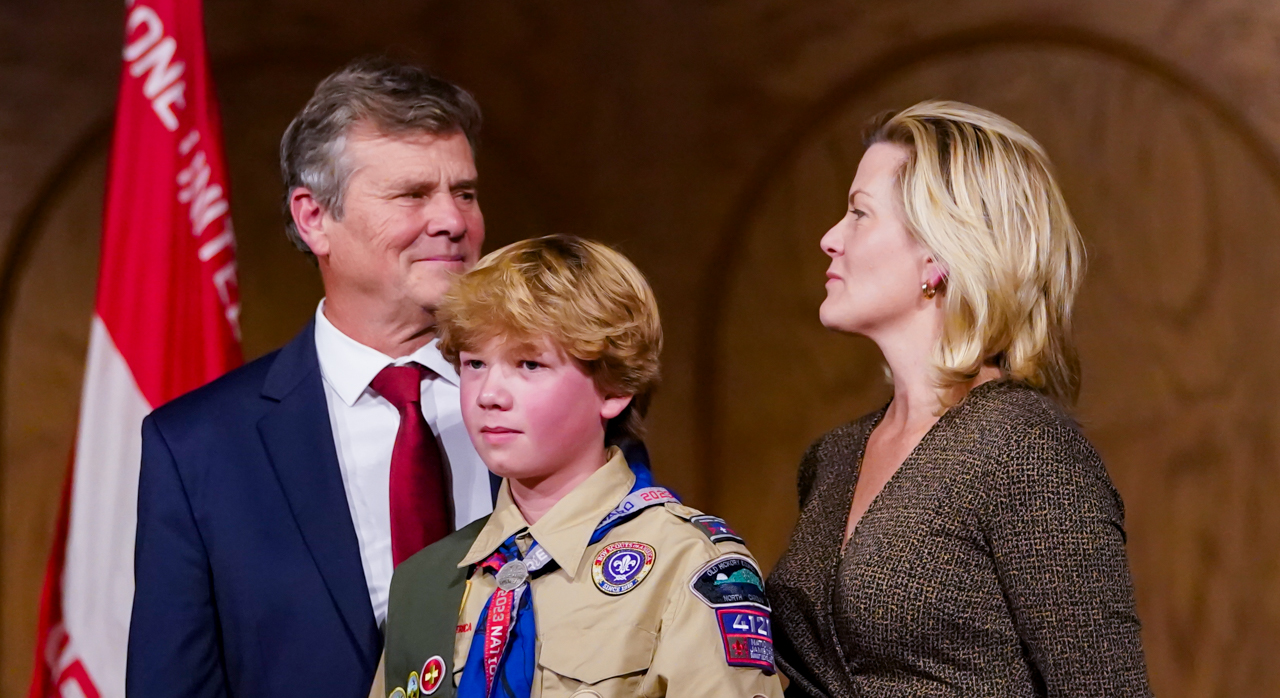
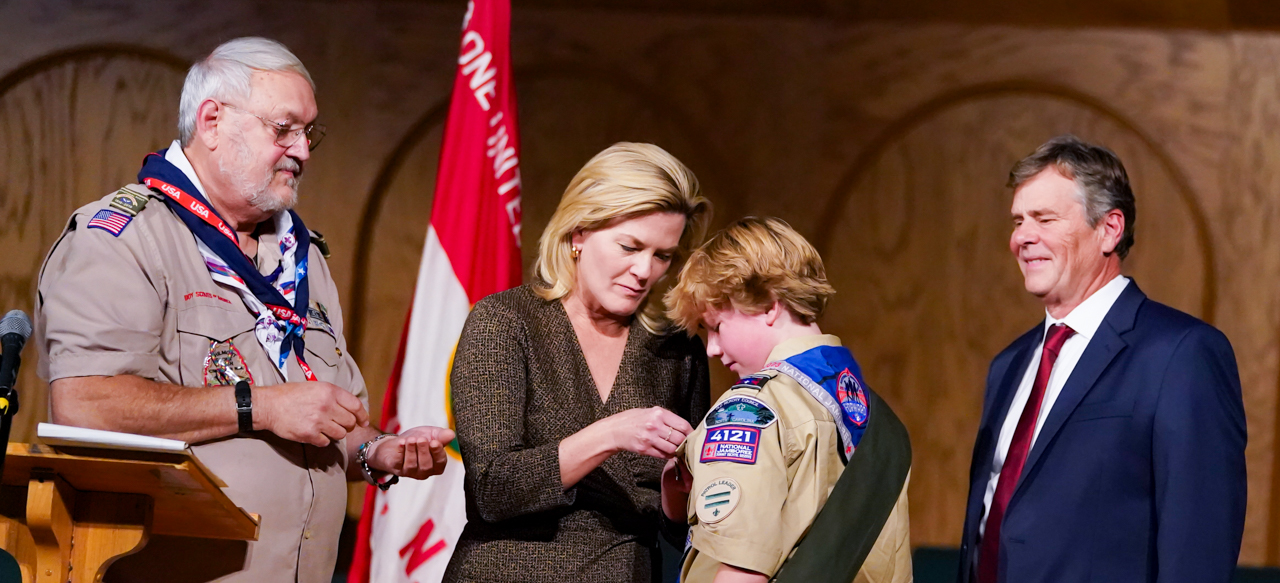
    Parents Ron and Cheryl Cutlip join Evan on stage Oct. 17 for his Court of Honor ceremony upon becoming an Eagle Scout. Photographic image by David Rogers

    At the outset, Cutlip estimated that it would take three weekends to complete the project. That proved optimistic. Instead, it took about three months, but his enthusiasm and commitment never wavered.

    Upon addressing the crowded sanctuary honoring him for his Eagle Scout achievements, Cutlip acknowledged and was thankful for the help he had received with his project, but in reflecting on the experience noted one of the most valuable of life lessons: self-discipline.

    ‘Mom’ gets to do the honors on Oct. 17 at Boone United Methodist Church during Evan Cutlip’s Eagle Scout Court of Honor ceremony. Photographic image by David Rogers

    You have to go back a few years to find the beginning of Cutlip’s early life journey through Scouting. Much of that journey is comprised of earning merit badges. There are 138 of them in all, according to Scouting.org, across a range of subjects to suit just about every educational palate, from energy to engineering, from fly fishing to forestry, from nuclear science to oceanography, from photography to plumbing.

    Several merit badges, not all, are required to have been attained on the journey to becoming an Eagle Scout: lifesaving, camping, hiking, personal fitness, sustainability, first aid, emergency preparedness, communication and cooking, to name a few. To be sure, all are useful life skills.

    The end, or just the beginning?

    Some, of course, will see Cutlip’s Eagle Scout Court of Honor ceremony as the end of a boyhood journey. Many others look at it as the beginning of yet another journey, perhaps one of accomplished adulthood.

    A roll call of young-boys-becoming-men attaining the Eagle Scout rank in the 113-year history of Boy Scouts is dotted with the featured profiles of accomplished historical figures, as well as role models.

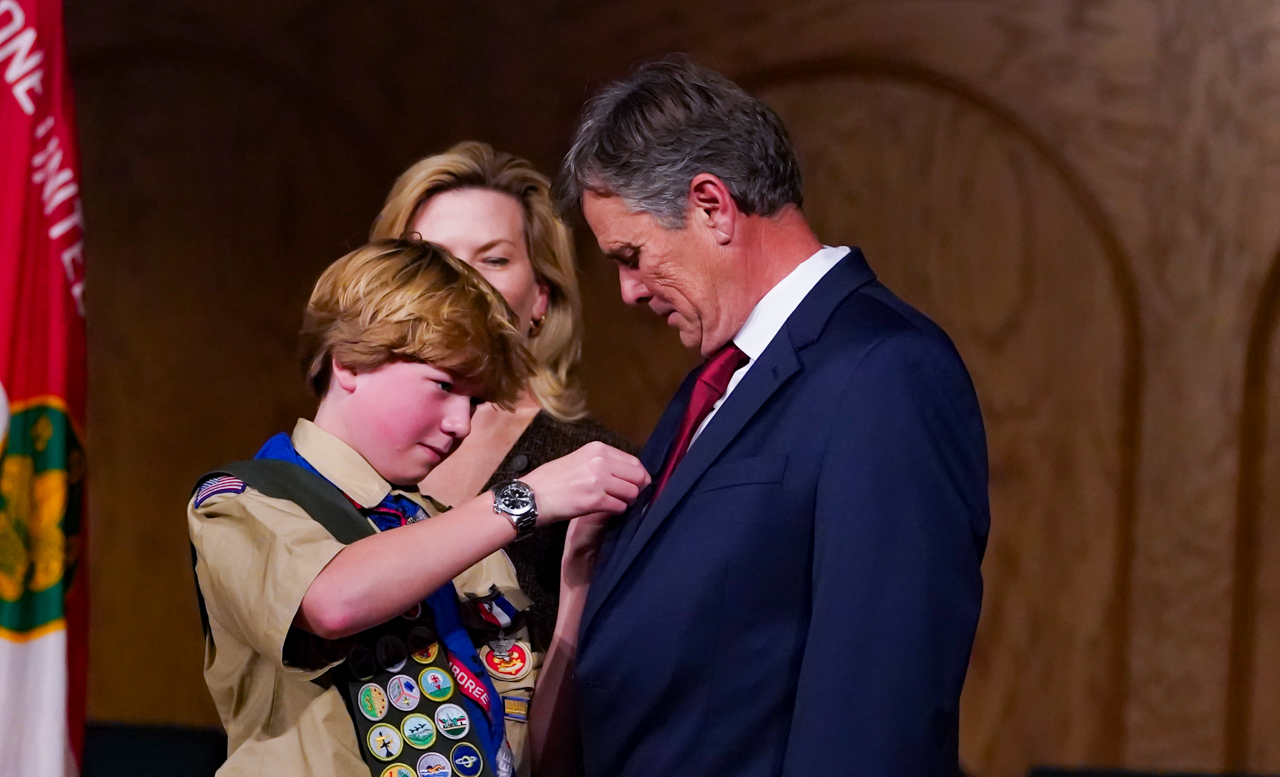
    For Cutlip, he looks no further than the man sitting across from him at the dining room table. His father, Ron Cutlip, is an Eagle Scout and now an accomplished landscape architect and golf course designer with completed projects up and down the East Coast.

    Evan Cutlip gets to ‘pin’ his father, Ron, during the Eagle Scout Court of Honor Ceremony. Photographic image by David Rogers

    Eagle Scouts are present in nearly every walk of life. They include astronauts, doctors, explorers and inventors, guys like Neil Armstrong, the first man to walk on the moon, and Philo T. Farnsworth, the inventor of modern television.

    They include athletes, coaches and sports executives. Don Garlits, now 91, is an engineer considered the father of professional “drag racing.” Their number also includes former NFL head coaches Ray Malavasi, Jim Mora, and Ken Whisenhunt.

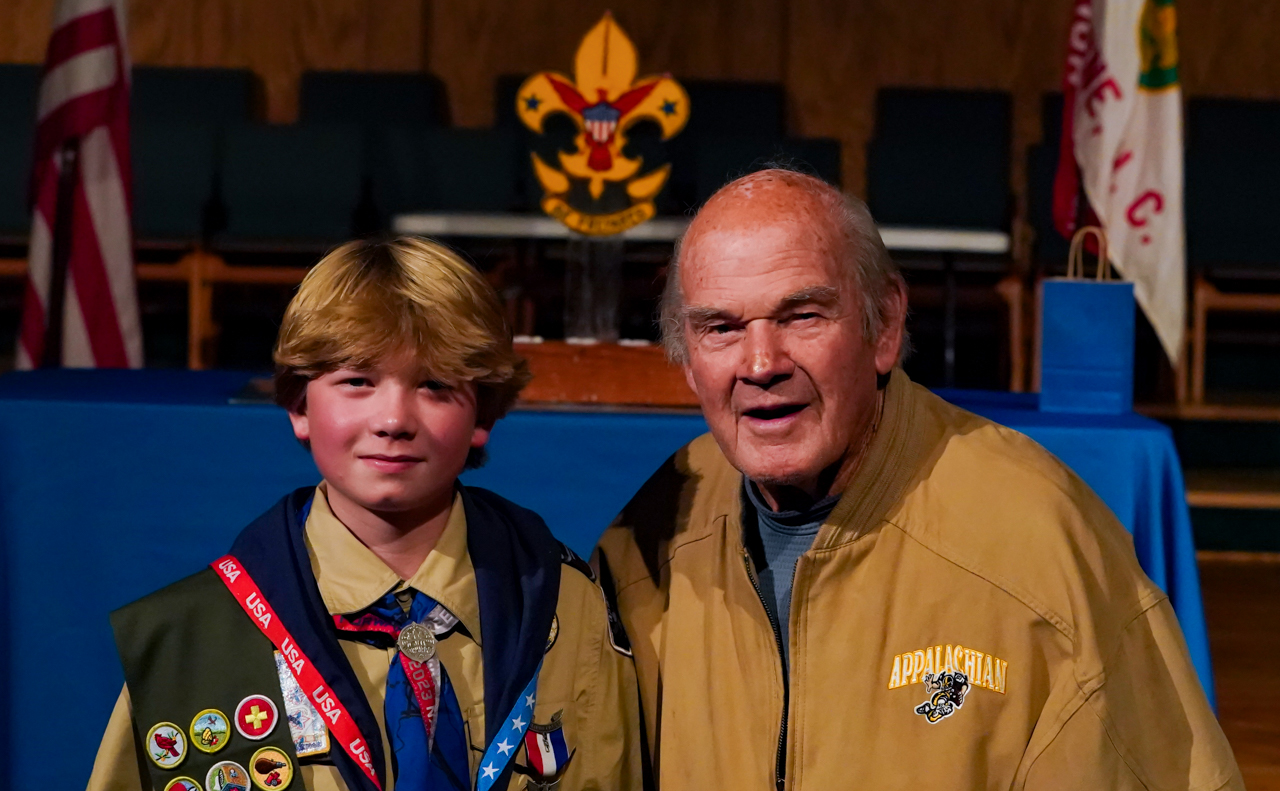
    Former App State football head coach Jerry Moore likes to tell his own story of being a Boy Scout in Texas, and the values it helped instill in him growing up. Photographic image by David Rogers

    Eagle Scouts include authors and journalists, like the late Clive Cussler, an underwater explorer and award-winning adventure novelist, as well as Harrison Salisbury, the Pulitzer Prize-winning journalist who covered the civil rights movement in the U.S., the Kennedy assassination, and the Vietnam War.

    They include civil rights leaders, like Percy Sutton, a Tuskegee Airmen pilot in World War II who came home to revitalize the famed Apollo Theatre in New York City.

    Eagle Scouts include entertainers, too. Steven Spielberg, the Academy Award-winning director of Schindler’s List and Saving Private Ryan, among other iconic movies of the last half century, was part of the Eagle Scout “Class of 1961.” David Lynch, the Academy Award-winning director of The Elephant Man and the hit TV series, Twin Peaks, is an Eagle Scout.

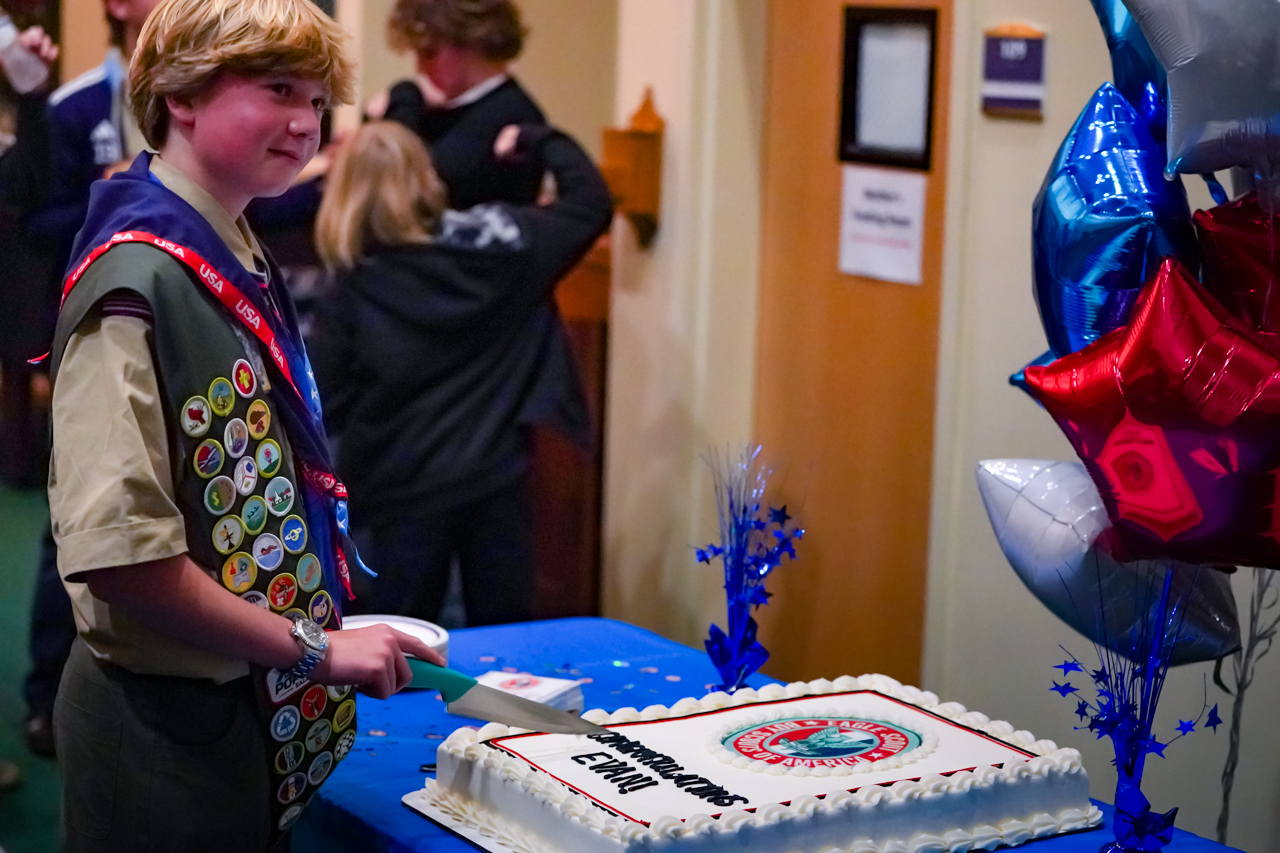
    Evan Cutlip cuts the first slice of celebratory cake following his Eagle Scout Court of Honor ceremony. Photographic image by David Rogers

    In 1995, I met an octogenarian Eagle Scout, William Hanna, at the Oysters restaurant and bar in Corona del Mar, Calif. He was a creative genius, a cartoonist and animator who created Tom & Jerry, and with business partner Joseph Barbera, arguably created the most successful television animation studio of its day, Hanna-Barbera, creating such shows as The Flintstones, Yogi Bear, The Smurfs, The Jetsons, Scooby Doo, and Huckleberry Hound.

    Politicians and public officials are Eagle Scouts, too. Former New York City Mayor and business icon Michael Bloomberg is one. So is U.S. Supreme Court Justice Stephen Breyer, U.S. President No. 38 Gerald Ford, former independent presidential frontrunner Ross Perot, former Governor of Texas Rick Perry, Secretary of the Treasury Henry Paulson, U.S. Attorney General Jeff Sessions, and former Secretary of State and former CEO of ExxonMobil, Rex Tillerson.

    Like Tillerson and Paulson, business leaders abound in the list of Eagle Scouts: Stephen Bechtel Jr. (Bechtel construction and civil engineering), Sam Walton (Walmart), Charles Dolan (HBO), and Bill Marriott (Marriott International), for example.

    Being an Eagle Scout is not a requirement for being successful in life, but it is a good launchpad, given the weight of the evidence. Up what path will Evan Cutlip’s journey take him? He, and other boys-becoming-men Eagle Scouts like him seem to have a headstart.

    Ron, Evan and Cheryl Cutlip. Photographic image by David Rogers
  • (UPDATED) PHOTOS of the WEEK: Oleg Zhuravel

    By David Rogers. BLOWING ROCK, N.C. — You just never quite know who you are going to meet out and about in Blowing Rock nor what gifts they are willing to share.

    Oleg Zhuravel came up from behind (that is not hard to do, these days) at Bass Lake and paid my camera a compliment. That turned into a conversation about his visit from Pennsylvania and his current adventure visiting the Southern Appalachian Mountains, as well as his own interest in photography.

    It turns out, Zhuravel was born in Belarus of a Ukrainian mother and Russian father. At some point in his early life they migrated to the Philadelphia area. He said he grew up in Olney, describing it as a “… pretty rough part of Philadelphia, but I still grew up happy.”

    After discovering North Carolina and buying a home in the Tar Heel State a few months ago, he says, “I have been exploring North Carolina for its beauty and for my hobby of photography.”

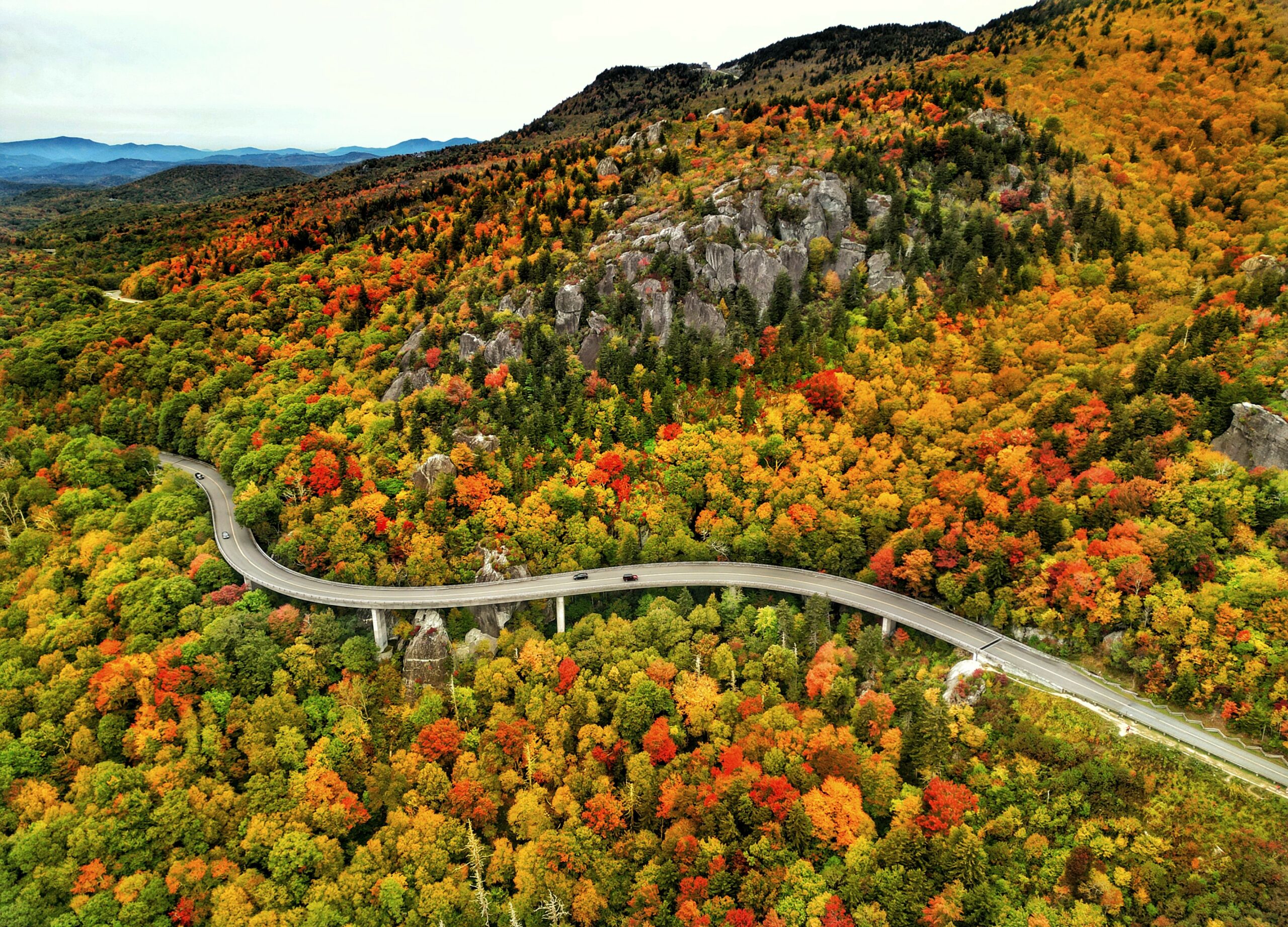
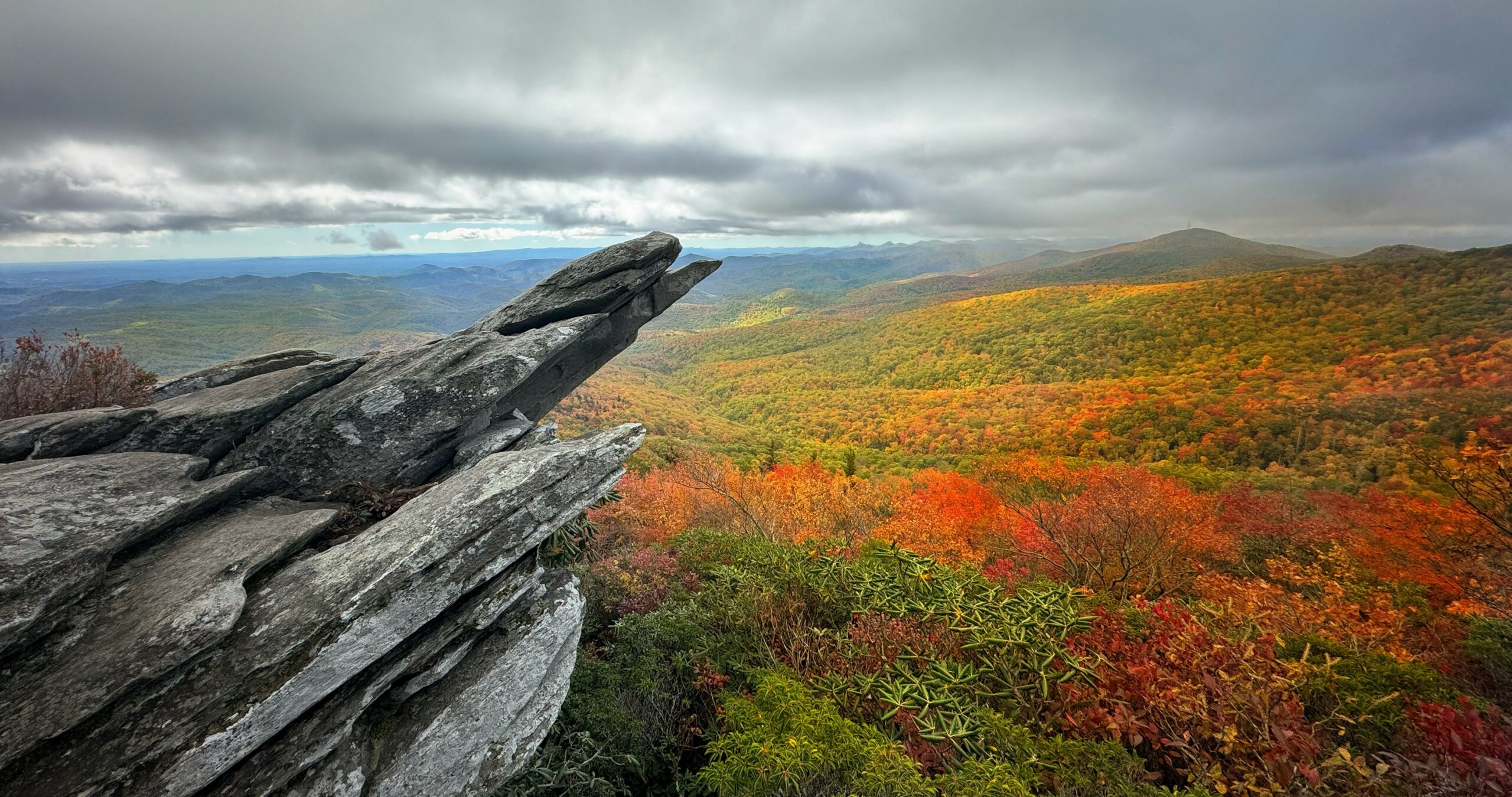
    From Wiseman’s View, Rough Ridge, and some unusual images of the Blue Ridge Parkway, we are happy to share selections from young Mr. Zhuravel’s work this week. He reports using a Sony A7, as well as an iPhone 15 Pro Max and a DJI Mini 3 Pro drone.


  • An autumn adventure: scenes from Bass Lake

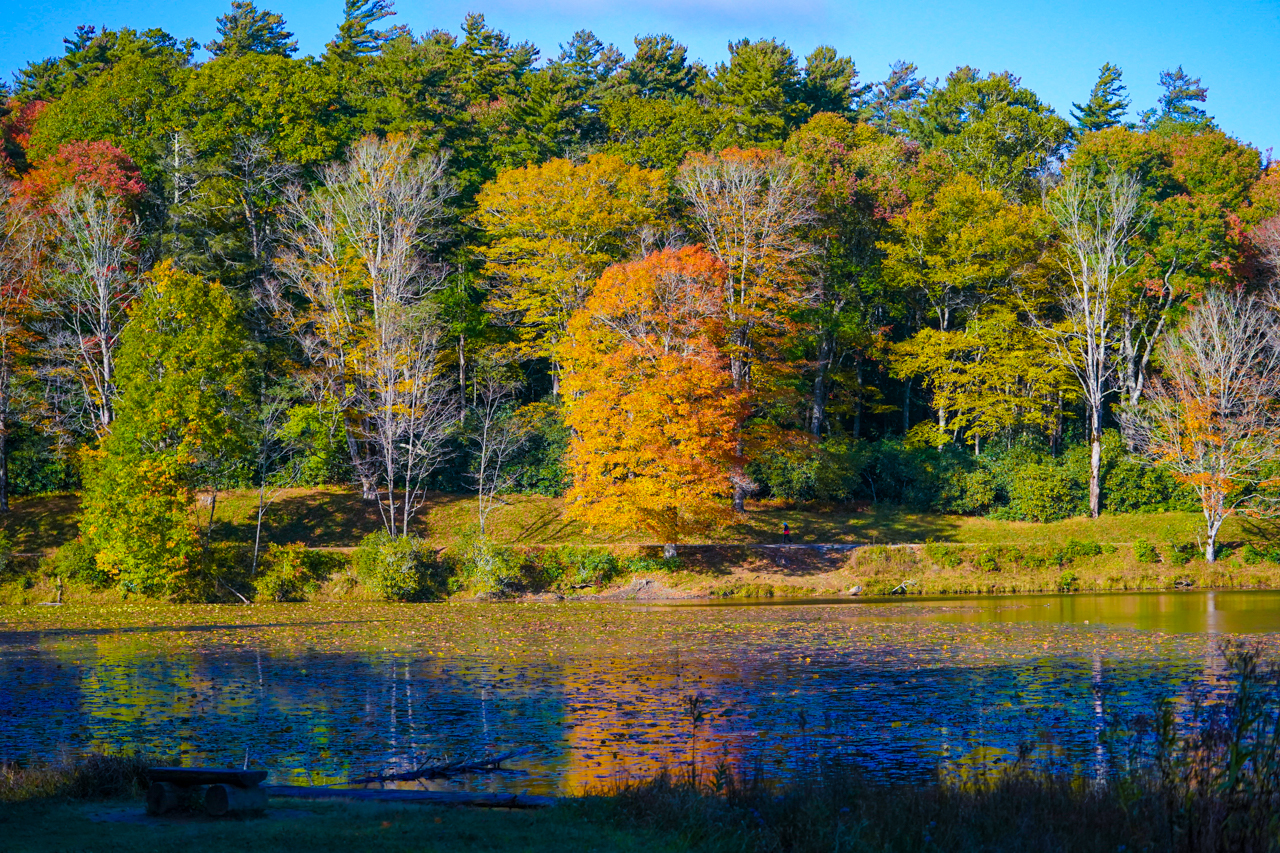
    By David Rogers. BLOWING ROCK, N.C. — It is that perfect time of year for fall colors and a Sunday evening stroll around Bass Lake in Blowing Rock. Dark limbs and tree trunks provided stark contrasts to the vivid gold reaching out over blue waters. Dark, ghostly reflections in still pools harken the days before Halloween. A shadowed trail with glimpse of color overhead, brightening the way…

    All photographic images by David Rogers. Click on any image for slideshow mode.


  • Photo of the Week: Watauga’s Evan Burroughs catch, art by Garner Dewey

    By David Rogers. BOONE, N.C. — Football is a game of moments, strung together to make a play, either by the entire team or by a single individual. Last week against South Caldwell, photographer Garner Dewey captured this sequence of moments in the football life of Pioneer Evan Burroughs as he caught a long pass from QB Maddox Greene.

    This is called an “action sequence” photo. You can capture the images on any camera, including on many smartphones, then put them together in one image using Adobe Photoshop.

    “This is what they call a ‘photo merge’,” explained Dewey. “The first step, of course, is taking a burst of several shots following the play’s action. For this one, I was panning at the same time as shooting in order to follow Evan Burroughs’ catch throughout the sequence, from when he first looked up and spotted the ball, followed it as it descended, then caught it.”

    Dewey said he first used Adobe Lightroom to make various color corrections and crops, then used Adobe Photoshop’s “Photo Merge” tool.

    The original burst was about 10 shots,” said Dewey. “I could merge them manually, of course, but I wanted to get this done quickly. So I let Photoshop do all the work. The built-in artificial intelligence selected these four moments in the sequence and merged them all into one image.”

    Readers are welcome to submit images for “Photo of the Week” consideration, sending a minimum of 1280 pixels on the long side, preferably landscape view, very high resolution to david@highcountrysports.net. The theme should be sports at any level (professional, college, high school, middle school, rec leagues), outdoor recreation, or adventure sports.


  • Mayfly Project will benefit from Cornhole Tourney

    By David Rogers. BLOWING ROCK, N.C. — Foster care in North Carolina has never been in greater demand. The Speckled Trout Outfitters is raising awareness as well as raising money for a non-profit organization, The Mayfly Project, that is addressing some of the foster care challenges.

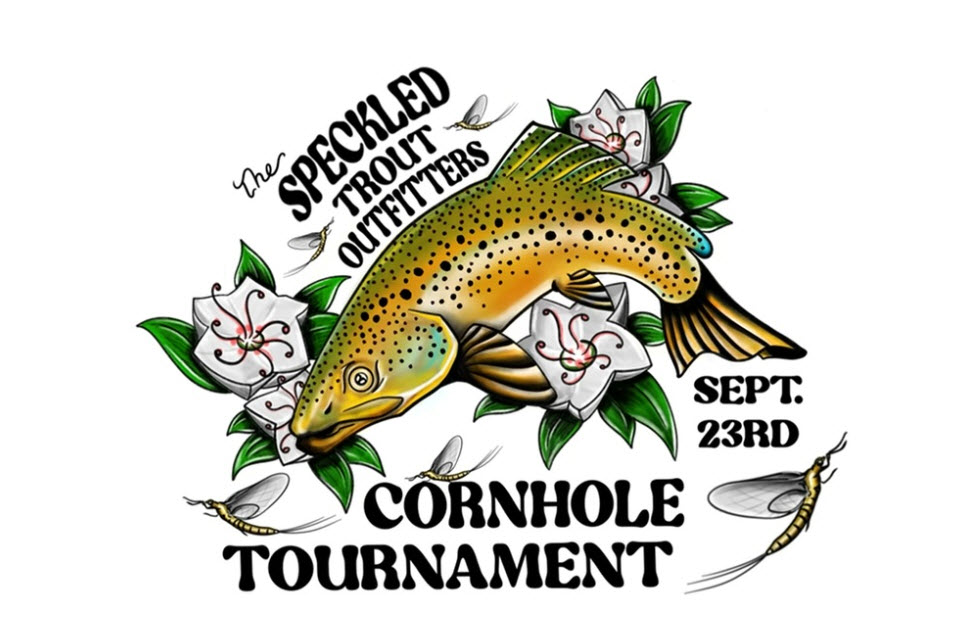
    The 1st Annual Cornhole Tournament benefiting the local chapter of The Mayfly Project is Saturday, Sept. 23, 12 noon to 5 p.m. The entry fee is $40 per team of two. Music and beer will be available throughout the day, the event ending with awards and raffle prizes.

    All proceeds from the $40 entry fee, raffle tickets, and the sale of donated beer from Lost Province will go directly to funding the Mayfly Project local chapter.

    While not necessary, pre-registration is encouraged for competition planning purposes. CLICK HERE for pre-registration.

    The Mayfly Project is a nationally-recognized 501(c)(3) non-profit that uses fly fishing as a catalyst to mentor children in foster care. The mission is to support children in foster care through fly fishing and introduce them to their local water ecosystems. By rewarding the children to a rewarding hobby, the goal is to provide an experience for foster children that is fun, that supports them, and leaves them with a connection to the outdoors.

    Adoption Choice, a private non-profit adoption agency describes the many challenges faced by children in foster care, at least some of which are addressed head-on through the mentoring and experiences facilitated by The Mayfly Project.

    • Grief and Loss: All children who enter foster care experience grief and loss due to the separation from their biological family. This happens whether or not the child has an abusive or neglectful background. It happens even to babies, who have had nine months in utero to get used to the sounds and rhythms of their biological mother.
    • Fear and Anxiety: Children who enter foster care experience fear and anxiety. While the children are placed with people who have been determined able to provide a safe place, children still need to learn to trust the new adult(s) in their lives. Some of the children who come into care have not attached well to anyone in their family.
    • Multiple Placements: Children often experience multiple placements which happen for reasons such as foster parents leaving the program or children needing a home more suited to their specific needs. These placements make attachment and trust much more difficult for foster children.
    • Difficulty Trusting Adults: Many foster children have no reason to trust adults and this makes it difficult when they are in school, where most children generally trust teachers. It is important to remember that, in order to survive both emotionally and physically, foster children have had to rely on only themselves. Through patience, time, good parenting, and teamwork, these children can come to trust adults.
    • Fragmentation of services due to moves: Services such as education, therapy, and medical care are fragmented when children move from place to place. At times, these services end up being worthless as the fearful children have no clear sense of who will take care of them.
  • Now, will an Eagle fly?

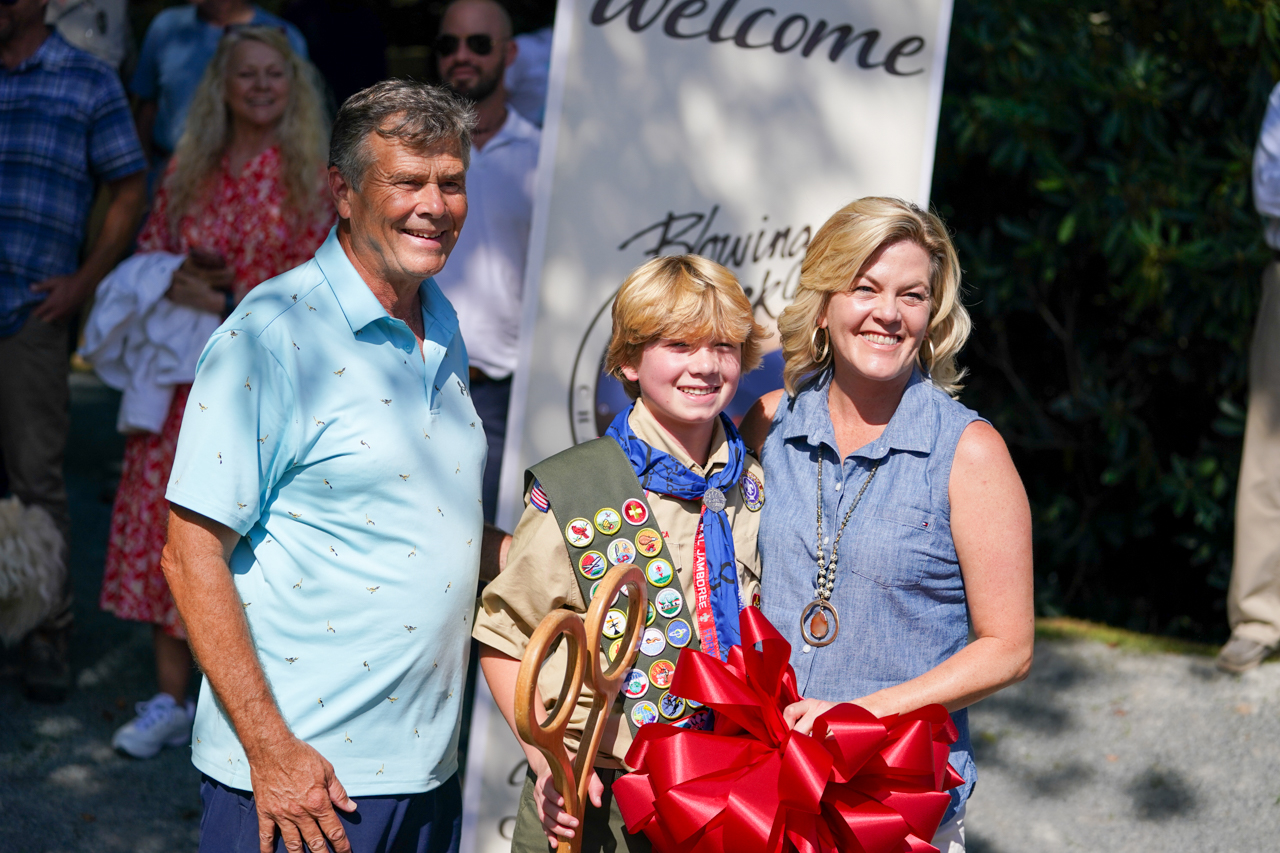
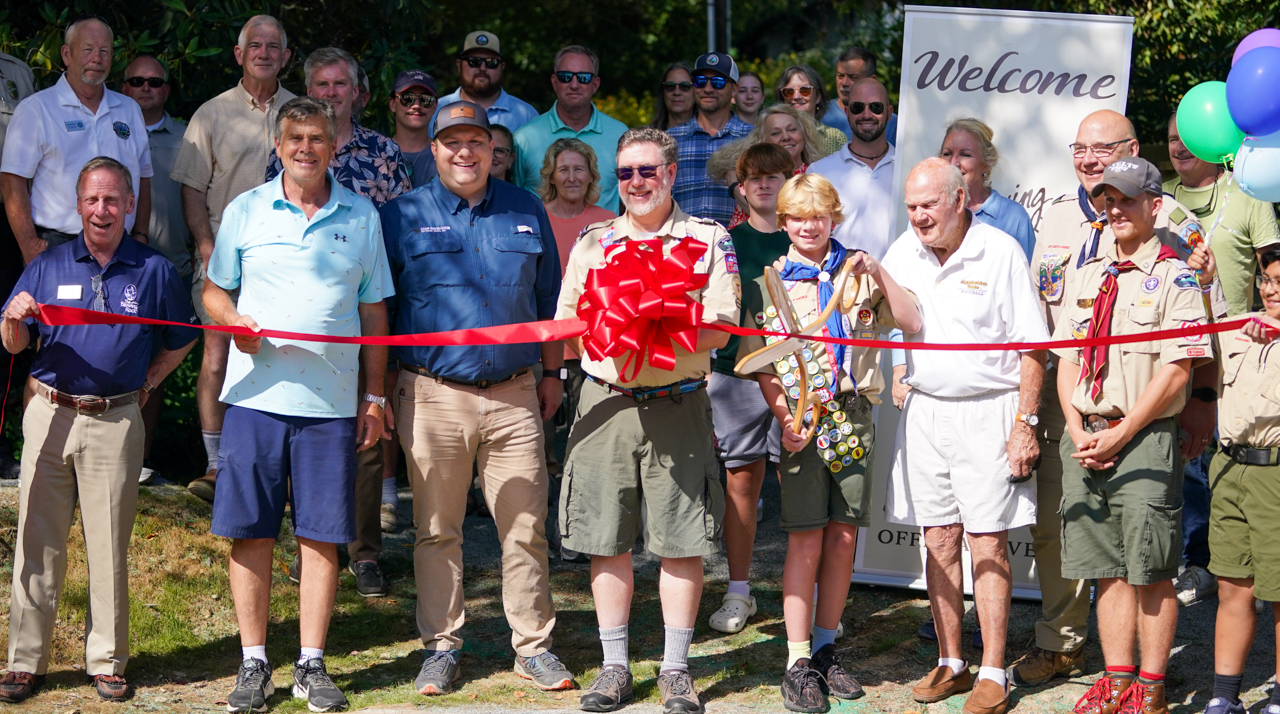
    By David Rogers. BLOWING ROCK, N.C. — It took the better part of five months but Evan Cutlip’s community service project aimed at earning him the Eagle Scout rank is now a reality. Members of the Blowing Rock Chamber of Commerce and representatives of the Town of Blowing Rock were on hand, Sept. 6, for a celebratory ribbon-cutting that officially opened the Blowing Rock Bike Park.

    Cool, In More Ways Than One

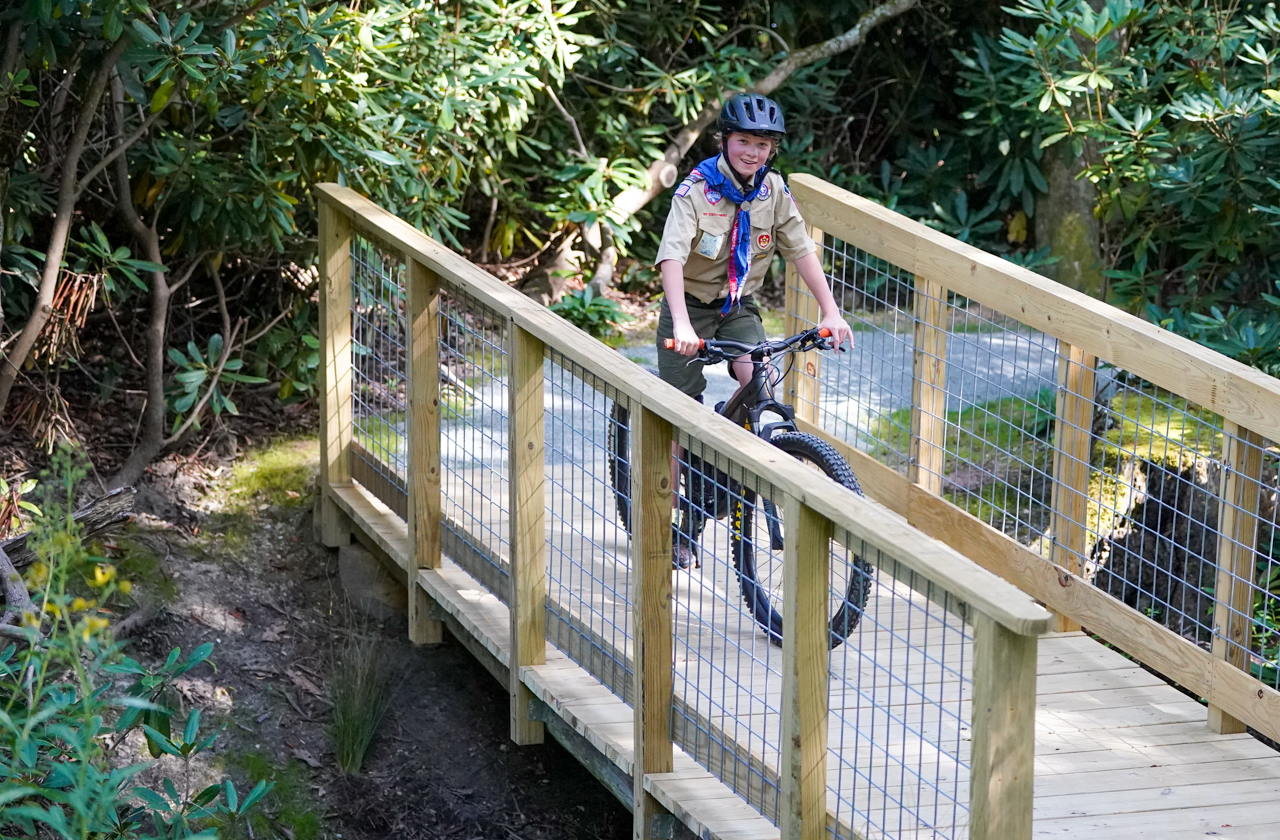
    Carved out of a rhododendron thicket and over a small spring in a corner of Davant Field, alongside Clark Street, the bike trail and “pump track” (through an alternative path) offers kids of all ages an opportunity to negotiate its twists, turns, ups and downs free of charge. As many of the celebrants who walked the course on Sept. 6 found, the cool shade of the trees and rhododendron made for a pretty “cool” trek, indeed, even with the hot sun beating down on those outside the bike park.

    A large crowd gathered to celebrate Evan Cutlip’s Blowing Rock Bike Park ribbon-cutting, incuding former App State football head coach Jerry Moore (to Evan’s left) and other notables. Photographic image by David Rogers

    For Boy Scouts, it is the culmination of having attained 21 merit badges, then completing all the requirements for Eagle Scout, scouting’s highest rank, including some form of “comprehensive community service project,” according to the “Guide to Advancement” published by Boy Scouts of America.

    Eagle Scout: A Storied History, With Many Notables

    According to Boys Life magazine, more than two million boys had earned the Eagle Scout rank by 2009, approximately four percent (4%) of Boy Scouts participants. Notable Eagle Scouts since the program started in 1911 include the likes of movie director Steven Spielberg, astronaut Neil Armstrong, NFL running back David Montgomery, Supreme Court justice Stephen Breyer, cardiothoracic surgeon William DeVries, poet Lawrence Ferlinghetti, aviator and adventurer Stephen Fossett, NFL coach Chan Gailey, animator/cartoon artist Bill Hanna, billionaire businessman J.W. Marriott, Jr., former U.S. Secretary of Defense Robert McNamara, NFL head coach Jim Mora, North Carolina Supreme Court Justice Paul Newby, U.S. Navy Admiral Elmo Zumwalt, among many, many others.

    Without question, young boys becoming men gain a lot in their education and personal development that can lead to success in their personal and professional lives as they grow older.

    It was a well-decorated and poised Evan Cutlip who addressed the crowd gathered for the official opening of his Blowing Rock Bike Park on Sept. 6, his community service project aimed at earning Eagle Scout rank. Photographic image by David Rogers
    Valuable Leadership Development

    Evan’s father, landscape architect and golf course designer Ron Cutlip, is also an Eagle Scout. He explained to High Country Sports, “The process is challenging and the leadership development skills it pushes you toward are invaluable. Imagine a 14-yearold boy standing before town council being grilled by the mayor and commissioners just like he might be proposing to build a $40 million hotel on Main Street!

    “For that boy, it is an invaluable experience,” added the elder Cutlip. “For this project, not only did he have to design it and sell it to the town council, but he had to do the construction planning, budgeting, recruit the needed help, solicit materials and then coordinate all the volunteers who were willing to give their valuable time and energy. I am really proud of Evan for his accomplishments with this project.”

    In answer to High Country Sports‘ questions, Evan Cutlip revealed that he at first considered three different sites around Davant Field for the Bike Park, including the one on which he finally decided. Among the unforeseen challenges was track erosion on the lower part of the course, which prompted him to design and install a drainage system to divert water under the track.

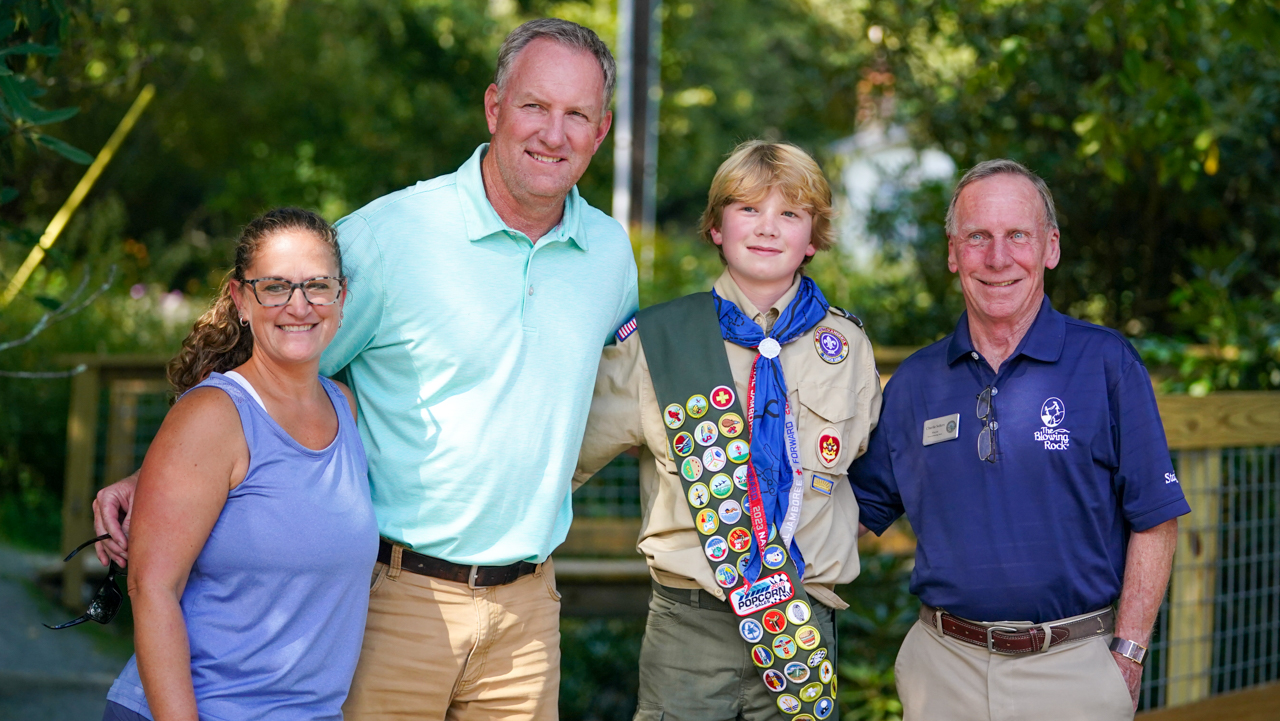
    Ron, Evan and Cheryl Cutlip on Sept. 6 for the ribbon cutting of the Blowing Rock Bike Park. Photographic image by David Rogers
    Laughs, Of Course

    The Cutlips also earned “best humor” recognition for the event.

    Serving as emcee for the ribbon-cutting ceremony and introducing his son, Ron Cutlip recalled sitting in the audience to watch his son be questioned by members of town council.

    “I think it might be the first time they ever voted unanimously for something!” quipped Cutlip, smiling at the audience that included Mayor Charlie Sellers, Commissioner Doug Matheson, Interim Town Manager Kevin Rothrock and Parks and Recreation Director Jennifer Jennifer Brown.

    Top honors getting laughs go to Evan, though, when asked whether he did the project all by himself or whether he had any kind of help. In reply, he deadpanned, “Of course, I did it all by myself…” — before quickly reversing course and rattling off the people and businesses that contributed.

    The Town of Blowing Rock worked closely with Evan Cutlip on his community service project aimed at becoming an Eagle Scout. Pictured are Jennier Brown (Parks & Recreation), Kevin Rothrock (Interim Town Manager), Cutlipm and Mayor Charlie Sellers. Photographic image by David Rogers

    Donations of money and materials included Appalachian Ski Mountain, Town of Blowing Rock Parks & Recreation (Jennifer Brown, Director), Town of Blowing Landscape Crew (Cory Cartheat), Dr. Basil and Patricia Cutlip, Greg and Jean Hebert, Highland Landscape Supplies, J.W. Hampton, Lowe’s, New River Building Supply & Lumber, 01 Masonary, Rhoddie Bicycle Outfitters, Tractor Farm Supply, Wil Townsend, and Vulcan Materials.

    Volunteers — several of whom had previously earned Eagle Scout rank — included Boy Scout Troop 109 (Gus, Thad, Kosmo, and Sam), Nelson Banegas, Ben Critcher, Mike Trew, Drew Critcher, Camden Brock, Mike Brock, Cheryl Cutlip, Ron Cutlip, John Greene, Kristian Jackson, Scotty Moretz, Matthew Moses, Eli Rice and Kevin Huff.

    Evan Cutlip crosses one of the bridges on the Blowing Rock Bike Park that he built as an Eagle Scout community service project. Photographic image by David Rogers
    RELATED STORIES
    RELATED LINKS