Author: David

  • It takes three OTs, but Mooresville gets by Watauga WSOC in first sudden death period, 1-0

    By David Rogers. BOONE, N.C. — For a soccer match featuring teams with almost identical regular season records, the May 20 match between Watauga and Mooresville in Round 3 of the NCHSAA 4A state playoffs was a fitting celebration of both teams’ accomplishments. Tied at 0-0 at the end of regulation and still tied that way at the end of two overtime periods, a defensive battle that saw only a handful of meaningful attacks on goal was thrust into sudden death OT.

    BONUS PHOTOS at bottom of article. For best viewing on desktop monitors or laptops, please click on any image for Slide Show mode.

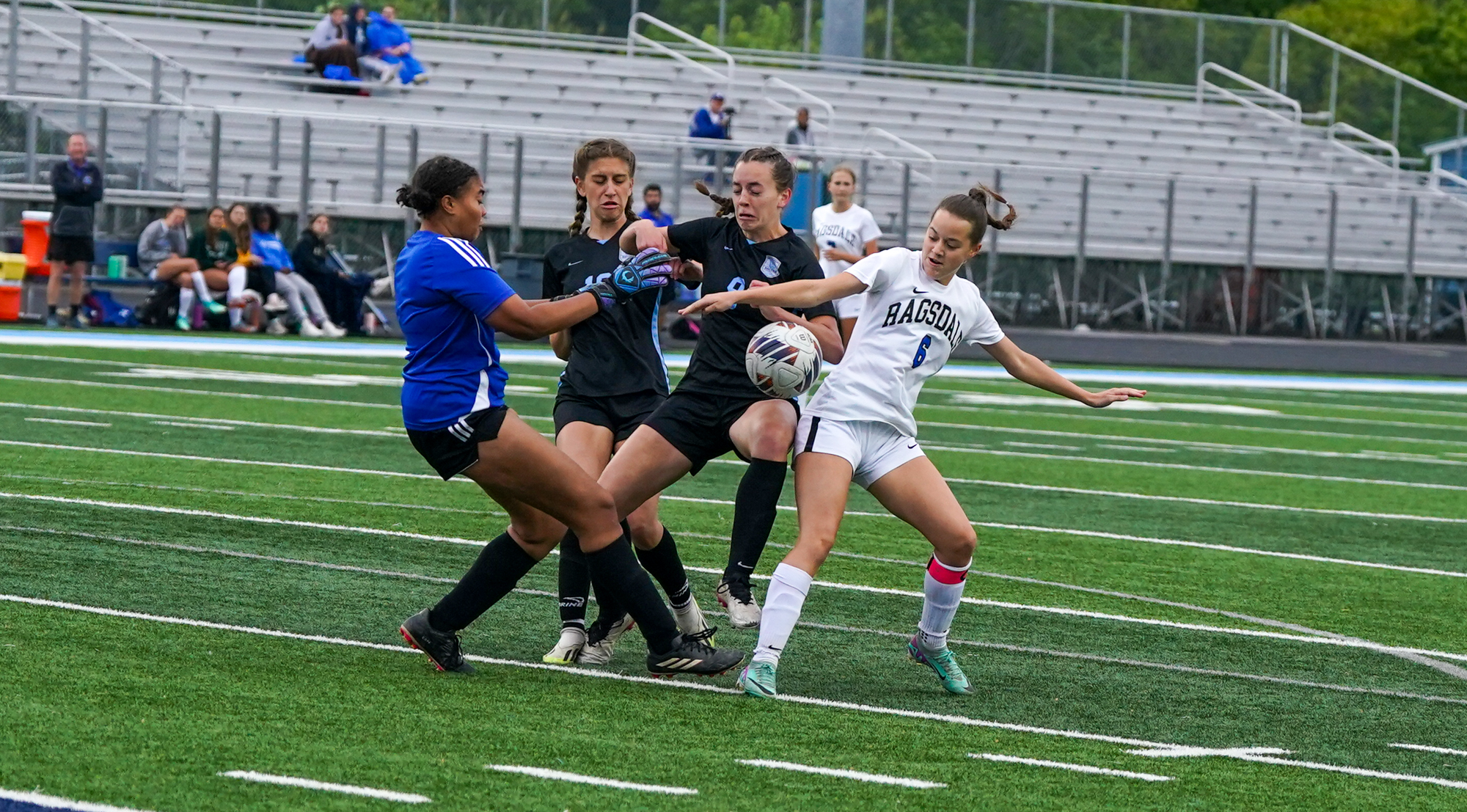
    Incidental contact inside the Watauga-defended penalty box sent players from each team sprawling to the turf, but the referee decided the Watauga defender was overly aggressive on the play, issued a yellow card, and awarded a penalty kick to Mooresville, midway into the first sudden death period. It is not the way you expect a match of this character and magnitude to end — and it almost wasn’t.

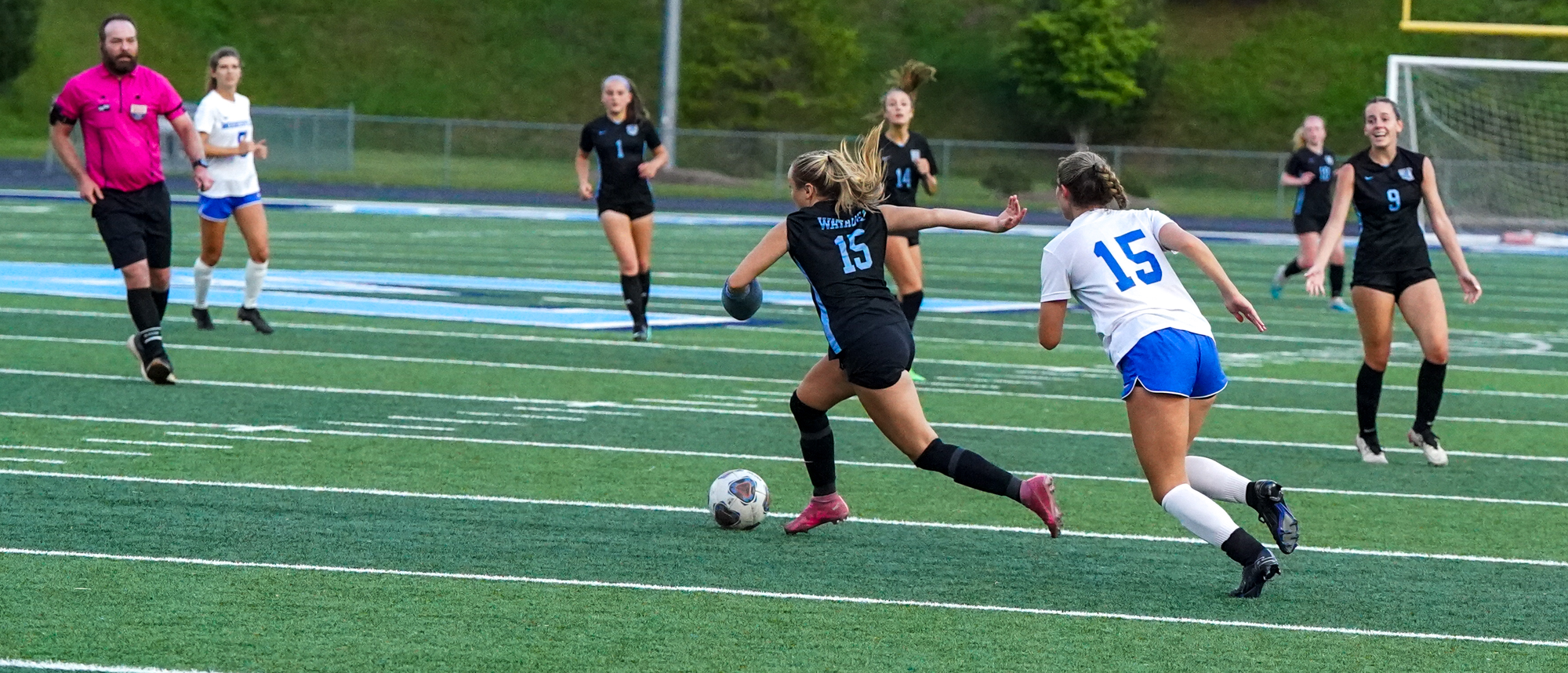
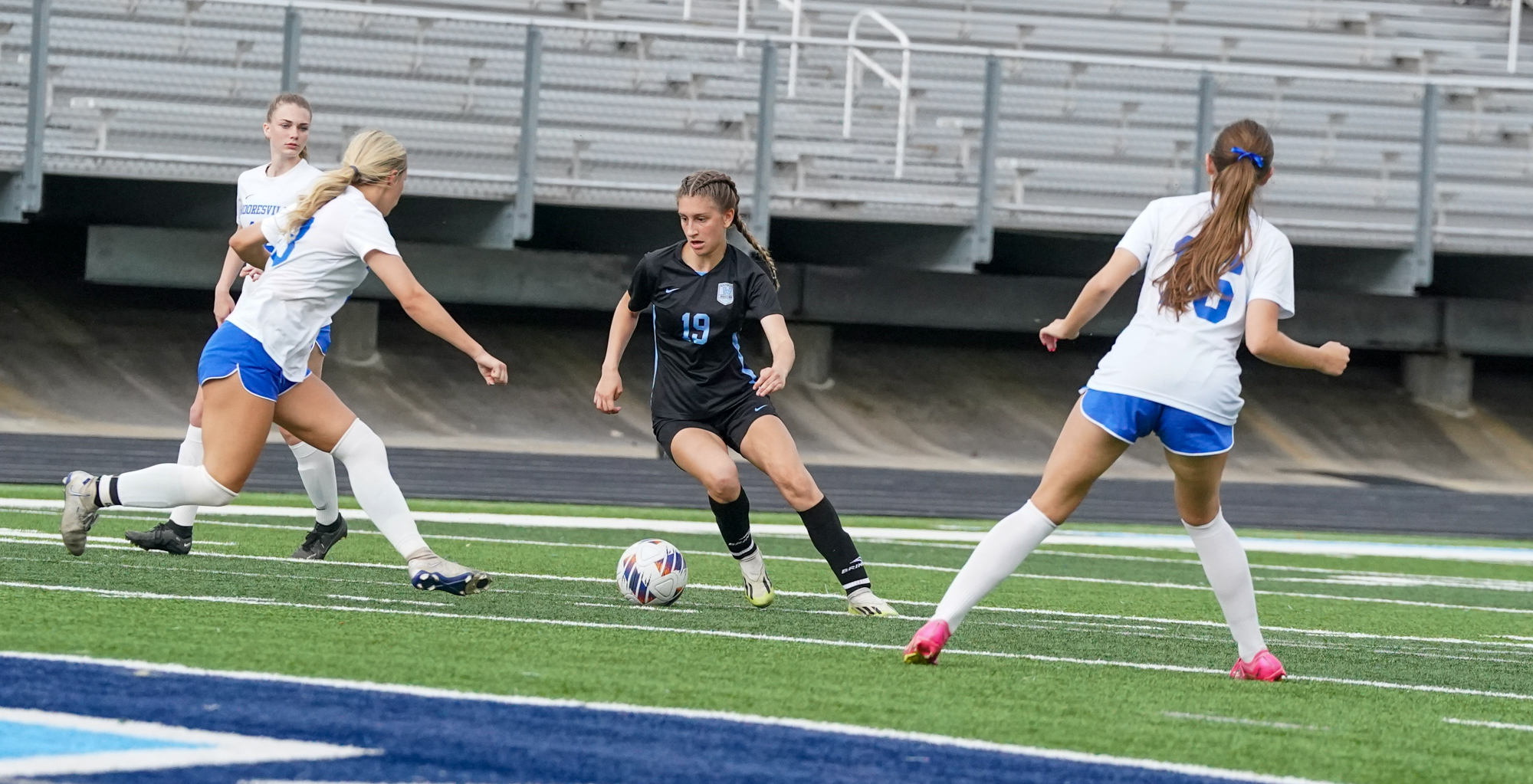
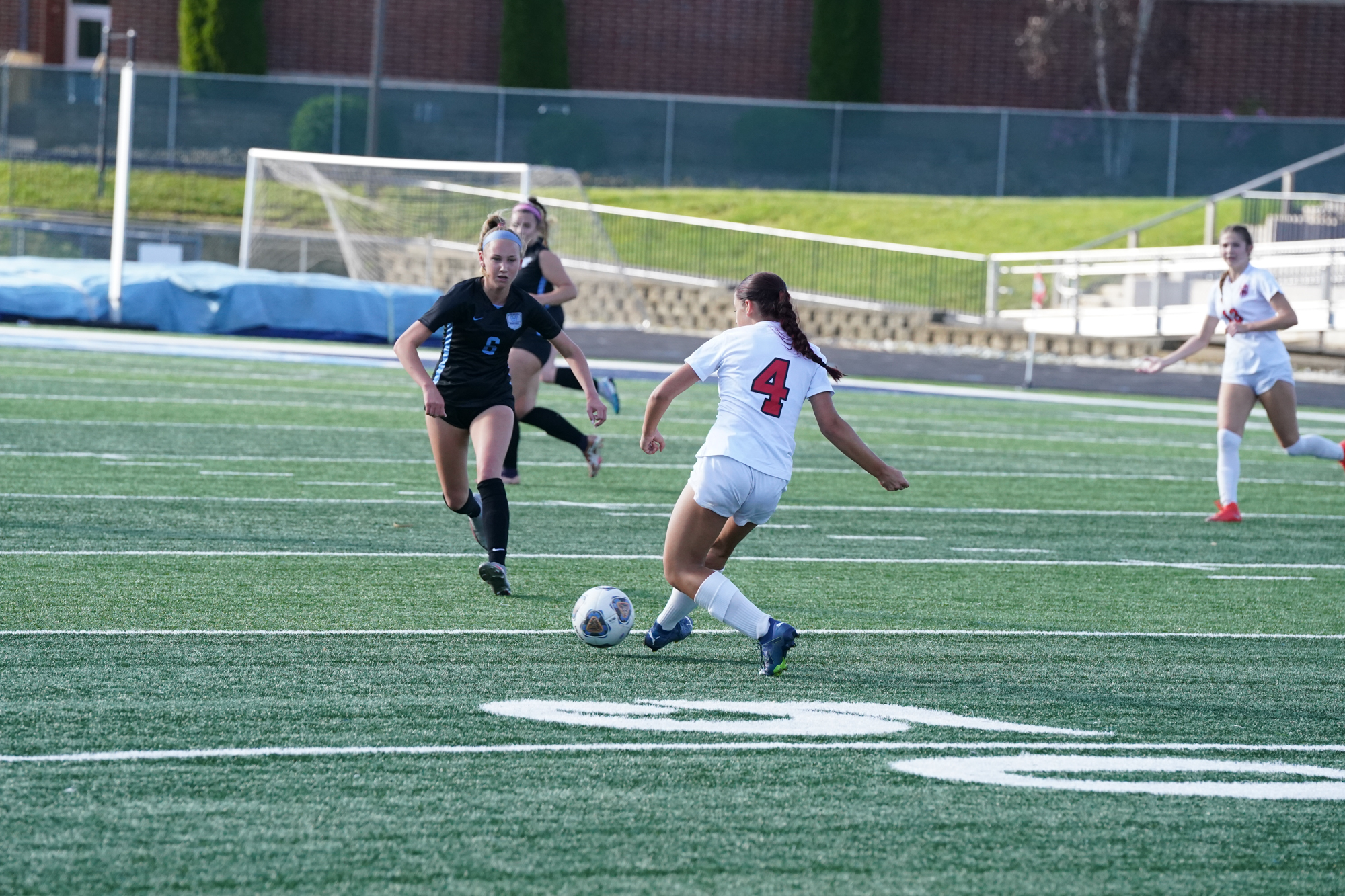
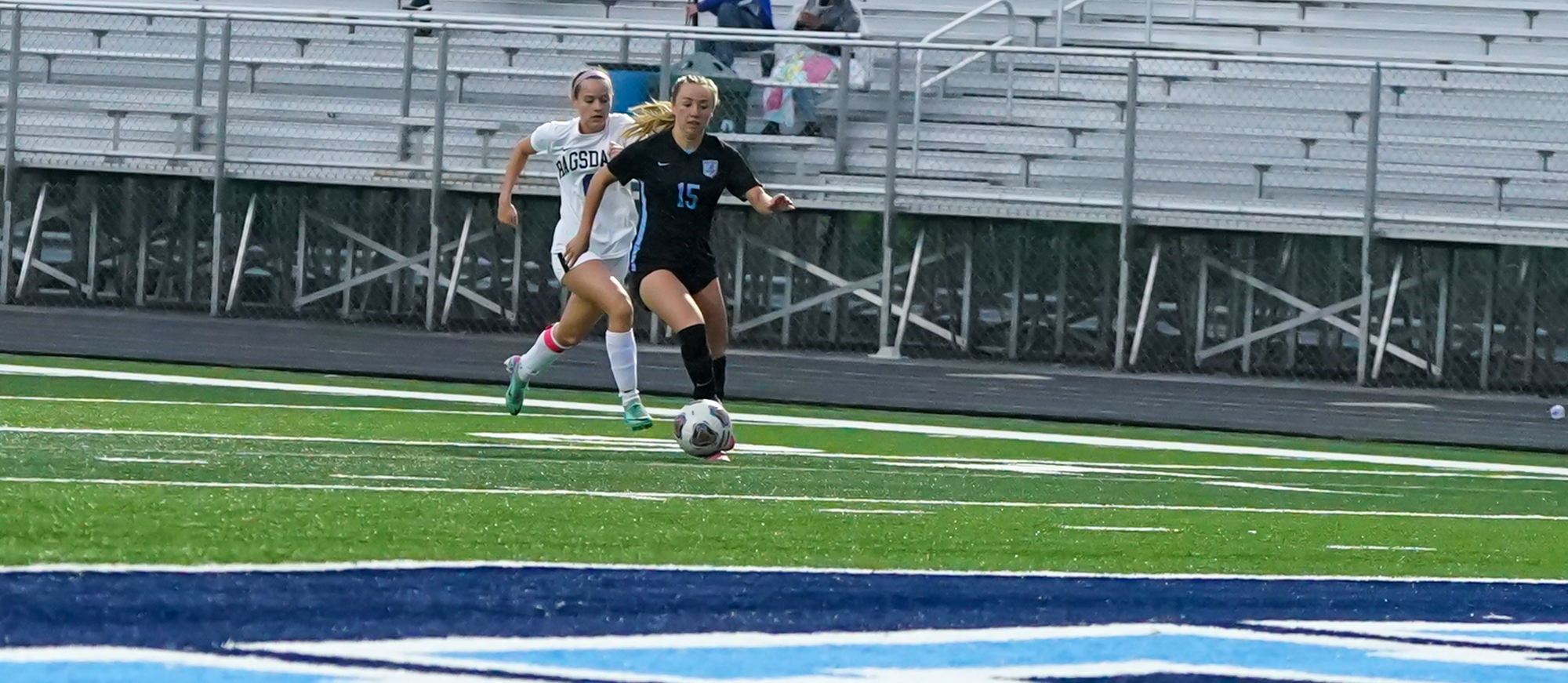
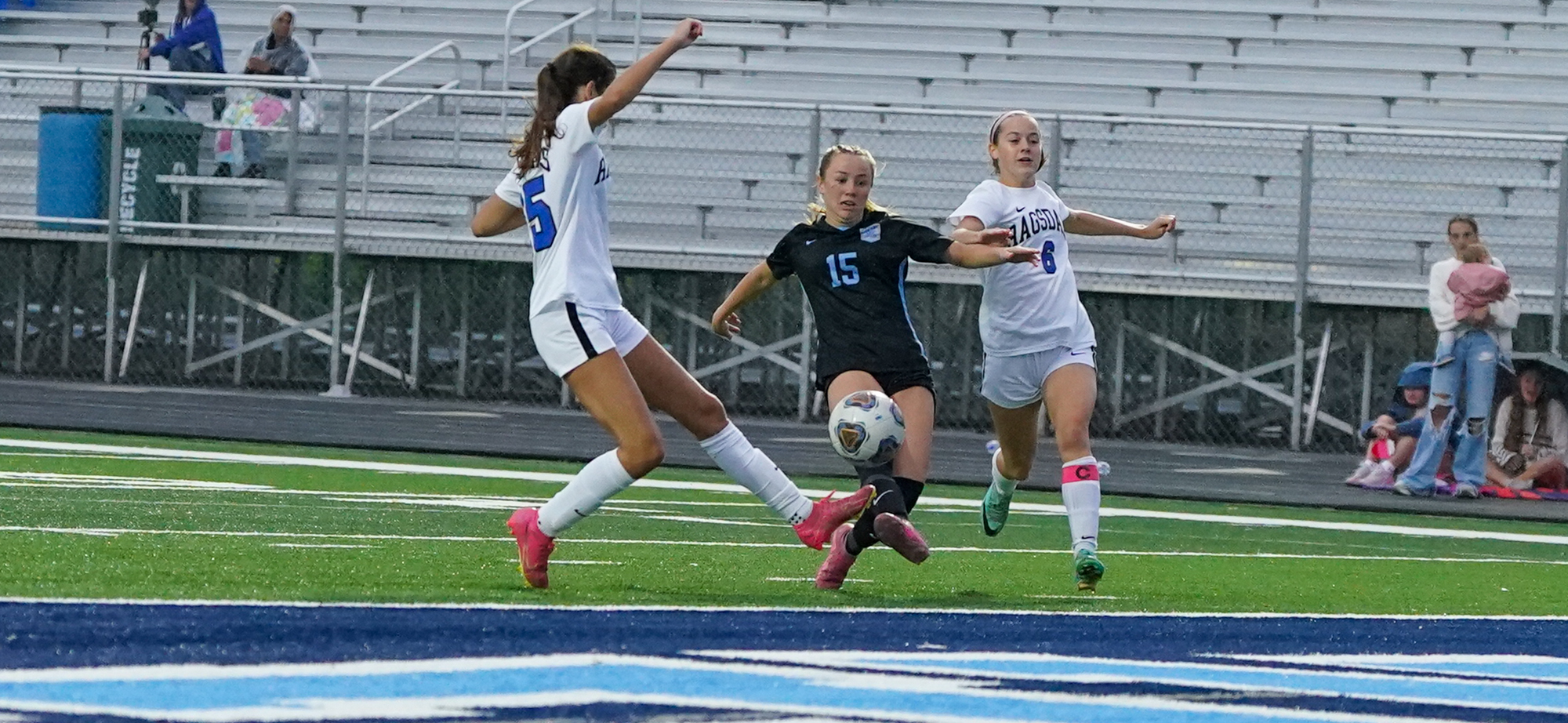
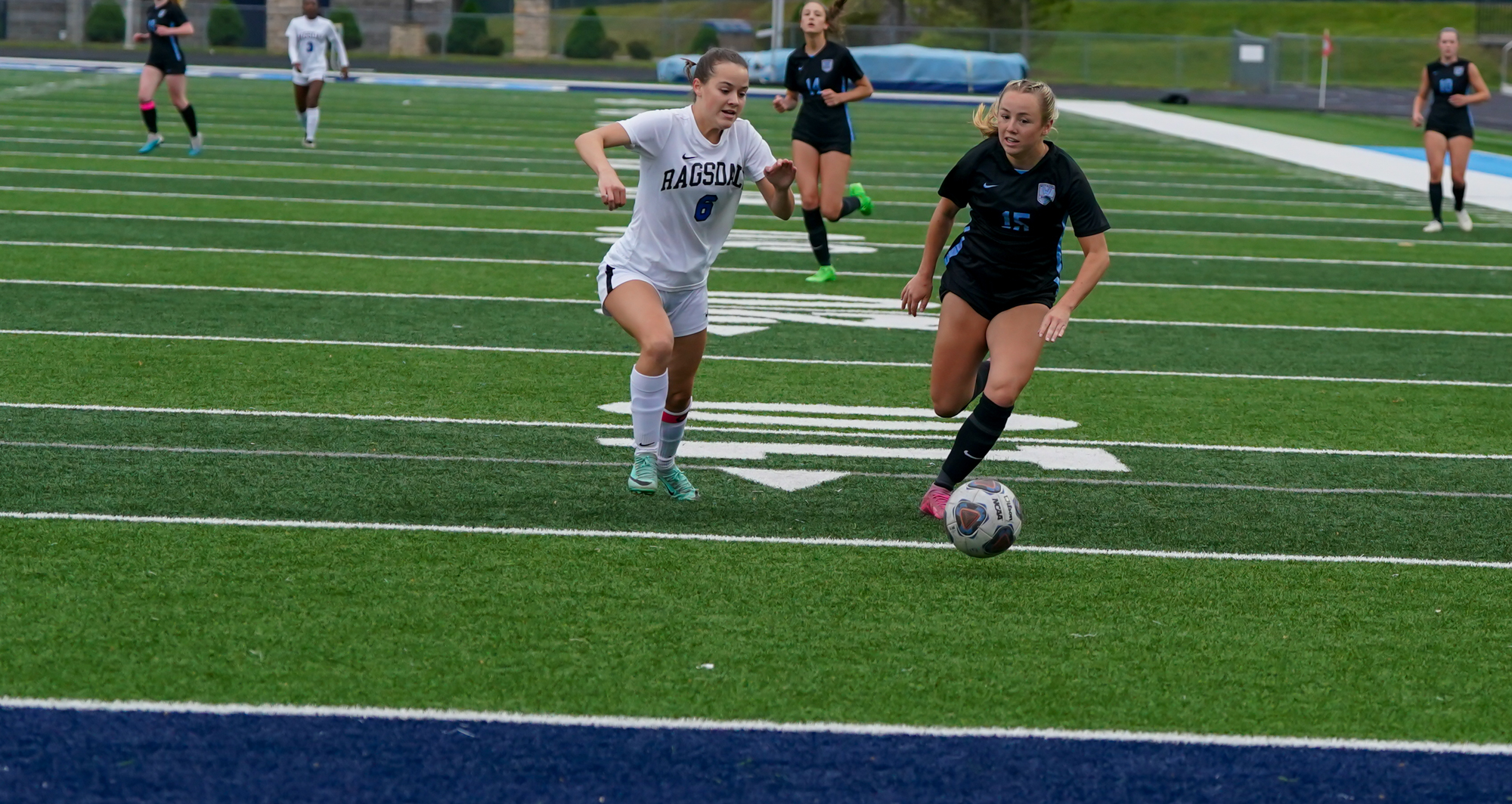
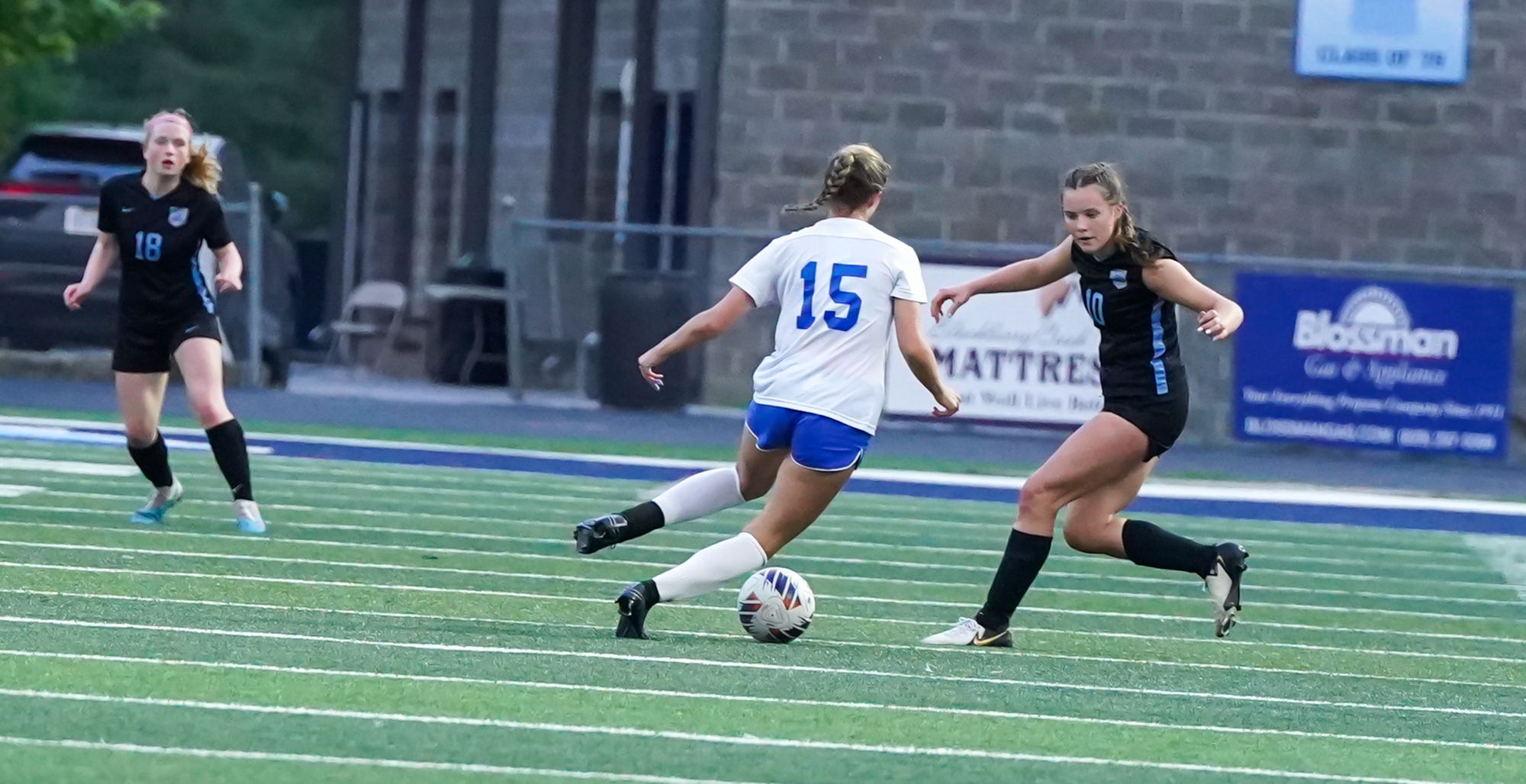
    With Watauga’s Sydnee Bryant (18) looking on in the background, sophomore defender Ali Bertrand (10) pressures Mooresville’s Siena Peruc (15) on May 20. Photographic image by David Rogers

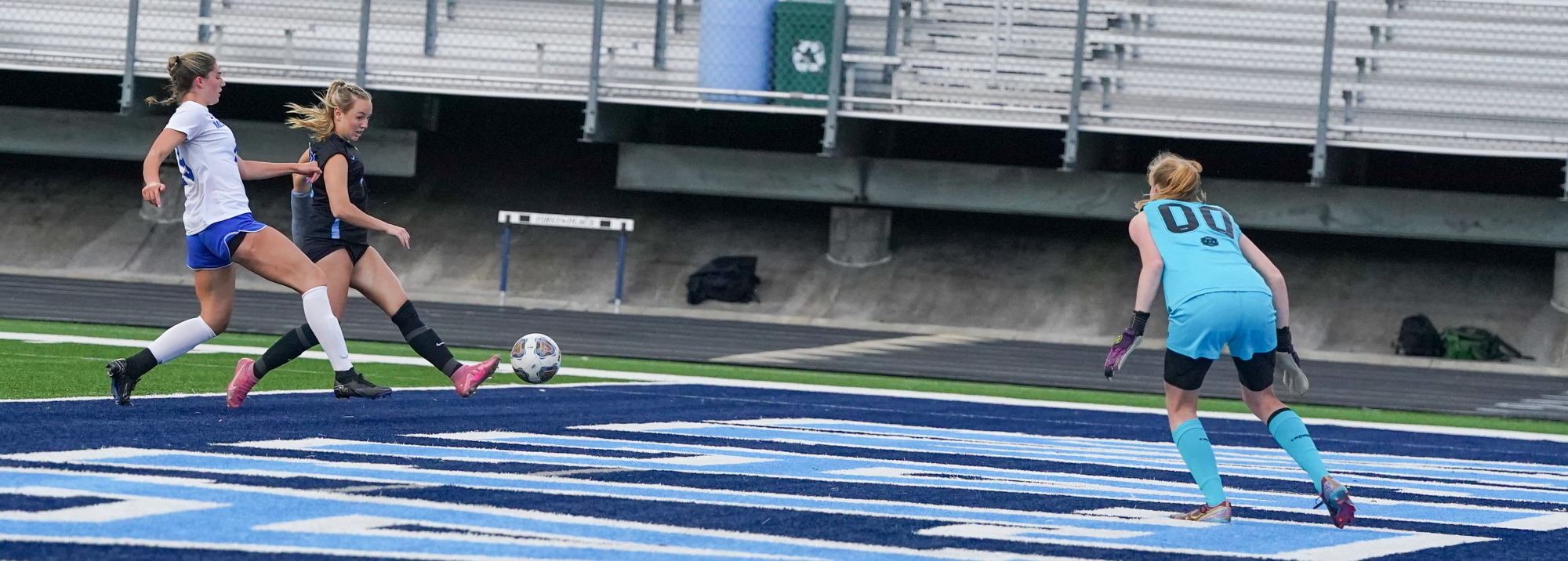
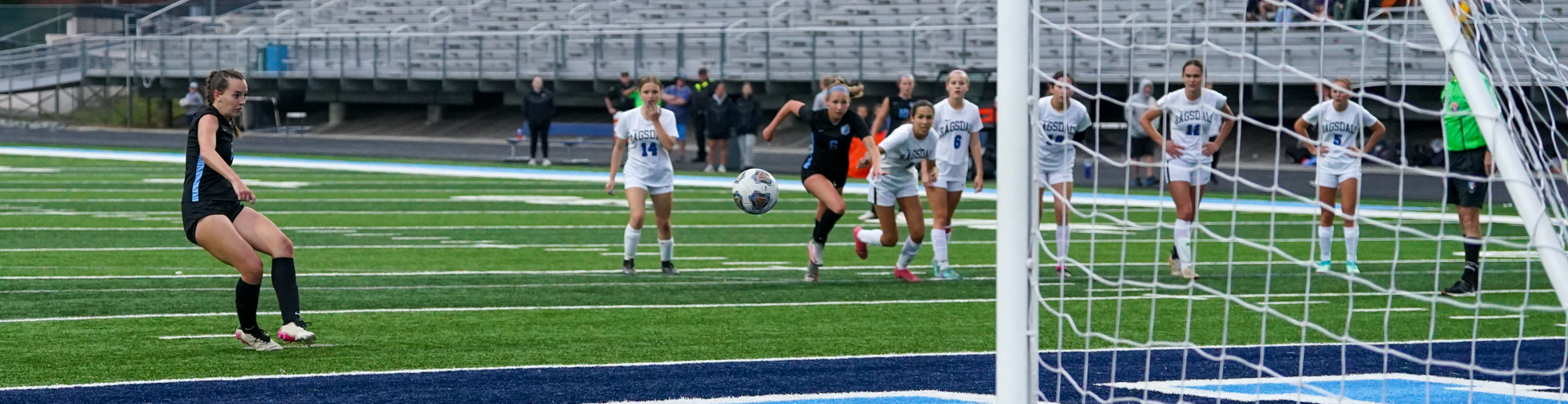
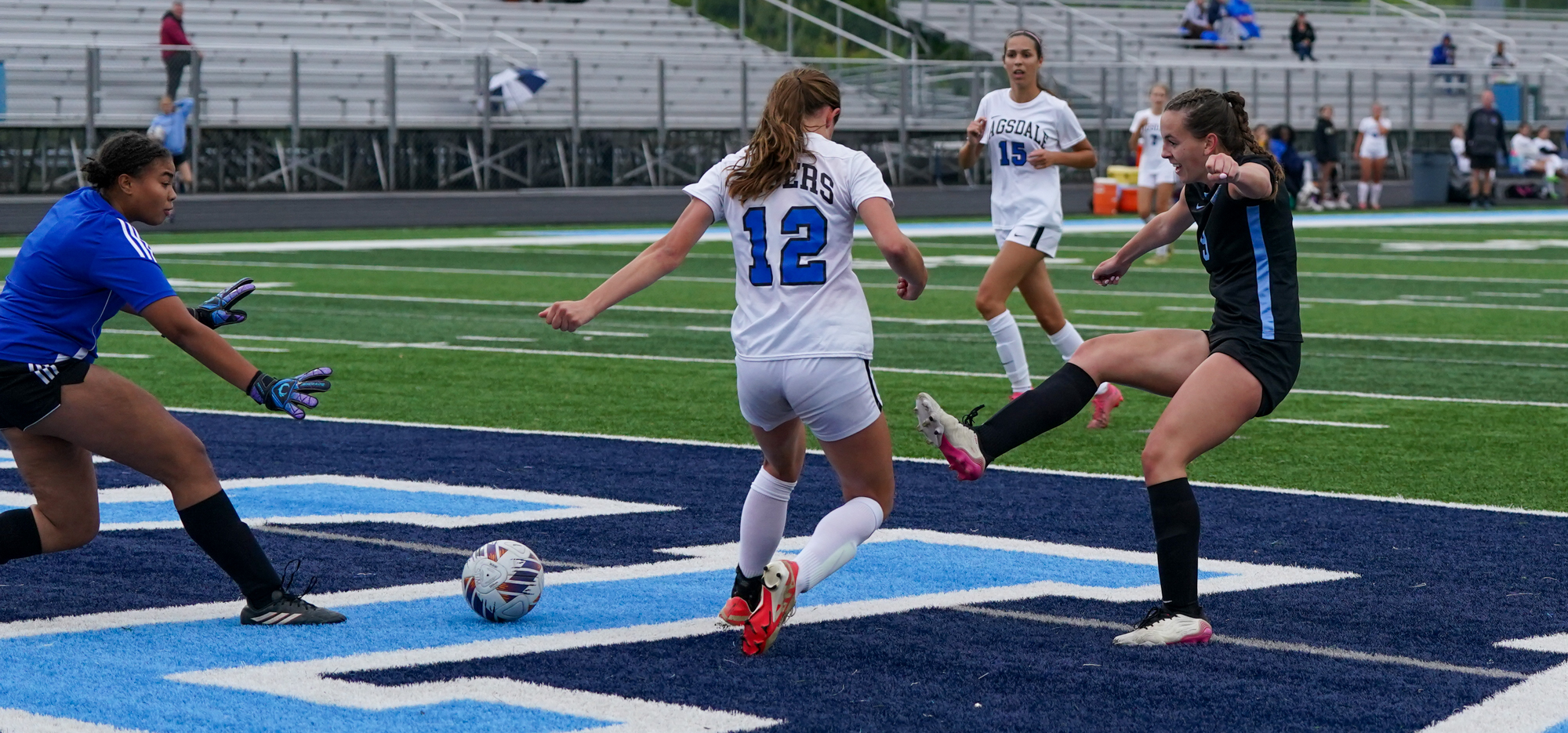
    The visiting Blue Devils’ junior midfielder Cameron Cline pummeled the PK ball toward the Watauga net, where goalkeeper Rylee Mitchell at first turned away the shot. In the mayhem that followed around the deflected ball in front of the Watauga goal, Cline found it again and pushed what had been an elusive orb toward and into the Pioneers’ goal for what turned out to be the game decider. The Mooresville sideline erupted, rushing in celebration to surround Cline. One by one, with intermixed hugs and sobs, the Pioneers drifted to the Watauga bench, a highlight-reel season’s end.

    It was another one of those games where you hated that someone had to lose. Mooresville dominated possession in their attacking half of the field for much of regulation time, repeatedly turned away by a disruptive Watauga defense, including close to a dozen saves by Mitchell. Watauga’s normally dominant offense didn’t have many opportunities this time out, but had arguably some of the most dramatic attacks on goal — saved by the Blue Devils’ goalkeeper, senior Briton Warham.


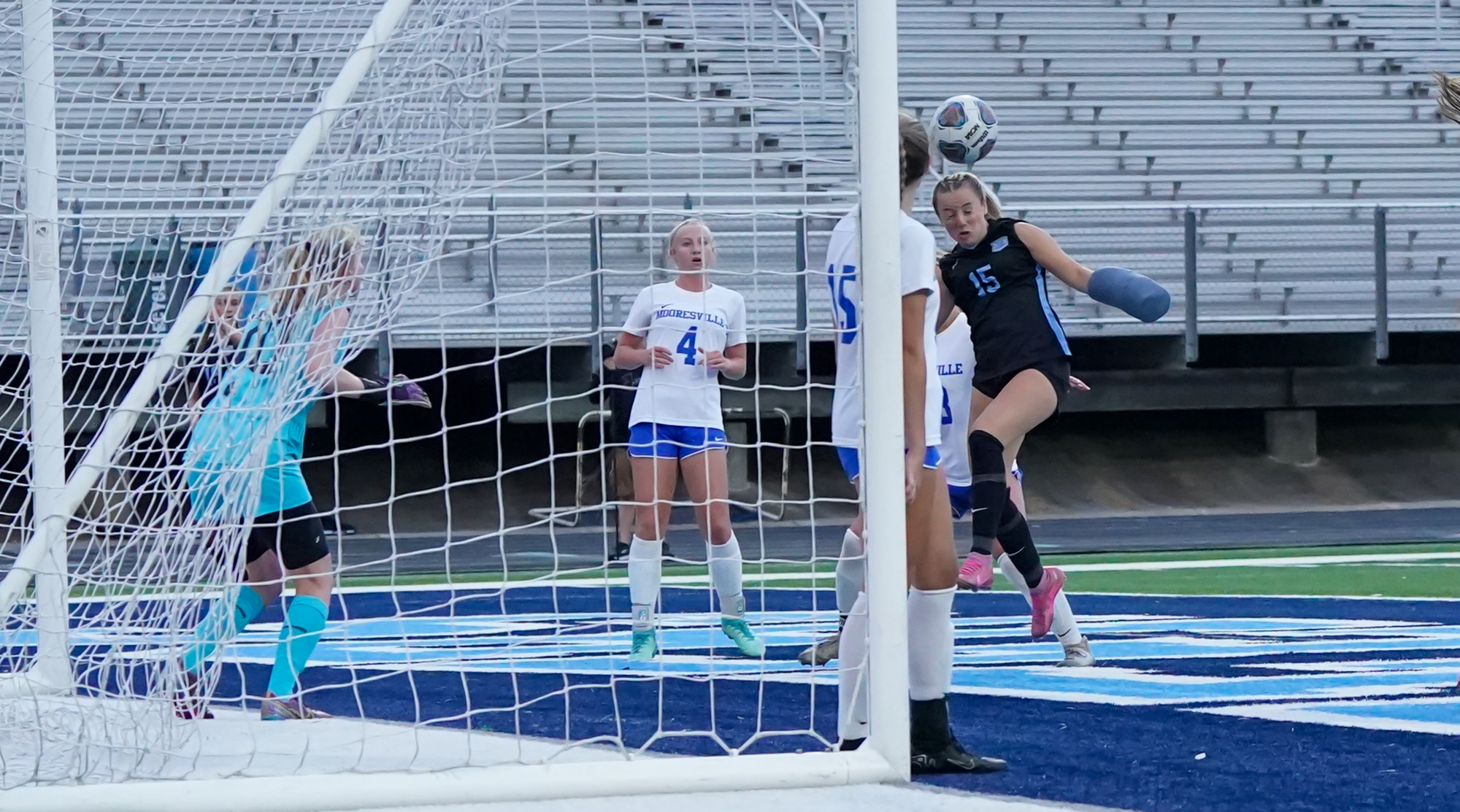
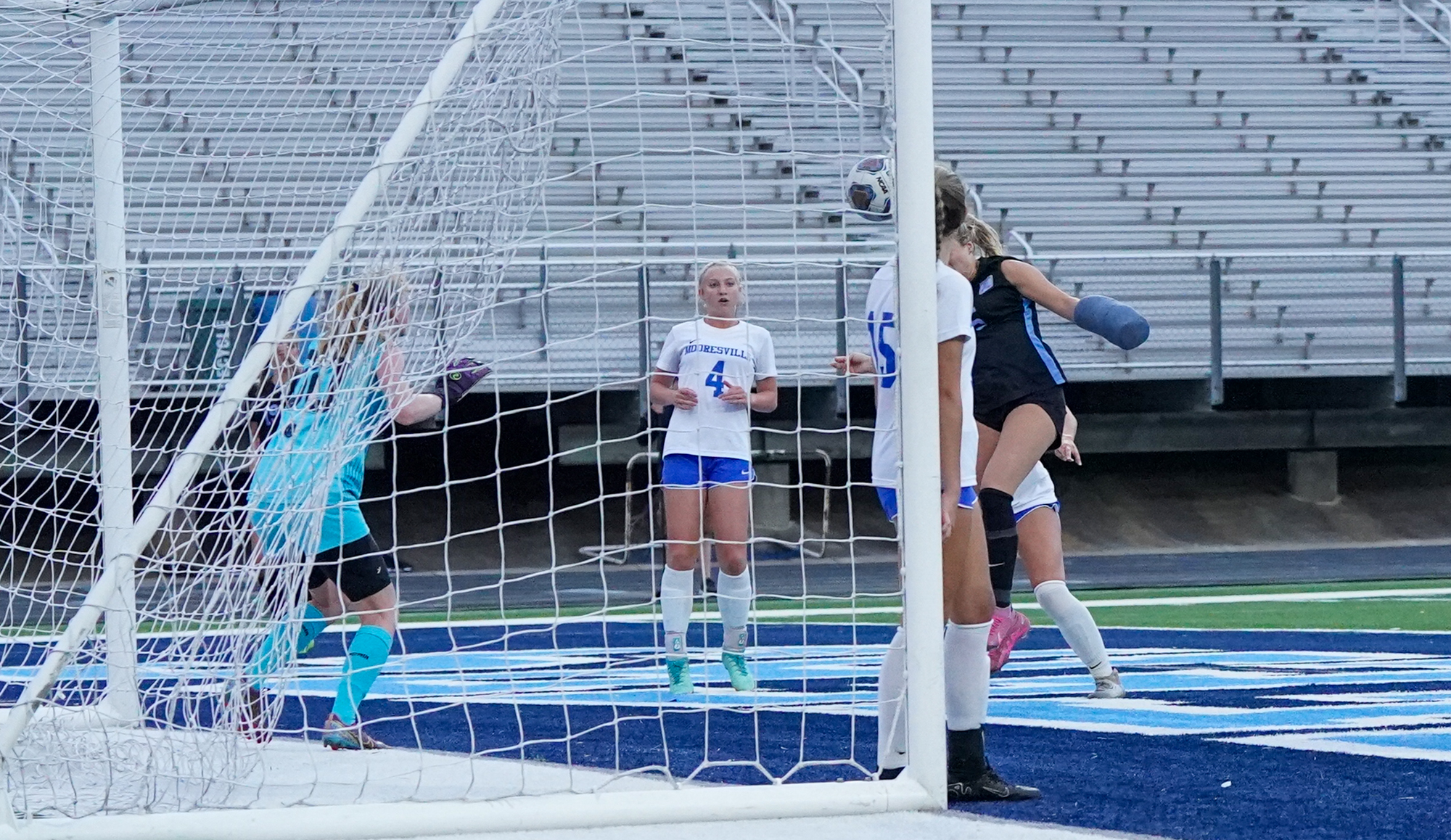
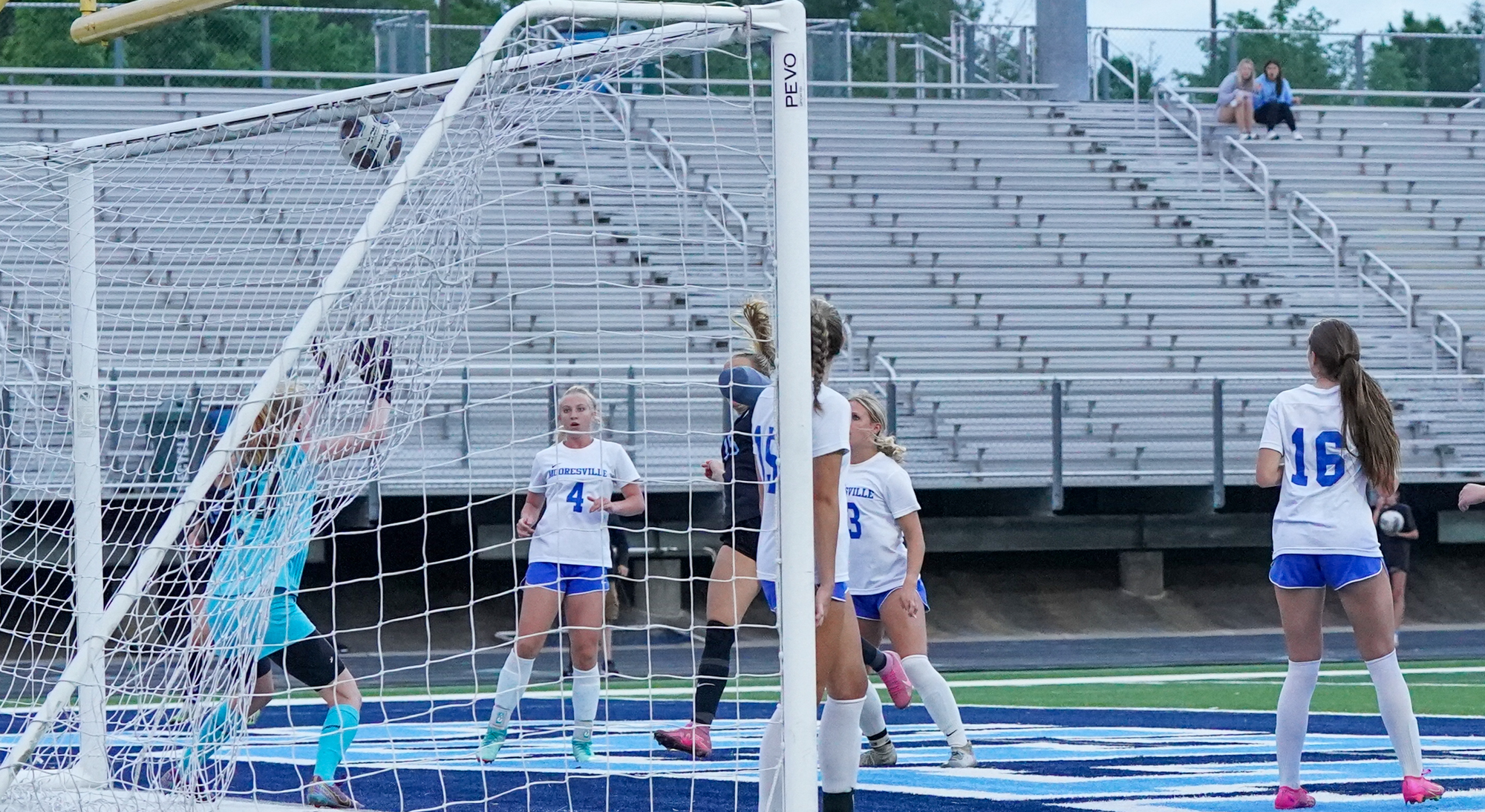
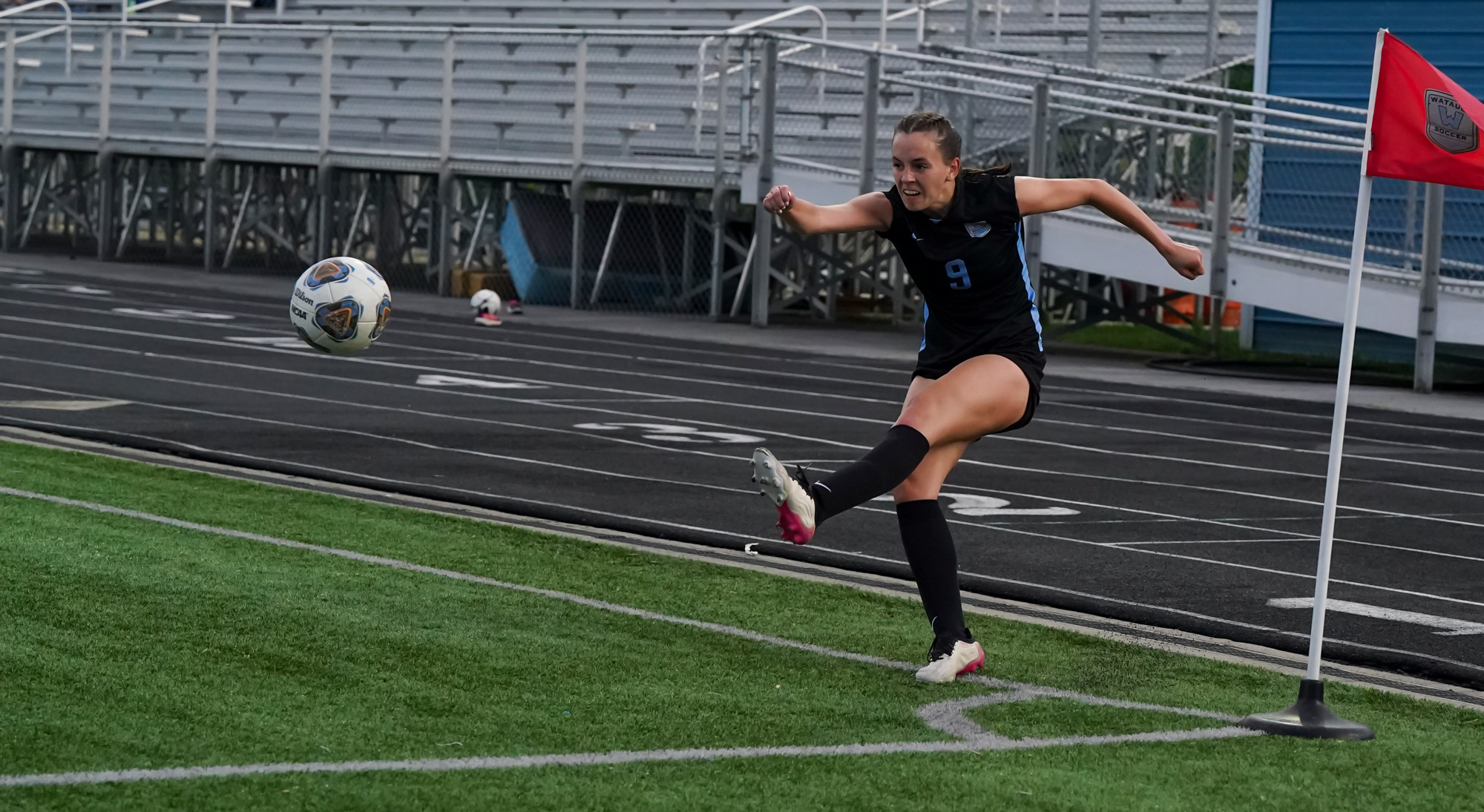
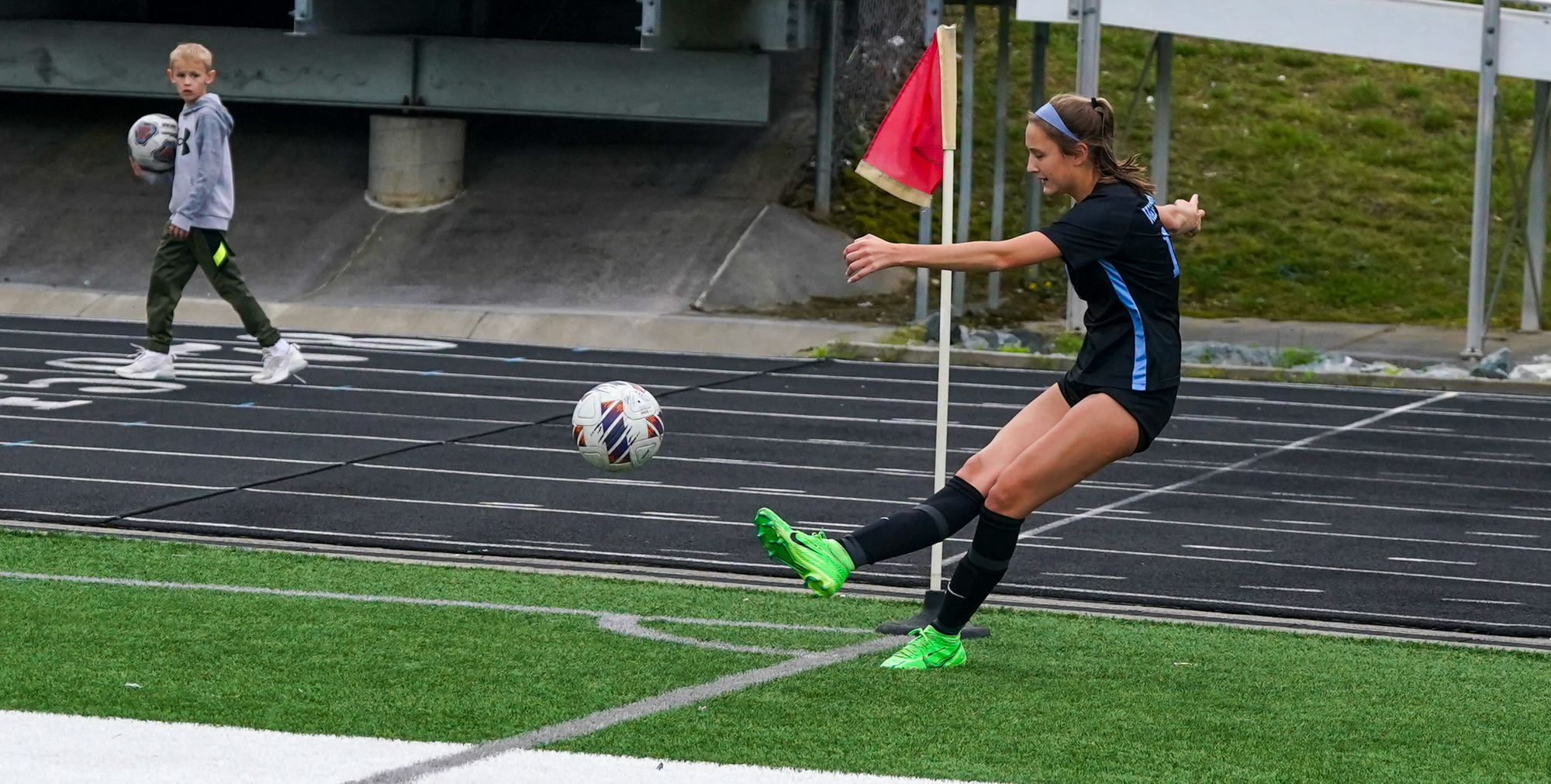
    Watauga’s ‘almost goal’ sequence during OT. Off a corner kick by Mattie Durham, Katie Durham spots up in front of the Mooresville goal for a header.

    Header delivered, aimed for the upper reaches of the net…

    Ball strikes the upper crossbar, caroms off and is cleared by a Mooresville defender.


    “Mooresville is a solid team,” said Watauga head coach Chris Tarnowski after the game. “They have had an historic season, winning their conference for the first time in 20-something years.

    “And you saw it tonight,” he added. “They possessed the ball well. They worked the ball around well. What kept us in the game was heart and character. Even if we’re not getting the ball and not able to play our game, we have players throwing themselves in front of crosses, clearing the ball, making that one last run. (Mooresville) walks away with the win but I walk away really proud of our heart and character, all the way through almost two hours of soccer.”

    Watauga’s trademark attacking style includes one- and two-touch short passes, keeping possession and working the ball methodically downfield. Against Mooresville, it was hard to implement.

    “I think you have to credit Mooresville,” Tarnowski conceded. “They closed down space far faster than what we are used to seeing. They were nullifying any chances that we were getting to move the ball. They came out with a lot of energy and a good game plan.”

    Tarnowski had some additional high praise for his roster depth, particularly Elyse Rea.

    “My gosh, we didn’t have any dropoff at all,” said the Pioneers’ chief mentor. “Sammy Morgan came out with some calf cramps and we were basically trading freshman for freshman. Elyse comes off the bench and we don’t skip a beat — and she plays 60 full minutes, blending in with four seniors on defense like she has been there all the time. We lose a really strong senior class but we have some really strong underclassmen, too. As coaches, it may be hard tonight but we are already looking forward to next year!”

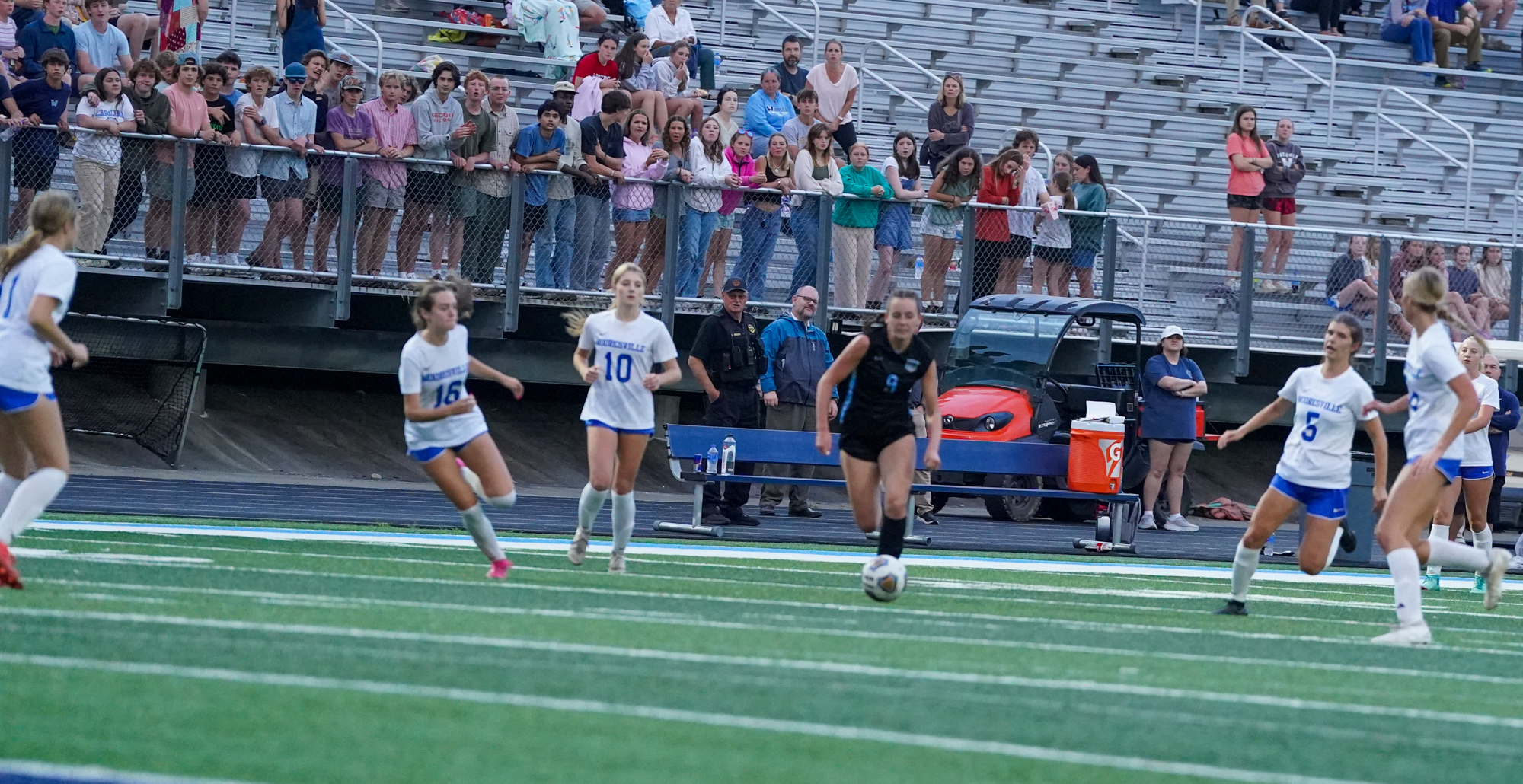
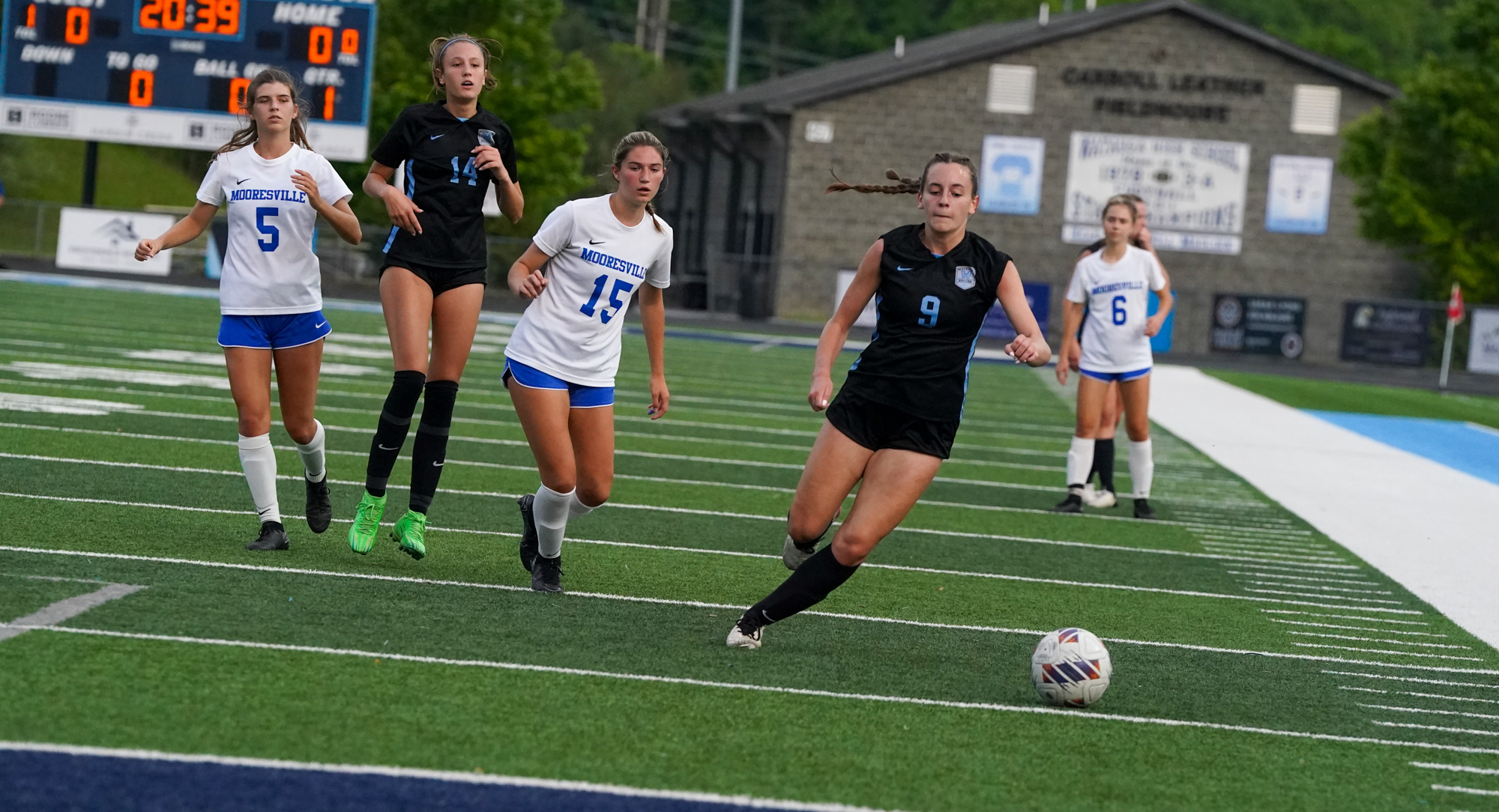
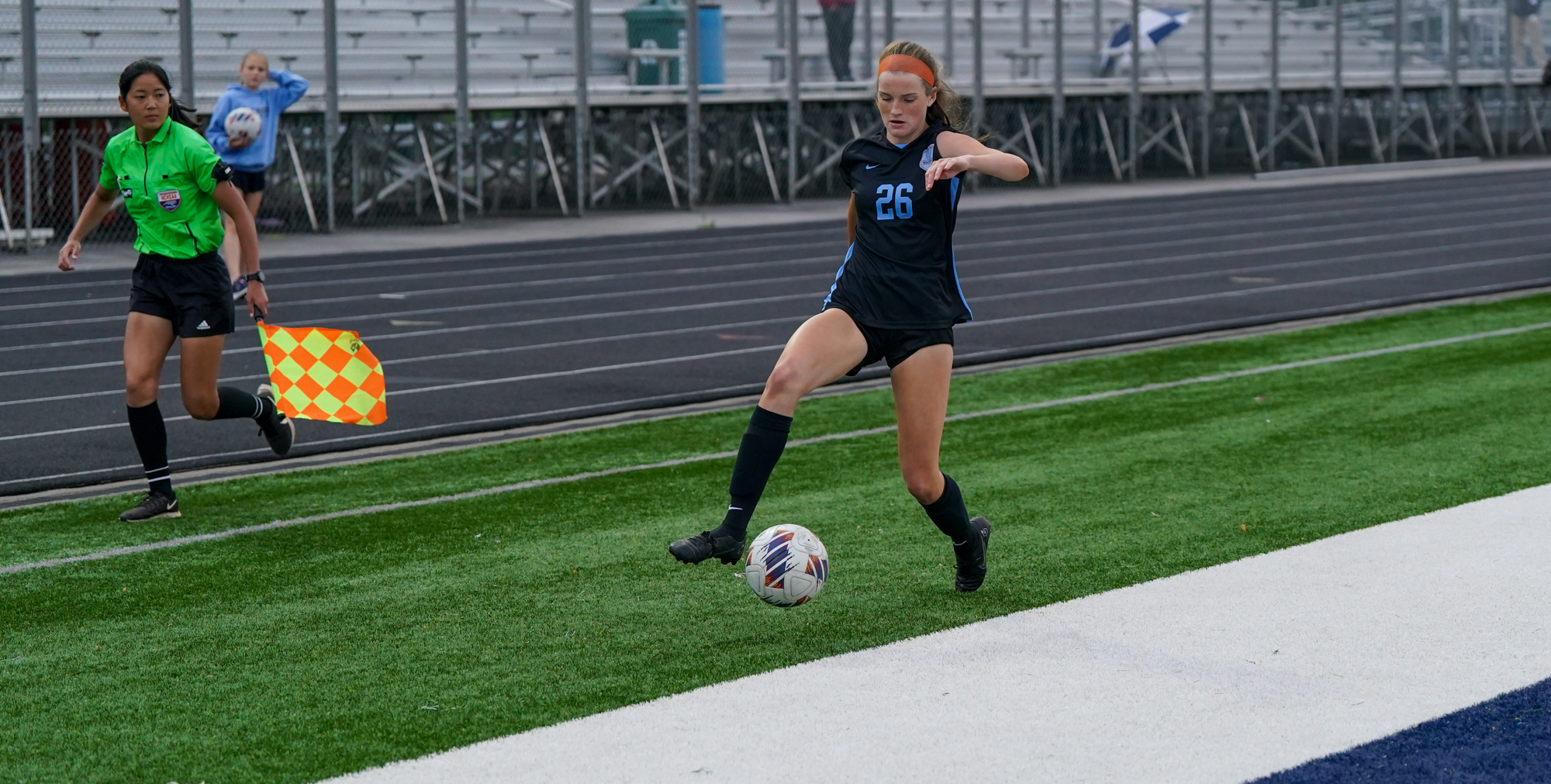
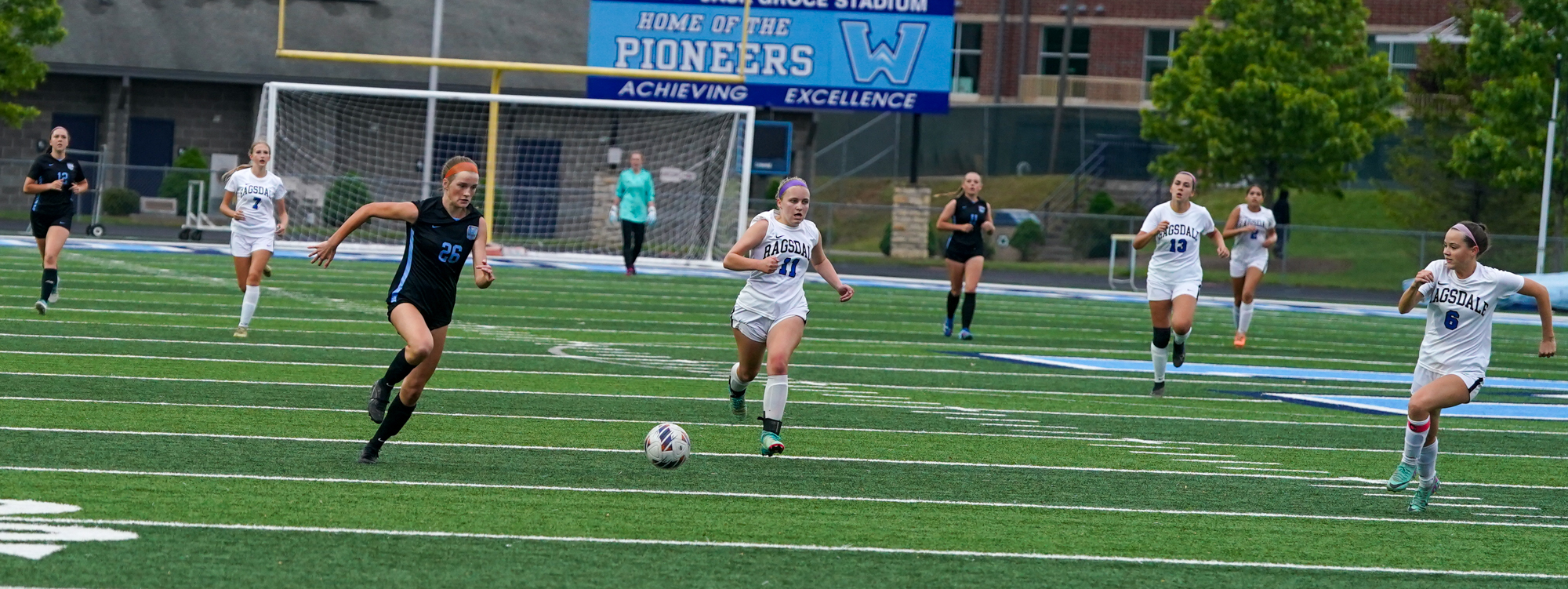
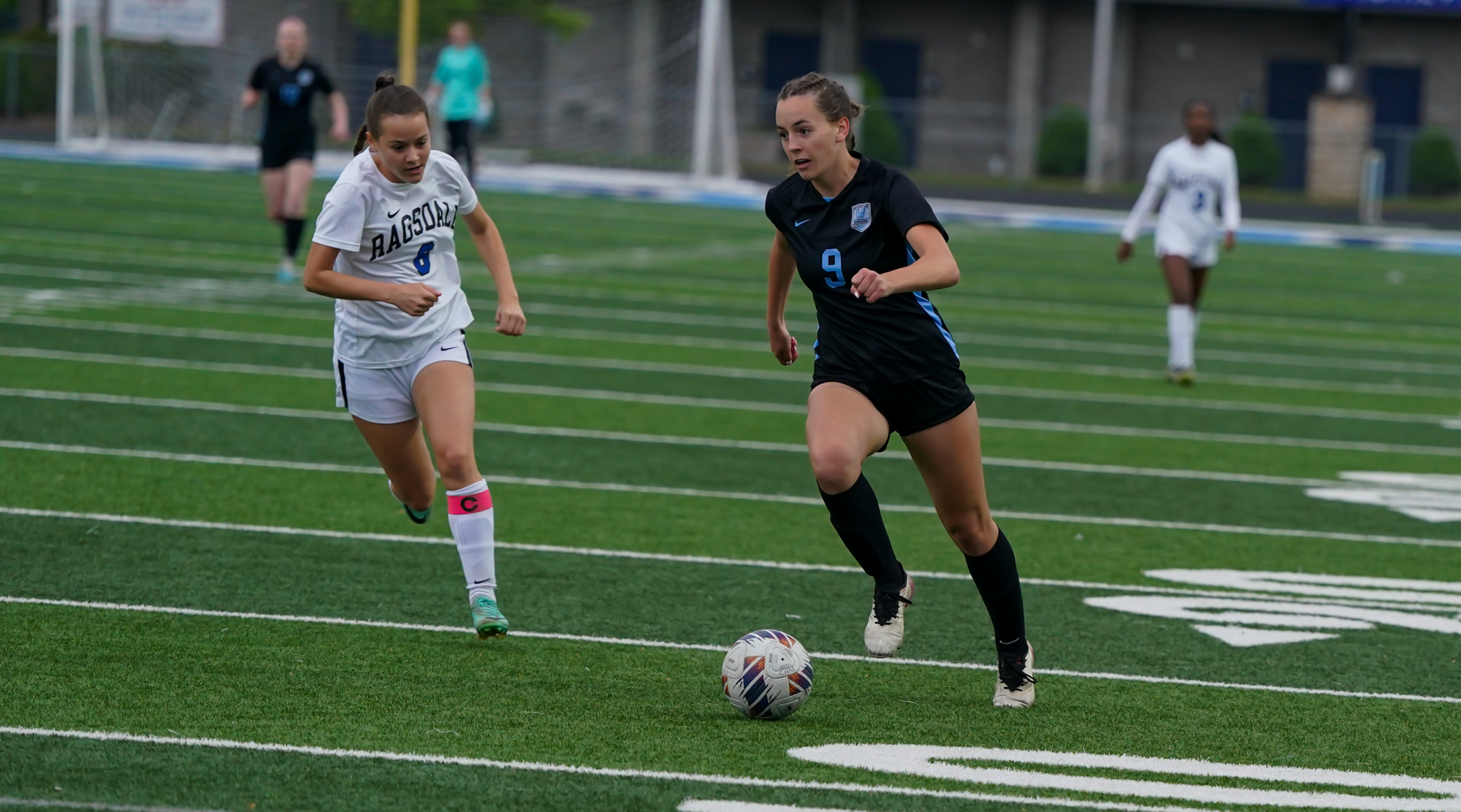
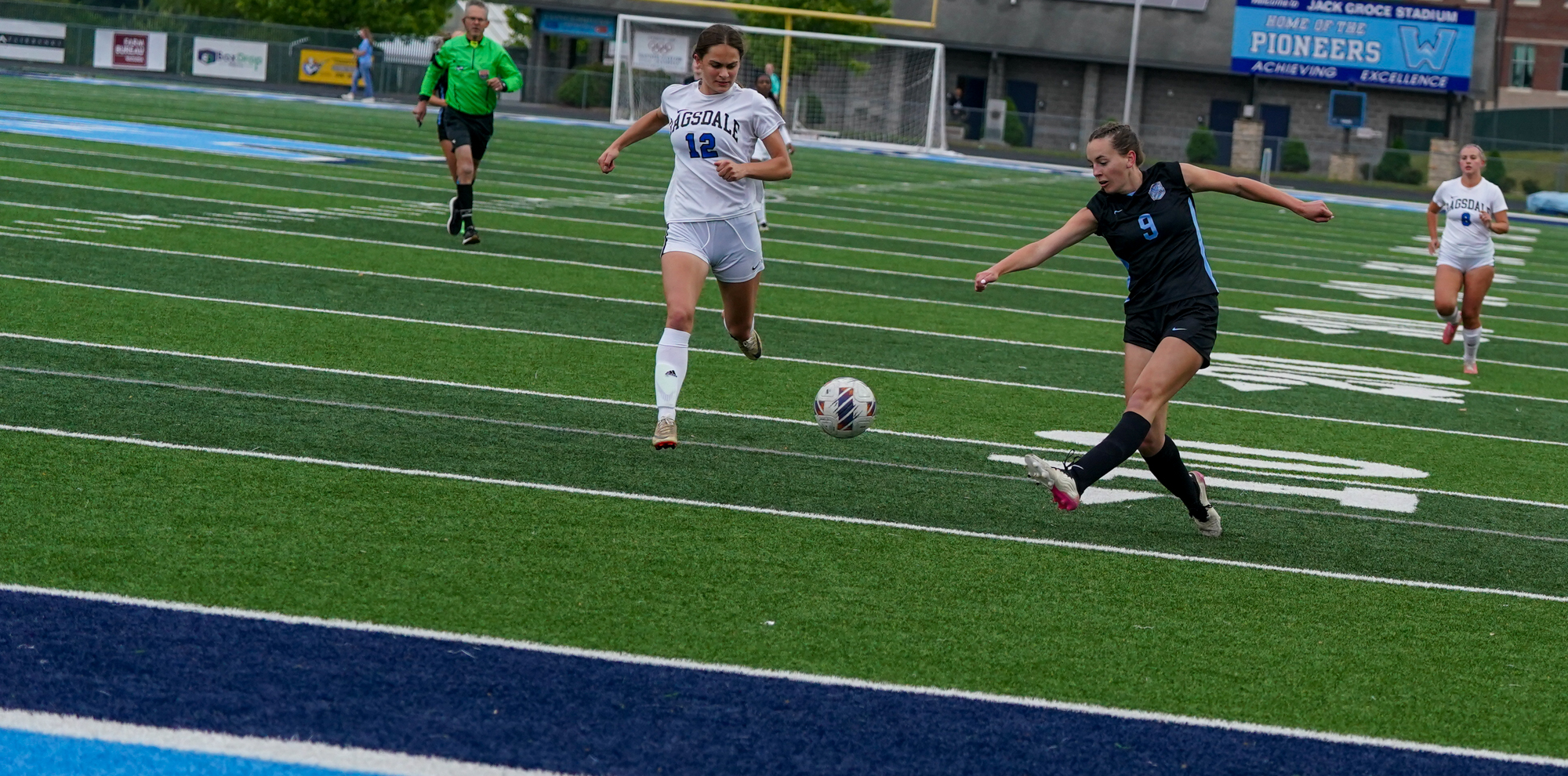
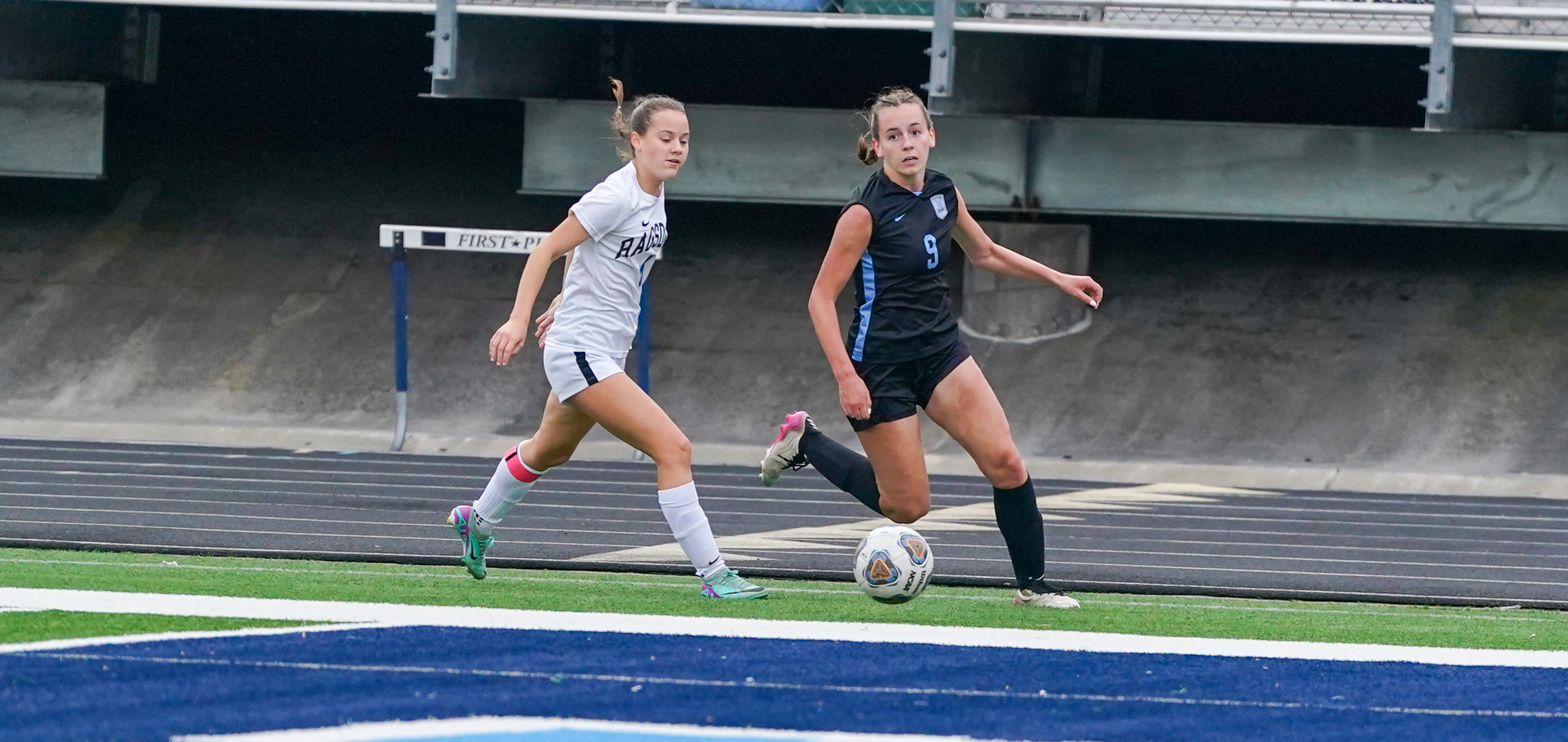
    Georgia Parker (9) sprints upfield with the ball, on attack vs. Mooresville in Round 3 on May 20 at Jack Groce Stadium. Photographic image by David Rogers

    Reflecting back on the season, Tarnowski had a lot of praise for his seniors.

    “We’ve had great senior classes before, but this may be the most impactful we have ever had. We are going to have young girls coming up through these programs and new players next year and I guarantee they will be saying, ‘Hey, I want to be scoring goals like Katie Durham and Georgia Parker.’ Or, ‘I want to be running through people like Sam Bertrand, Syd Bryant and Lucy Willis.’ Or, ‘I want to be controlling the midfield like Charlotte Cuthbert.’ We have had Olivia Foskey doing the high jump in track one day and blocking shots for us the next. When I look back, it is going to be with a special appreciation for our seniors. They need to know that they will have a (significant) impact on young female athletes in our community.”

    Mooresville head coach Susie Hudson was, of course, pleased with her team’s performance on the night, as well as had high praise for Watauga.

    “This was a hard, hard-fought match,” said Hudson. “Our girls dug deep. This is something that they have wanted. They played with heart, soul and determination tonight. Watauga plays tough, hard-working soccer up here. They are very tough to beat. They have speed and they have skills. They play really hard.”

    With win, No. 8 Mooresville advances to face No. 5-seeded Asheville (a 2-1 winner over No. 13 Charlotte Catholic) on May 23.

    In the other 4A West bracket Round 3 games, No. 6 Marvin Ridge defeated No. 3 West Forsyth, 4-2, and No. 26 Myers Park upset No. 2 Hough, 3-1

    BONUS PHOTOS

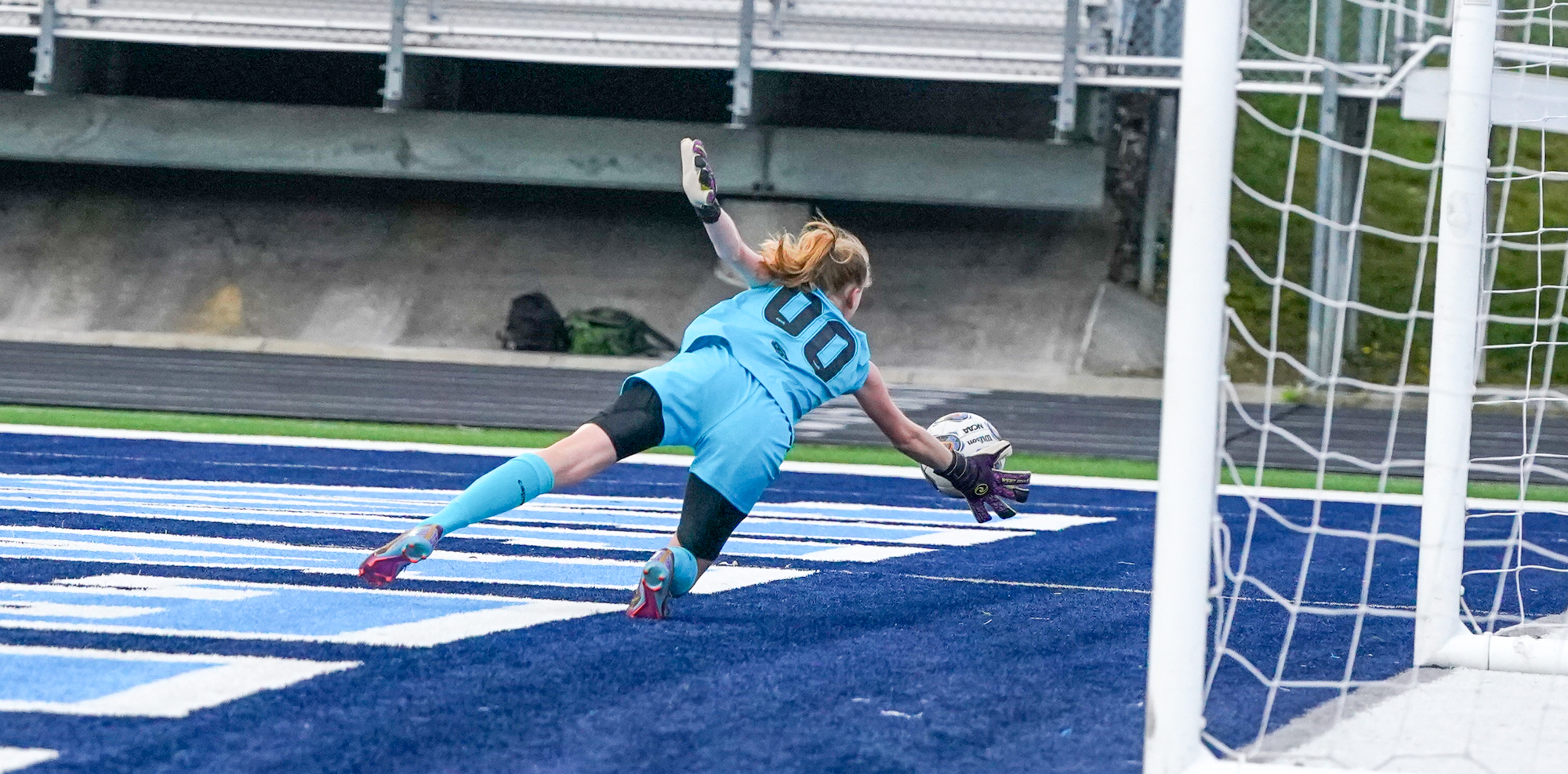
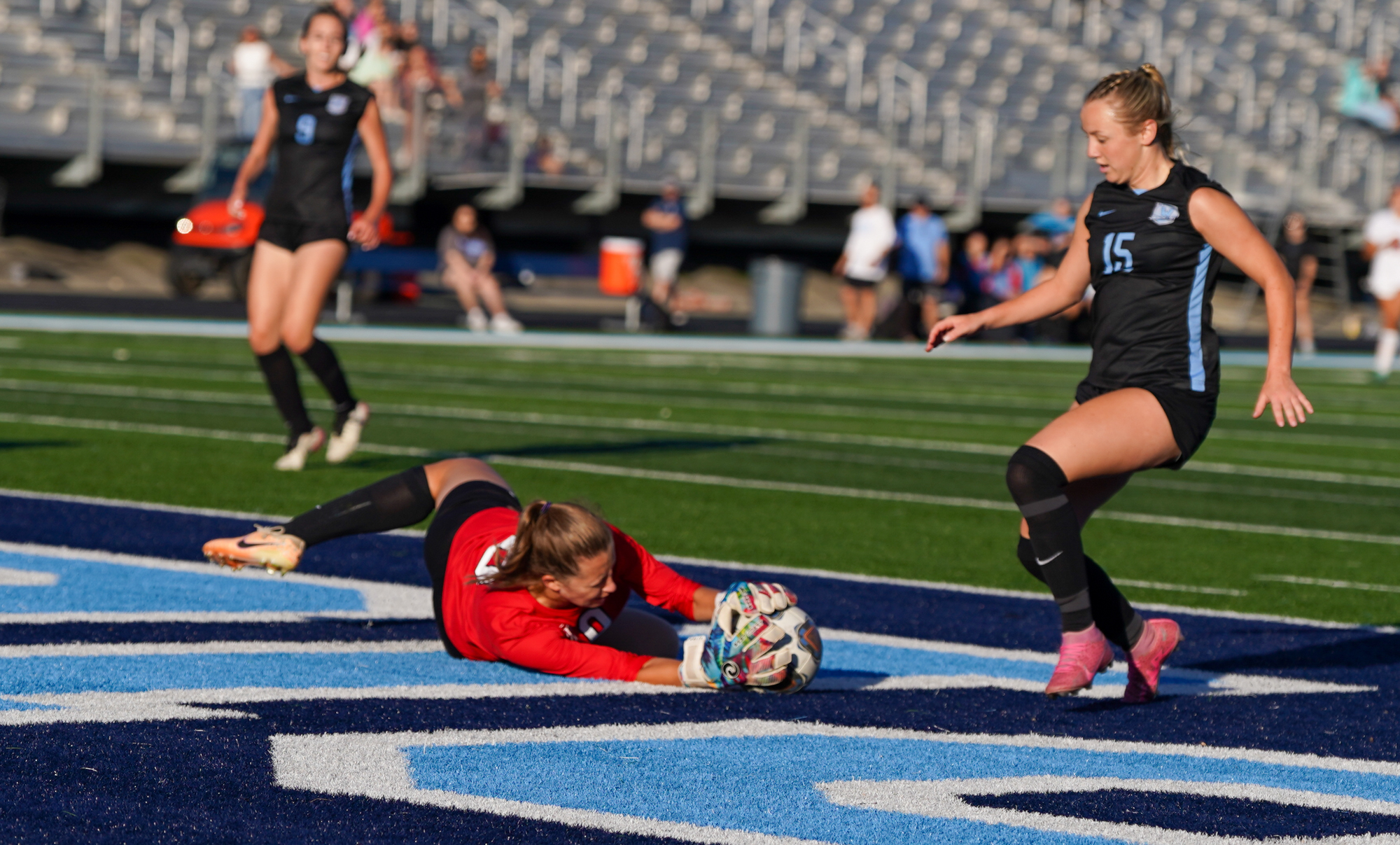
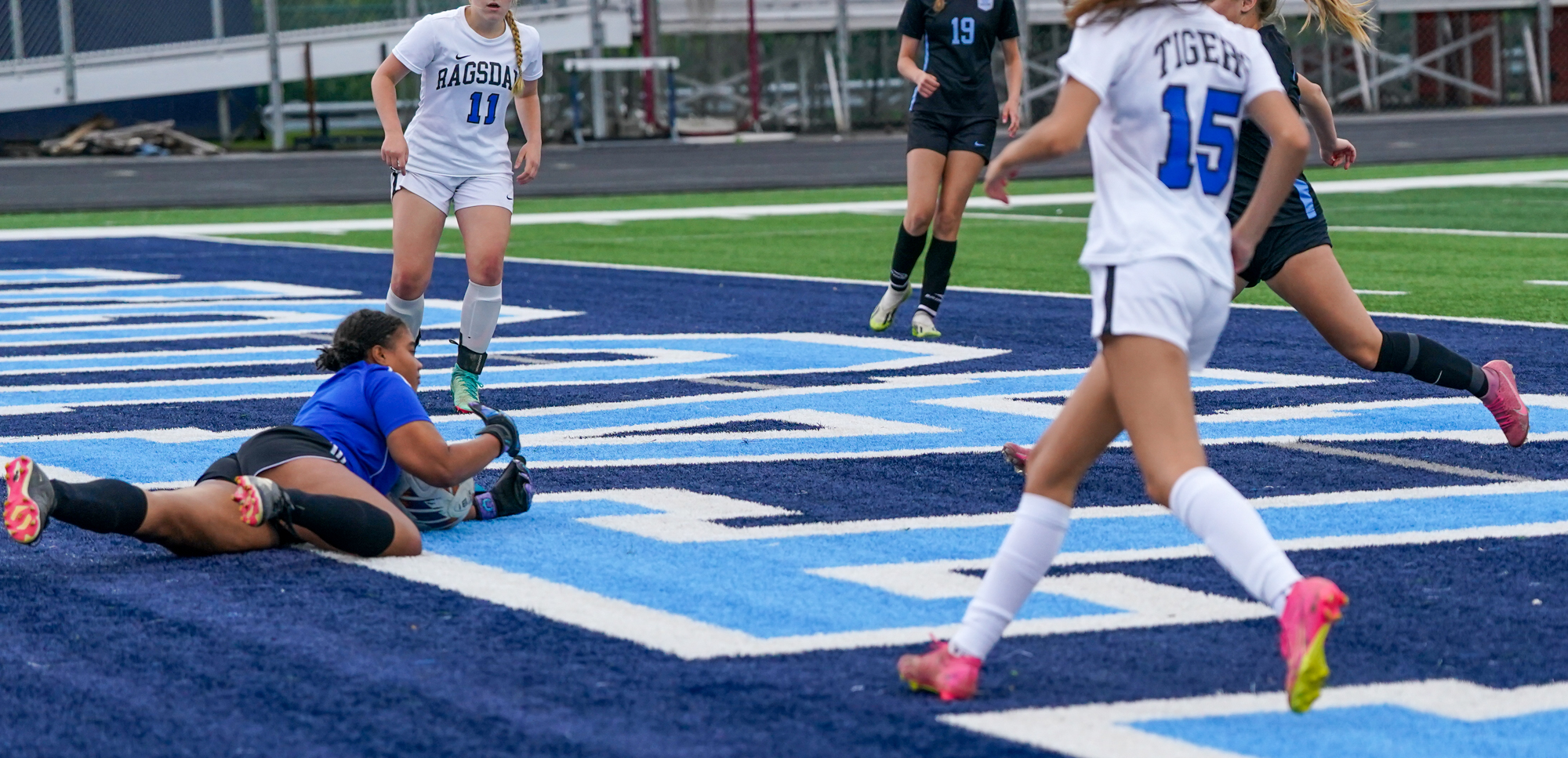
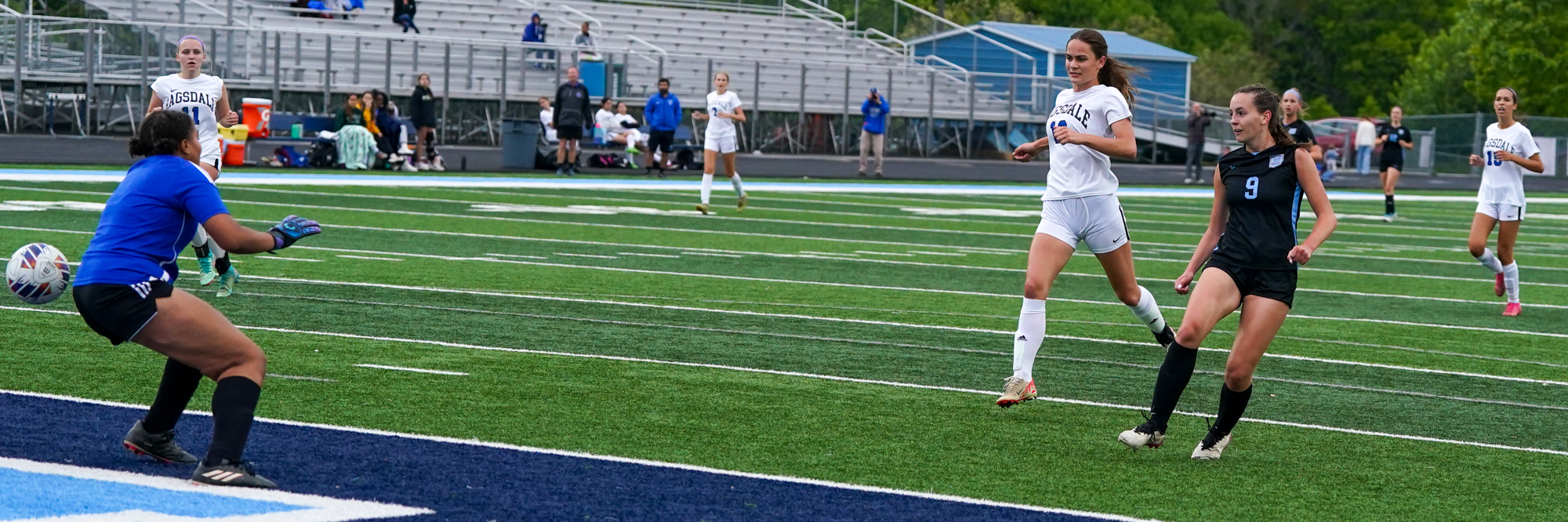
    Mooresville goalkeeper Briton Warham dives to save a potential goal off the foot of Watauga’s Katie Durham, early in the Round 3 playoff game on May 20. Photographic image by David Rogers

  • Stories galore at North Wilkesboro Speedway for All-Star Race (and before)

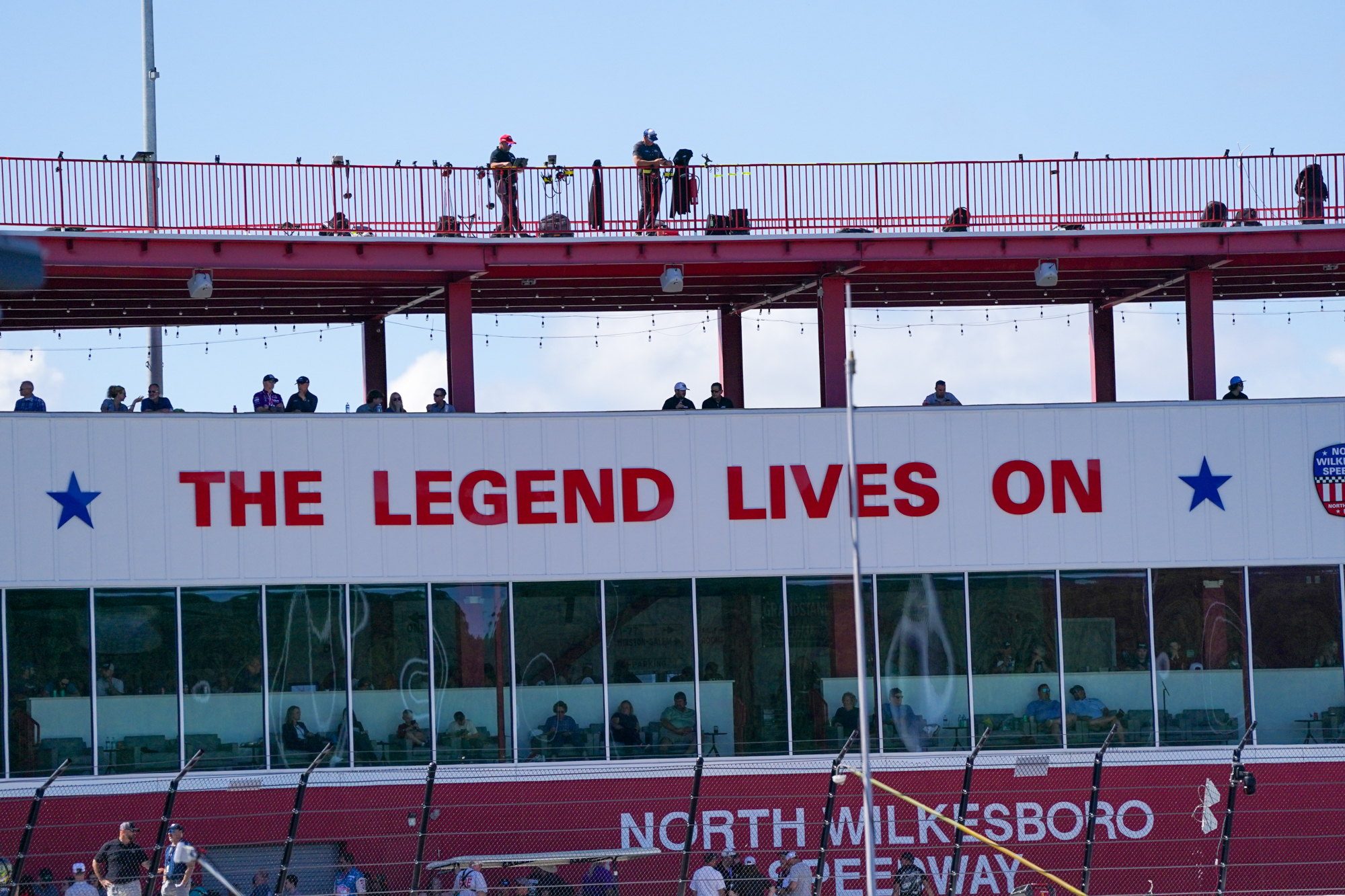
    By David Rogers. NORTH WILKESBORO, N.C. — It was a night of storylines — and were there ever stories to tell at North Wilkesboro Speedway for the 2024 NASCAR All-Star Race.

    For best viewing of photos on a laptop or desktop monitor, please click on any image for Slide Show mode.

    The NASCAR, Speedway Motorsports and Wilkes communities — and catching up with Mother (Nature)

    Road & Track magazine described the May 18 weather event the day before the All-Star Race as a “massive downpour.” FOX Weather reported that the flooding turned the North Wilkesboro Speedway into a swimming pool for NASCAR crew members. Weather bulletins reported more than four inches of rain fell on North Wilkesboro Speedway in just two hours, causing flash flooding in and around the track as creeks in the area rose to overflowing.

    Chris Myers, Kevin Harvick and Clint Bowyer, left to right, appeared in Victory Lane atop the North Wilkesboro Speedway media center before the 2024 All Star Race on May 19. Photographic image by David Rogers for High Country Sports

    To say that Speedway Motorsports, North Wilkesboro Speedway, and NASCAR did yeoman’s work in collaborating with the Wilkes County community to get things ready for Sunday morning’s delayed Truck Series race as well as the All-Star Open and All-Star Race in the evening would be an understatement.

    Scott Cooper, Senior VP and Director of Communications for Speedway Motorsports explained to media representatives on Sunday that NWS had lost 40 percent of its race parking. Wilkes Community College pitched in to provide parking and other community interests like the Wilkes County Boy Scouts contributed buses and other vehicles to use as shuttles to and from the racetrack. For the parking areas next to the Speedway (hilly pastureland), the organizing team got a rock quarry to open in the wee hours of Saturday night and Sunday morning, with delivery of some 900 tons of gravel to spread on parking lot roadways.

    Then, of course, there was pumping water out of the infield and off the track.

    Photographic image by David Rogers for High Country Sports

    Driver reactions to the NWS track repaving

    Universally, we heard nothing but rave reviews from every driver interviewed, as well as crew chiefs. Several noted that the multiple grooves around the track were exceptional for a repaving on any track. Among others, Joey Logano said that those involved with the repaving had kept some of the track’s personality, such as the flatter corners in Turn 1 and Turn 2 as well as a “bump” on the inside of Turn 1. The most common reaction, “This was fun.”

    From this start of the 2024 NASCAR All Star Race at North Wilkesboro Speedway to the finish, Joey Logano (No. 22) led 199 of the 200 laps. Photographic image by David Rogers for High Country Sports

    The Tire ‘Option’

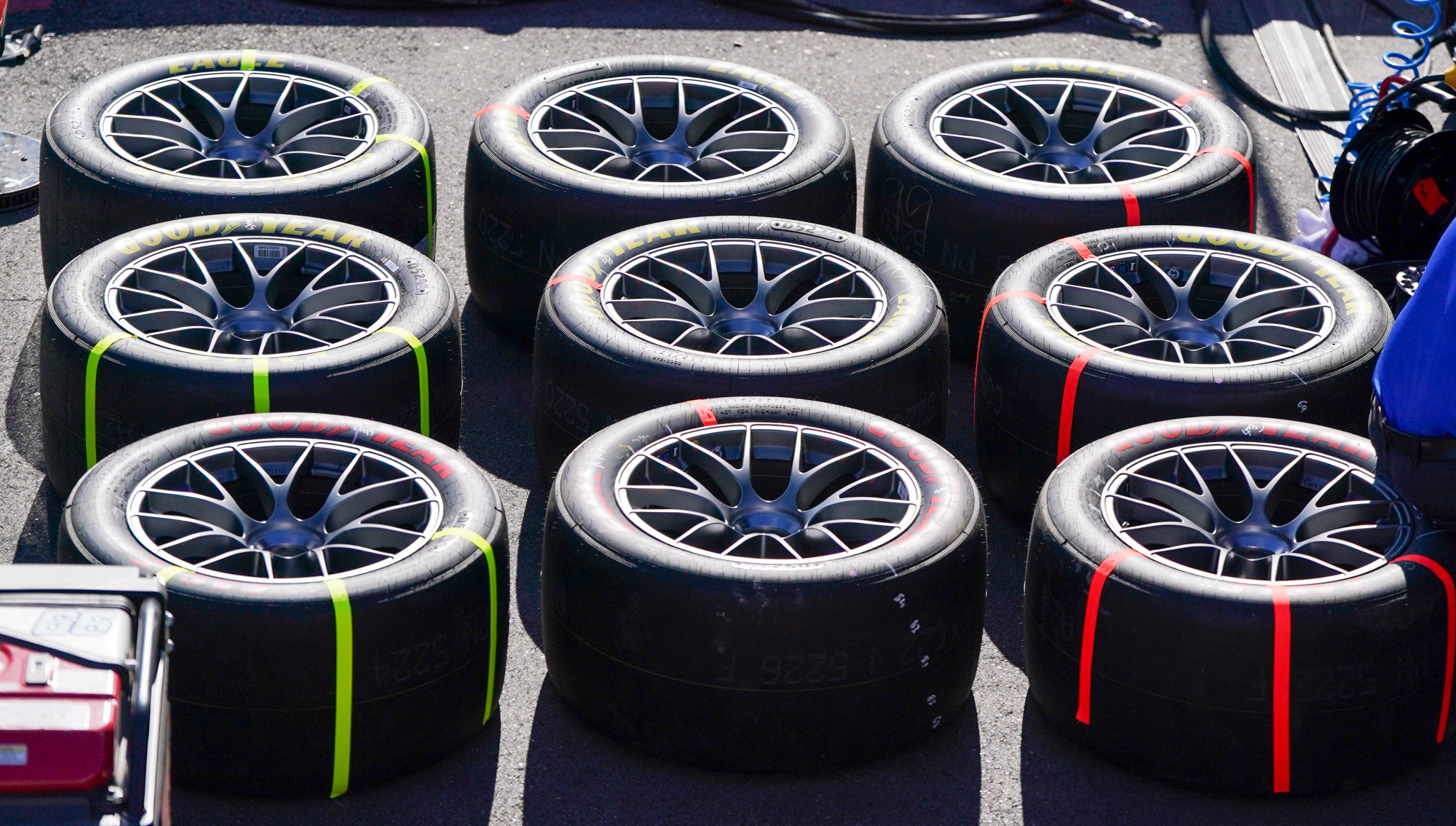
    For the All-Star Race, NASCAR and Goodyear collaborated on providing the race teams with three tire options: [1] the “yellow” or Prime tire; [2] the “red” or Option tire; and [3] the “white,” a tire for Wet conditions, if needed.

    The softer Option tire was advertised to drivers and media representatives before the race as “providing more grip” facilitating higher speeds, but that it “fell off faster,” meaning that it lost traction much quicker than the Primary tire. The default tire selection was the Prime, ostensibly giving drivers a more durable tire in dry conditions.

    Seeing how Joey Logano and others who stuck with the Option tire performed without experiencing much in the way of falloff, by Stage Two just about everyone was running their softer tires.

    Tire options for the All-Star Race made for interesting strategy decisions on May 19. Photographic image by David Rogers for High Country Sports

    The Fisticuffs

    The softer Option tire actually played a role in the middle of the second lap as Ricky Stenhouse, Jr. stuck his car in the 3-wide middle between Denny Hamlin on the inside and Kyle Busch, Jr. on the outside. Although video replays from Ty Gibbs’ car seemed to indicate that Stenhouse gave Busch plenty of room, the Las Vegas native seemed to think Stenhouse’s move to pass him on the inside ran Busch up into the wall. Less than a lap later, Busch clearly retaliated by bumping Stenhouse’s left rear quarter-panel, ultimately turning him to crash into the outside wall and out of the race.

    Before going to the care center for his mandatory, post-crash medical evaluation, Stenhouse parked his car in Busch’s pit box and climbed a ladder to have a few words with the No. 8’s crew chief, Randall Burnett and Richard Childress Racing’s Vice President of Competition, Andy Petree.

    After the race, Stenhouse confronted Busch on Pit Row. The two seemed to be exchanging explanations as to what happened, when suddenly Stenhouse took a big swing and appeared to connect before the onlooking pit crews joined the fray, some trying to separate the combatants, others seeming bent on a fight.

    Photographic image by David Rogers for High Country Sports

    Kyle Larson

    With a lot of media resources committed to whether or not Kyle Larson would make it to North Wilkesboro for the All-Star Race after qualifying for the Indianapolis 500, the Hendrick Motorsports driver was helicoptered to the venue from the Wilkesboro airport with roughly 30 minutes to spare. It was enough time for him to even get a TV interview in before the race, up on Victory Lane atop the Media Center.

    After setting a rookie record in Indianapolis and qualifying an astonishing fifth fastest time, Larson started at the rear of the All-Star field (@ No. 20) because of a driver change. Kevin Harvick piloted the No. 5 car in qualifying to the No. 12 position.

    Larson still has to worry about the Memorial Day Double, driving the Indianapolis 500 early in the day then trying to make it to Charlotte for the Coca-Cola 600 in the early evening. Perhaps the biggest concern is if the Indianapolis race runs long because of weather delays.

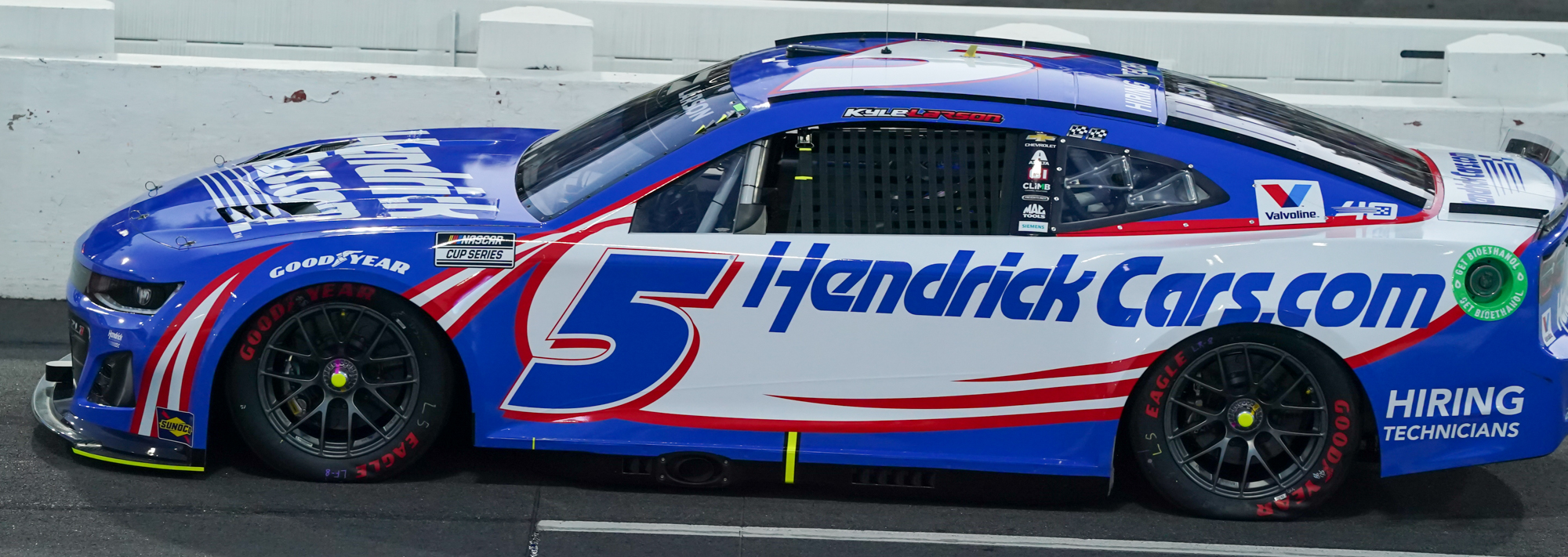
    Kyle Larson driving the No. 5 car at the start of the All-Star Race on May 19. Photographic image by David Rogers for High Country Sports

    The Winner

    Oh, yeah, there was a dominating winner in Joey Logano, who along with William Byron and Ty Gibbs participated in a Goodyear and NASCAR administered “tire test” over two days in mid-March. He stated that the three of them tested as many as 60 different compounds over the two days. After the “red” tire was decided on as the Option tire, Logano reportedly ran a significant number of laps, apparently concluding that after a small “fall off” the tire performance seemed to flatten out, providing adequate traction.

    Logano hasn’t won a points race so far in the 2024 season, so his winning the All-Star Race was a welcome respite for his winning drought. As he was interviewed in the Media Center after the race, Logano was candid in saying, “One of my first thoughts was that this wasn’t a points race. But then, I have a million reasons to smile!” (referring to the million dollar prize for the race winner)

    Joey Logano speaks to reporters in the Media Center after winning the 2024 NASCAR All-Star Race at North Wilkesboro Speedway. Photographic image by David Rogers for High Country Sports

    Media Treat: Hall of Famers’ Interviews

    In the mid-afternoon on May 19, before the All-Star Race, NASCAR and Speedway Motorsports brought Hall of Famers Richard Childress and Chad Knaus into the Media Center to field questions about their careers, as well as their perceptions of the “new” North Wilkesboro Speedway venue.

    Childress, who started as a driver in 1969 and became a team owner in 1981, installing Dale Earnhardt as the driver of his No. 3 car and a year later hired Ricky Rudd. In answer to a reporter’s question, Childress identified Rudd as having a particular significant impact on his life and career in racing.

    Knaus, who rose from rear tire changer to crew chief for Jimmie Johnson’s seven Cup Series championships driving for Hendrick Motorsports, provided observations as to how the crew chief role has changed, especially with technology. In Knaus’ new role with Hendrick as Vice President of Competition, he said as an organization they try to evaluate every individual crew chief’s strengths and weaknesses and surround him with professional with the skillsets that are most needed.

    Chad Knaus, now Vice President of Competition for Hendrick Motorsports, is a NASCAR Hall of Famer and discussed the changing roles of crew chiefs before the 2024 All Star Race on May 19. Photographic image by David Rogers for High Country Sports
    Richard Childress is an iconic name in NASCAR as an owner, but got his start as a ‘replacement’ driver in 1969 at Talladega during a drivers’ strike. Photographic image by David Rogers for High Country Sports
    Just before the start of the 2024 All Star Race on May 19, along pit row. Photographic image by David Rogers for High Country Sports
    A frequent fan favorite who grew from iRacing to the Cup Series, William Byron (No. 24) got left behind early in the All Star Race because of a flat tire and finished No. 19, several laps down. Photographic image by David Rogers for High Country Sports


  • Sasquatchers rally in 11th hour to tie Apotheos, 2-2

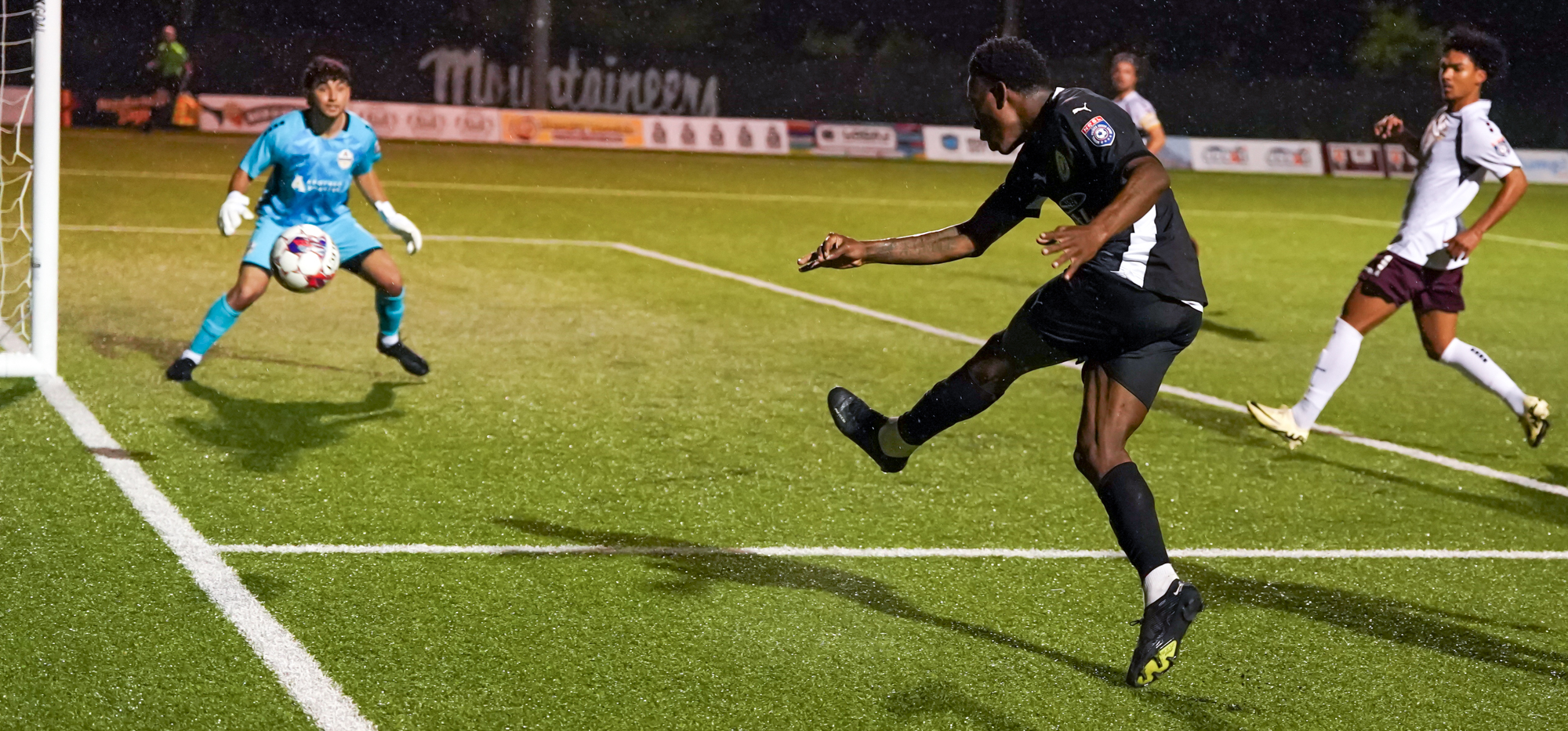
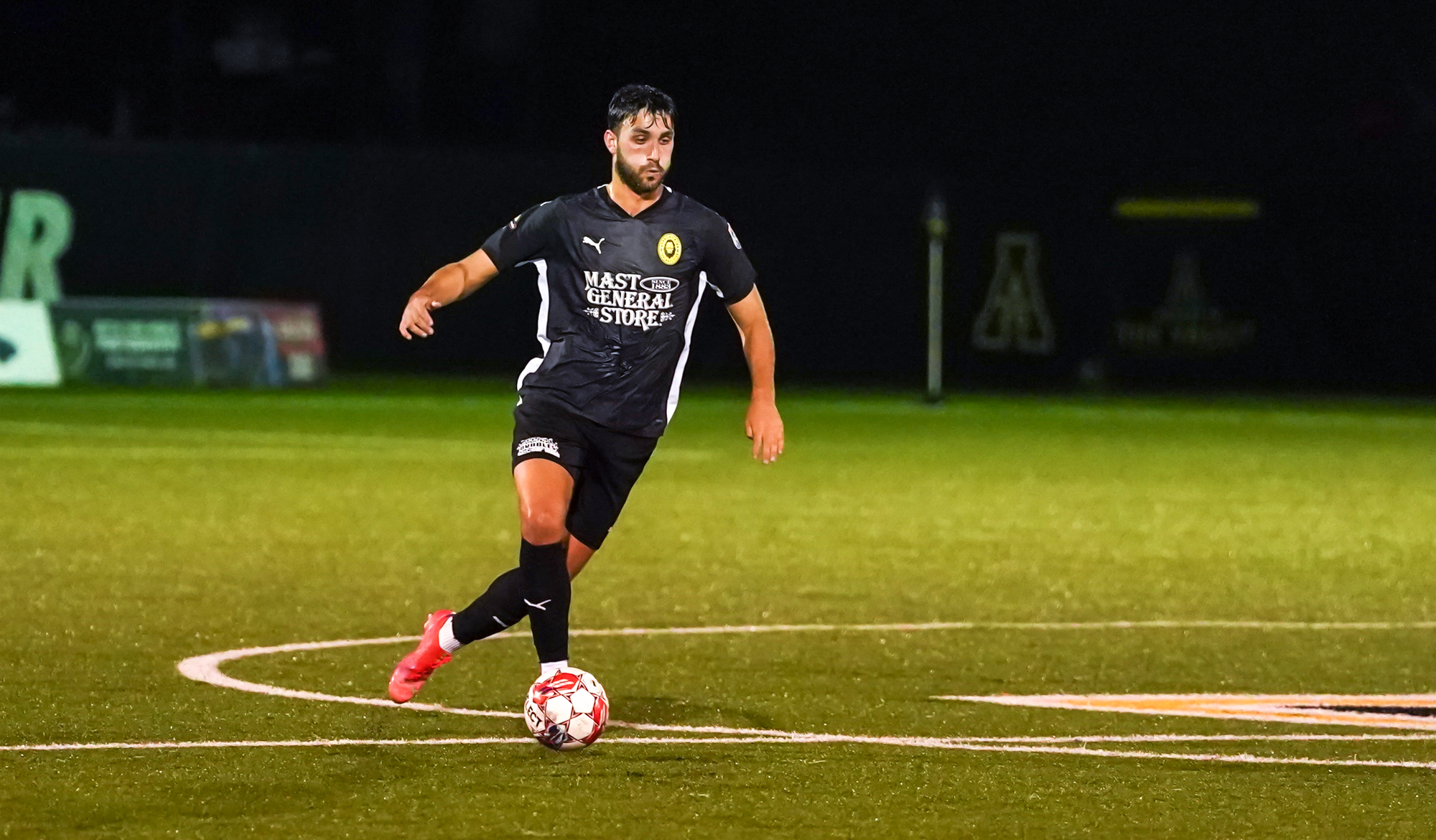
    By David Rogers. BOONE, N.C. — It is why they play the WHOLE 90 minutes. Down 2-0 to Apotheos in the 80th minute, Appalachian FC’s Elie Bokota found the back of the net in the 81st minute to shrink the deficit, then teammate Ken Raghoebar blistered a goal in the 88th minute to tie the score, 2-2.

    BONUS PHOTOS at bottom of article. For best viewing of photography on desktop monitor or laptop, please click on any image for Slide Show mode.

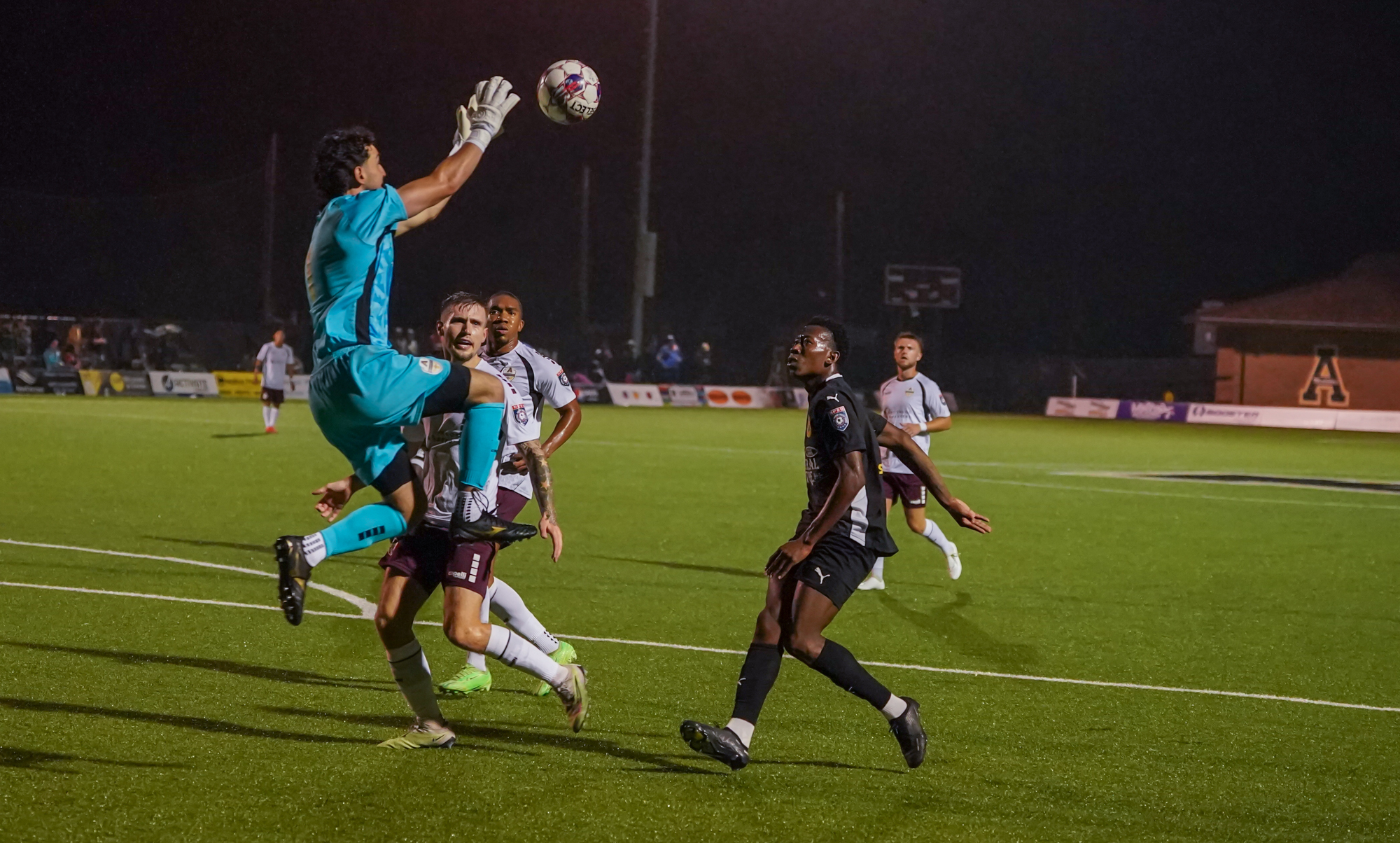
    While Appalachian FC displayed its offensive power in the first half with several of the most exciting and dramatic attack opportunities, they all flew just wide or were saved just as dramatically by the Apotheos goalkeeper, Newsha Mirfendereski, either leaping high to corral an attempt or diving to smother a “worm burner” skipping toward the net.

    Photographic image by David Rogers for High Country Sports

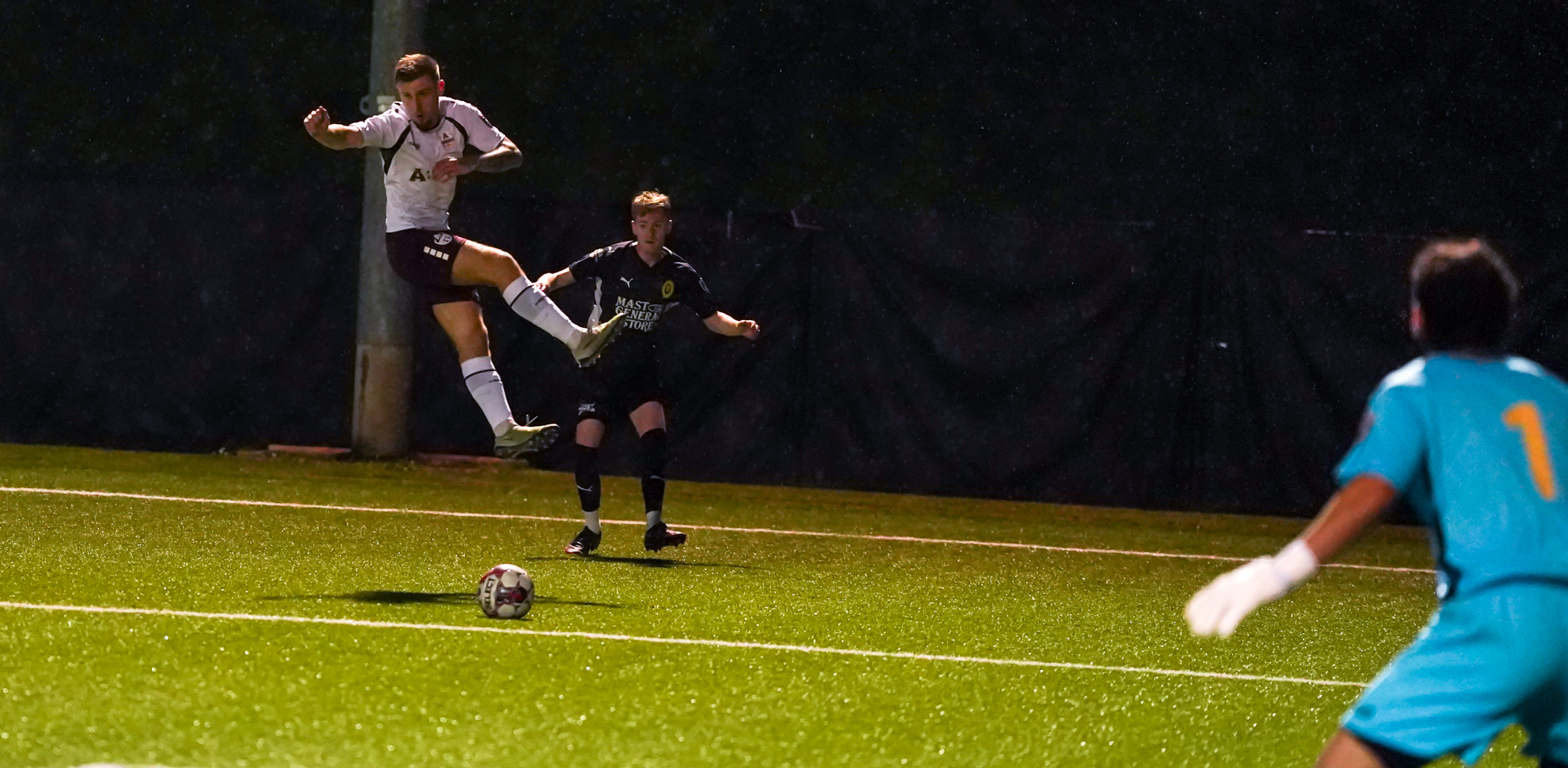
    Meanwhile, Apotheos — the Atlanta-based team that was runner-up to Tulsa Athletic in the 2023 National Premier Soccer League Championship Game (losing on penalty kicks) — was able to capitalize on one of the few opportunities it had in the opening half on a long goal from outside the box. Appalachian FC’s defense and midfield play limited Apotheos’ opportunities, but the Locomotives took a 1-0 lead into intermission and added a penalty kick in the second half to increase their advantage, 2-0.

    Photographic image by David Rogers for High Country Sports

    And that led to Appalachian FC’s late comeback to tie the game.

    Next up for Appalachian FC is a road test on May 25 in Knoxville, Tenn., against 865 Alliance. The Sasquatch crew returns home on June 1 to face the Bristol Rhythm AFC at Ted Mackorell Soccer Complex.

    BONUS PHOTOS

  • Blowing Rock’s Vestri, Ford have ‘massive’ performances at 10K in London

    By David Rogers. LONDON — In what can only be described as an “awesome” trip across the pond, two Blowing Rock-based athletes clipped significant time off their respective personal bests at the 10,000 meters’ distance.

    Vestri finishes No. 3 in elite international field

    Both members of the ZAP Endurance professional running team, Amanda Vestri bettered her previous personal best by 44 seconds in claiming the No. 3 finishing spot (31:10.52) in the Night of 10,000 Meters PBs premier women’s division race, hosted at the Parliament Hill Fields Athletic Track in north London.  Vestri, a former star collegiate performer at Syracuse University, joined the ZAP team last September and has been making steady progress as she aims for the U.S. Olympic Team qualifying races in June.  According to World Athletics, Vestri’s previous personal best was as a collegian in March 2023, 32:08.26, in Palo Alto, Calif. World Athletics also lists her May 18 race in London as the 8th-best American at the 10,000 meters distance.

    Vestri was one of two Americans to finish in the top three of the elite international field of 31 runners. Fiona O’Keefe of the U.S finished No. 2, her time of 31:03.46 within a half-second of Great Britain’s Megan Keith at No. 1 (31:03.02).

    Ryan Ford earns ‘Top 10’

    Blowing Rock’s Ryan Ford also took considerable time off his previous personal best on the Parliament Hill track, finishing No. 10 in the elite international field of 39 male runners, crossing the line in 27:40.80.  World Athletics lists his previous best as 28:09.53, in a Walnut, Calif. race in May 2023.

    Ford was just 18 seconds behind the No. 1 runner, Mohamed Ismael of Djibouti. Ford was the second U.S. runner to cross the finish line, the first being Paul Chelimo at No. 3, just over six seconds ahead.

    “It was a great night,” said ZAP Endurance head coach Pete Rea after the two races were completed. “These were massive personal bests for Amanda and Ryan as they prepare for June’s U.S. Olympic Team Trials in Eugene, Ore. Lowering a personal best gets harder and harder as you go faster and faster.”

    Vestri’s performance in London is just the latest in a series of accomplishments since joining ZAP Endurance. In September 2023, she placed No. 4 in the USATF 10 Championships in Northport, N.Y., then followed that up on Dec. 3 by placing No. 8 out of 200 top-ranked collegiate and professional runners in Boston at 5,000 meters. A week later she captured the USATF National Cross Country title in Tallahassee, Fla., then won the Oskar Blues 4-Miler in Brevard, N.C. before winning “The Ten” (10,000 meters) as part of a stacked field in San Juan Capistrano, Calif., this past March. Just over a month ago, Vestri, placed No. 3 in an elite international field at 5,000 meters in Azusa Pacific, Calif., qualifying for the U.S. Olympic Trials at that distance in the process.

    Ford and ZAP teammate Dan Schaffer finished 1-2 last November in the Richmond Half Marathon, with Ford just 18 seconds off the U.S. Olympic Trials qualifying standard for the marathon. The former collegiate runner at Iowa State and Tennessee-Martin is transitioning from middle and shorter distance races to the marathon, but for the 2024 Olympics, he will be trying to qualify for the U.S. team in Eugene at the 5,000 meters or 10,000 meters distances.

  • Flash and Grind: Watauga WSOC gets by South Mecklenburg in Round 2, 1-0

    By David Rogers. BOONE, N.C. — A flashy goal in the first 90 seconds was all the offense No. 1- seeded Watauga needed at Jack Groce Stadium against No. 17 South Mecklenburg on May 16, thanks to the grittiest defensive performance of the season.

    For best photography viewing on a desktop monitor or laptop, please click on any image for Slide Show mode.

    Driving up the center of the field into the open, Katie Durham poked a pass downfield between two Sabre defenders and in front of a racing Morgan Flynt. The junior forward settled the ball ahead once, then quickly angled the ball across the face of the goal, past a surprised South Meck goalkeeper, and inside the opposite post for the game’s first and only score by either team.

    Watauga midfielder Charlotte Cuthbert zeroes in on the ball played by South Mecklenburg on May 16, in the Pioneers 1-0, Round 2 win on May 16. Photographic image by David Rogers

    Afterwards, Durham explained,”Morgan is always out there. I knew without looking that she would be there.”

    Inasmuch as the Sabres kept possession of the ball for a majority of the rest of the match in their attacking third of the field, Flynt was understandably excited about making good on her opportunity.

    “I may have only touched the ball 10 times the entire game,” said Flynt. “That one of those touches was a goal is pretty special.”

    With Watauga’s Katie Durham applying the pressure, the South Mecklenburg goalkeeper Lilly Heaslet dives for the save. Photographic image by David Rogers

    To be sure, while the Pioneers were pretty quiet offensively, their defense won the night, headlined by goalkeeper Rylee Mitchell and the core four defensive athletes, Ali Bertrand, Sammy Morgan, Lucy Willis and Sydnee Bryant, along with midfielder Sam Bertrand. Because of Watauga’s frequent dominance in the attacking third of the field in most matches this season, Mitchell was relatively untested until South Meck came along. She came up with 12 saves on the night, including defending against multiple Sabre corner kicks.

    “I love our defensive players,” Mitchell said later. “They are so, so good.”

    “We knew that South Meck is very good with some particularly fast players,” said Bryant, a senior, after the game. “I think the difference tonight was our team’s heart. We were determined not to let them score.”

    Watauga head coach Chris Tarnowski was candid when all was said and done.

    “Sometimes soccer is a funny game. Offensively, we were arguably outplayed tonight but I am so proud of our defensive performance. It was gritty and it came against a very good South Meck team that is among the best in the state,” said Tarnowski.

    With the win, Watauga advances to Round 3 vs. No. 9 Mooresville on Monday, May 20. Kickoff is set tentatively for 6 p.m. at Jack Groce Stadium.

    ROUND 2 RESULTS FOR THE NCHSAA 4A WEST BRACKET:

    • No. 1 Watauga def. No. 17 South Mecklenburg, 1-0
    • No. 9 Mooresville def. No. 9 Providence, 1-0
    • No. 5 Asheville def. No. 12 Reagan, 1-0
    • No. 13 Charlotte Catholic def. No. 4 Ardrey Kell, 6-0
    • No. 3 West Forsyth def. No. 14 Cuthbertson, 2-1
    • No. 6 Marvin Ridge def. No. 11 T C Roberson, 2-1
    • No. 26 Myers Park def. No. 10 Weddington, 1-0
    • No. 2 Hough def. No. 15 East Forsyth, 6-0

    OTHER GAMES OF INTEREST:

    • 3A: No. 1 Hibriten def. No. 16 Crest, 7-0
    • 3A: No. 5 Hickory def. No. 12 Asheboro, 7-0
    • 2A: No. 3 Wilkes Central def. No. 14 Forbush, 2-1


  • Tolley’s HR ‘hat trick’ earns App State doubleheader split vs. Georgia Southern

    By Matt Present. BOONE, N.C. — Three Banks Tolley bombs, capped by a walk-off shot worthy of an enthusiastic bat flip, clinched top-six Sun Belt Conference positioning for App State Baseball and a spot in the double-elimination portion of next week’s championship tournament.

    Already the Mountaineers’ record holder for single-season home runs, Tolley hit solo homers in the third, eighth and 10th innings to lift App State (31-18-1, 16-12-1) to a 6-5 victory against Georgia Southern (29-25, 16-12) in the opening game of a Thursday doubleheader at Jim and Bettie Smith Stadium. The Eagles completed the doubleheader with a 14-4 victory in seven innings in game two.

    Due to forecasted inclement weather, first pitch of the regular-season finale is now scheduled for Friday at 11 a.m. with the Mountaineers’ Senior Day ceremony beginning at 10:30 a.m.

    App State’s 31 wins on the season are the most since 2012, when the Mountaineers set the program record with 41 victories, including an NCAA regional appearance.

    Game 1

    After Tolley’s 22nd homer of the season gave the Mountaineers a 4-1 lead heading to the fourth inning, he erased a 5-4 deficit with his 23rd homer of the season leading off the bottom of the eighth inning. Leading off the bottom of the 10th, Tolley drilled a 1-1 offering over the wall in left-center, as his 24th homer of the season traveled 449 feet.

    Tolley three-homer game is the second in program history, joining Andre Crawford who accomplished the feat against Marshall in 1986.

    An excited Tolley flipped his bat straight up into the air before trotting around the bases and being mobbed at home plate by his teammates. Beginning its final Sun Belt series of the regular season in fourth place, App State needed one win to guarantee a finish of no worse than sixth with a tournament format that forces seeds 7-10 to play in single-elimination games Tuesday in Montgomery, Ala., before the double-elimination phase of the event starts Wednesday.

    After Tolley’s eighth-inning homer in Game 1 tied the score, Cody Little pitched a scoreless top of the ninth, with first baseman Drew Holderbach snagging a line drive in the air and doubling up the runner who had hit a one-out double in the previous at-bat.

    Grey LaSpaluto then pitched a scoreless top of the 10th, stranding runners at the corners with a swinging strikeout to set the stage for Tolley’s heroics.

    App State improved to 10-3 this season in starts by Jackson Steensma, who allowed one run over the first four innings before giving up three runs in the fifth. He struck out seven batters before giving way to Little, who pitched the next four innings and allowed just one run.

    Tolley finished 3-for-4 with one walk, while Austin St. Laurent went 2-for-4 with two runs scored and a two-run single. Joseph Zamora was 2-for-3 at the plate.

    Game 2

    Despite loading the bases with one out in the first inning, the Mountaineers were only able to score one first inning run, leaving three aboard, and the offense never found its rhythm in game two, tallying just six hits and stranding six runners in the ballgame.

    CJ Boyd opened the scoring with an RBI double in the first, but Georgia Southern jumped in front with a three-run third and never relinquished the lead.

    The only other offense for the Mountaineers came in the fourth when Joseph Zamora, Austin St. Laurent and Drew Holderbach hit three consecutive singles, followed by a sac fly from Banks Tolley.

    Tyler Tuthill delivered a scoreless inning in relief in the sixth-year senior’s final appearance at Smith Stadium. Ryan Sleeper and Jake Beaty also each tossed a scoreless frame for the Mountaineers.

    The Eagles scored five in the fourth, two in the fifth and four in the seventh to pull away for a run-rule win.

    App State will look to earn its fifth consecutive Sun Belt series win, and its first against the Eagles since 2013, in the rubber game on Friday.

  • Carving out fun for the human spirit

    By David Rogers. NARRAGANSETT, R.I. — Spring had not quite arrived when we visited High Country-based golf course architect Ron Cutlip’s latest creation, South Shore Golf Course, carved out of the rocky hills, vales, woods and marshes of a picturesque, historic farm in New England. Even so early in the season, the “greening” had begun and a golfer’s zeal was palpable.

    For best photography viewing on a desktop monitor or laptop, please click on any image for Slide Show mode.

    Golf course architecture is a multi-science, multi-discipline profession. Understanding the topographical features impacting hydrology, drainage, agronomy, turfgrasses, physics, geometry, civil engineering, soil sciences, botany, psychology and a tract of land’s natural systems are all part of the endeavor. In Cutlip’s hands, so is understanding the history of the venue and its surrounding region.

    Golf course architect Ron Cutlip, left, greets Geronimo Narizzano, of Buenos Aires, Argentina and a member of the University of Rhode Island men’s golf team. Photographic image by David Rogers

    Decisions about where to carve out a fairway, place a tee box or craft a bunker are seldom arbitrary.  For Cutlip, who has worked on almost two dozen courses across New York, Rhode Island, New Jersey, North Carolina, South Carolina, Ohio and Pennsylvania, course design is about appealing to — and challenging — the human spirit.

    A good design provides an escape from the golfer’s normal day.

    “When the player finishes a round, I want them to feel like they have conquered something.  Let’s face it, this is a recreational market, so the courses need to look tough but maybe play easy from the proper tees,” said Cutlip as we walked over a rise in the No. 8 fairway and down to a sculpted green nestled against the woods.

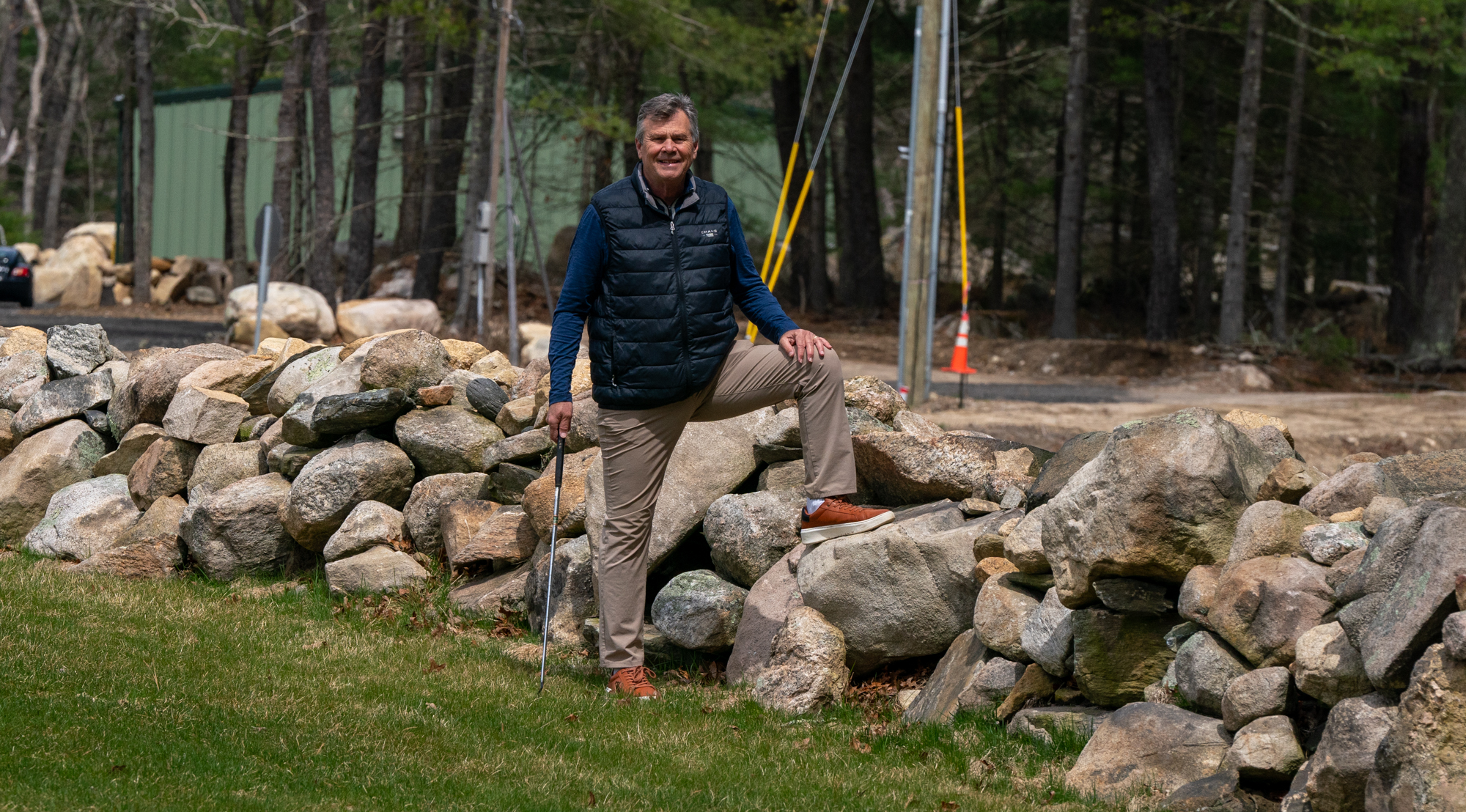
    A rock wall dating back to early Colonial days in the 1600s serves as backdrop to Hole No. 5 at South Shore Golf Course, Ron Cutlip’s latest design. Photographic image by David Rogers

    “And yet, the course still needs to provide a test to the player who desires a challenge,” he added. “A good design creates an escape from a person’s normal day. The golfer needs to be presented with both the game and the dramatic beauty of nature during the round. Long-term, the golfer should feel good about their experience and return again and again whether they’re a professional or a weekend warrior.”

    A unique course feature is a rock wall dating back to early Colonial times.

    The South Shore course is a 9-hole, central feature of a new, 55-plus housing development, South Shore Village, in South Kingstown. The development is just minutes from the sun, sand and sea of Rhode Island’s beaches. The custom-built homes are all one-level, which frequently appeals to residents whose hair is beginning to gray.

    The subdivision is built on the historic, Jerry Brown Farm. No, it is not related to the former governor of California, but traces back to a tract of land owned by Jeremiah Brown in the 1700s. Dotting the landscape throughout the region are rock walls dating back as far as the 1600s where settlers cleared land of the boulders and repurposed them to keep livestock from running away.

    Photographic image by David Rogers

    Cutlip uses one of these ancient walls as the backdrop to the green at the No. 5 hole.

    “When you think about the history of this land and the rugged lives experienced by the inhabitants who worked this area, I think it is important to memorialize that history by preserving this wall,” said Cutlip, one foot elevated to a spot on the wall, the other planted in the nearby grass.

    Golf course designs are usually a mixture, a combination, of the natural topographical features of the land as well as artificial constructs.

    Hole No. 9 at South Shore Golf Course is protected by a rocky ‘moat’. Photographic image by David Rogers

    “I’d say most of my courses are 70 percent to 80 percent natural,” said Cutlip. “Even where there are artificial features, I like to take a natural characteristic and accentuate it. That big boulder? Use it as a natural hazard, a challenge for the golfer to get around. That bump of a hill? Build it up to frame the green, visually. I don’t think I have any holes that are less than 50 percent usage of the natural features. Sure, you have to cut down some trees to create fairways, but it is not just to clear land. You do it with creative purposes in mind.”

    A good testimony as to the quality of golf played at South Shore is that it has become one of the favorite tracts for the University of Rhode Island men’s golf team to play and practice. On the day we toured the course, the URI team was already there, getting in some practice swings, and were eager to discuss various features with the course designer.

    Each collegian had a favorite hole, all for different reasons. Made up of four freshmen, a sophomore, a senior and a graduate student in terms of their eligibility, they arrived at Rhode Island from a variety of locales, including Beijing, China; Alberta, Canada; and Buenos Aires, Argentina, as well as Massachusetts, Florida, New York, Vermont and one local young man, from Narragansett.

    Larry LeBlanc, left, is the developer of South Shore Village, a 55+ residential subdivision in South Kingstown, Rhode Island, for which Ron Cutlip of Blowing Rock was hired as the golf course architect. Photographic image by David Rogers
  • Watauga WSOC rolls over Ragsdale in Round 1, 9-0

    By David Rogers. BOONE, N.C. — Based on Watauga’s Round 1 performance, it is easy to understand how the Pioneers earned the No. 1 seed in the NCHSAA 4A West bracket of the North Carolina state playoffs.

    BONUS PHOTOS at bottom of article. For best viewing on a laptop or desktop monitor, click on any image for Slide Show mode.

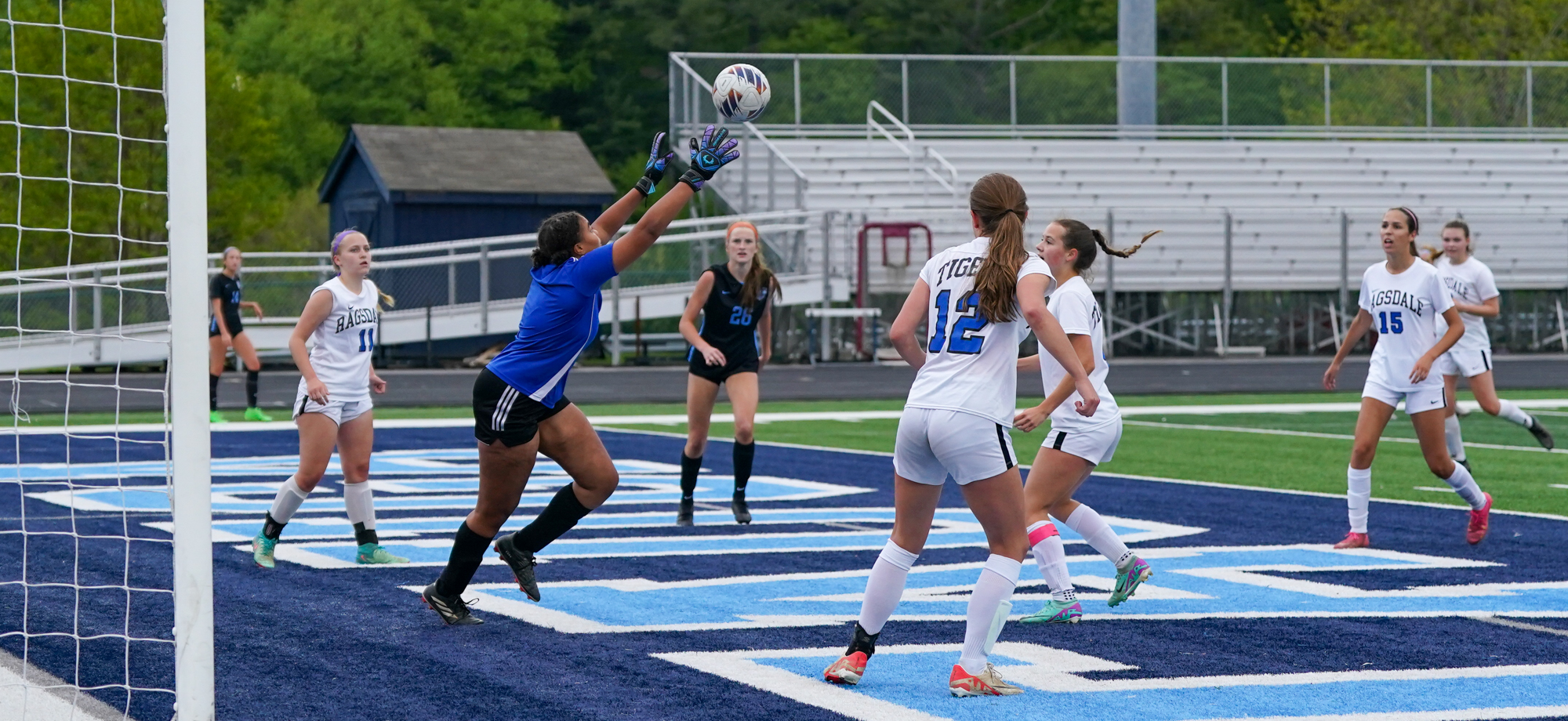
    When a soccer team spends most of the game time controlling possession in the attacking half of the field there is a high probability for it to emerge the victor. That is exactly what happened on May 13 at Jack Groce Stadium, with No. 1-seeded Watauga women’s soccer rolling over No. 32-seeded Ragsdale (Jamestown), 9-0.


    Watauga’s Katie Durham sizes up the Ragsdale goalkeeper…

    … then pummels the ball into the back of the net for one of her two second-half goals. Photographic images by David Rogers


    Executing the team’s short-passing, ball possession strategy almost to perfection, the deft-ball handling and one- and two-touch passing of the Pioneers dominated, from the defense to the attacking third of the field.

    Six Watauga players were credited with assists on a night where rain clouds poured in early in the second half and made ball-handling a bit trickier. The assists went to Katie Durham, Georgia Parker, Savannah Duvall, Sammy Morgan, Sam Bertrand and Morgan Flynt.

    On the receiving end of those assists were a pair of “hat tricks,” three goals each by Flynt and Parker. Durham shrugged off a first half bloody nose to return and tally two goals in the second half while Bertrand added a goal, too.

    “Overall, it was a great way for us to start our playoff run at home,” said Watauga head coach Chris Tarnowski after the game. “The rain certainly made the ball roll faster, but we adjusted to that and to Ragsdale’s game. We were able to find some openings in their defense. Our offense is really clicking and our forward/midfield players are so unselfish in the final, attacking third; they’re looking for one another and making some beautiful passes. Our defense is playing strong and communicating, non-stop, so front to back we’re really in a good spot as we advance in the playoffs.”

    In Round 2, Watauga will host No. 17 South Mecklenburg, which upset No. 16 Cox Mill in Concord, 2-1.

    FULL ROUND 1 SCORES IN THE 4A WEST BRACKET:

    • No. 1 Watauga def. No. 32 Ragsdale, 9-0
    • No. 17 South Mecklenburg def. No. 16 Cox Mill, 2-1
    • No. 8 Mooresville def. No. 25 Hickory Ridge, 1-0
    • No. 9 Providence def. No. 24 Northern Guilford, 3-2
    • No. 5 Asheville def. No. 28 Hopewell, 9-0
    • No. 12 Reagan def. No. 21 Mount Tabor, 1-0
    • No. 13 Charlotte Catholic def. No. 20 Page, 5-1
    • No. 4 Ardrey Kell def. No. 29 East Mecklenburg, 9-0
    • No. 3 West Forsyth def. No. 30 Davie, 2-1
    • No. 14 Cuthbertson def. No. 19 Lake Norman, 3-0
    • No. 6 Marvin Ridge def. No. 27 Alexander Central, 9-0
    • No. 11 T C Roberson def. No. 23 Grimsley, 5-1
    • No. 26 Myers Park def. No. 7 Northwest Guilford, 1-1 (shootout 3-2)
    • No. 10 Weddington def. No. 23 R J Reynolds, 4-0
    • No. 15 East Forsyth def. No. 18 Sun Valley, 5-2
    • No. 2 Hough def. No. 31 Porter Ridge, 7-0

    OTHER SCORES OF INTEREST

    • 1A West: No. 9 NC School of Science and Math def. No. 24 Avery County, 3-0
    • 2A West: No. 3 Wilkes Central def. No. 30 Southwestern Randolph, 6-2
    • 3A West: No. 1 Hibriten def. No. 32 West Charlotte, 10-0
    • 3A West: No. 16 Crest def. No. 17 Ashe County, 4-3
    • 3A West: No. 5 Hickory def. No. 28 Ledford, 8-0
    • 3A West: No. 7 A C Reynolds def. No. 26 St. Stephens, 4-0

    BONUS PHOTOS

    Nice save by Ragsdale’s goalkeeper on May 13. She was kept busy by the Watauga forwards and midfielders in the attacking third. Photographic image by David Rogers
    Watauga’s Katie Durham dribbles past a Ragsdale defender in Round 1 of the state playoffs, May 13. Photographic image by David Rogers
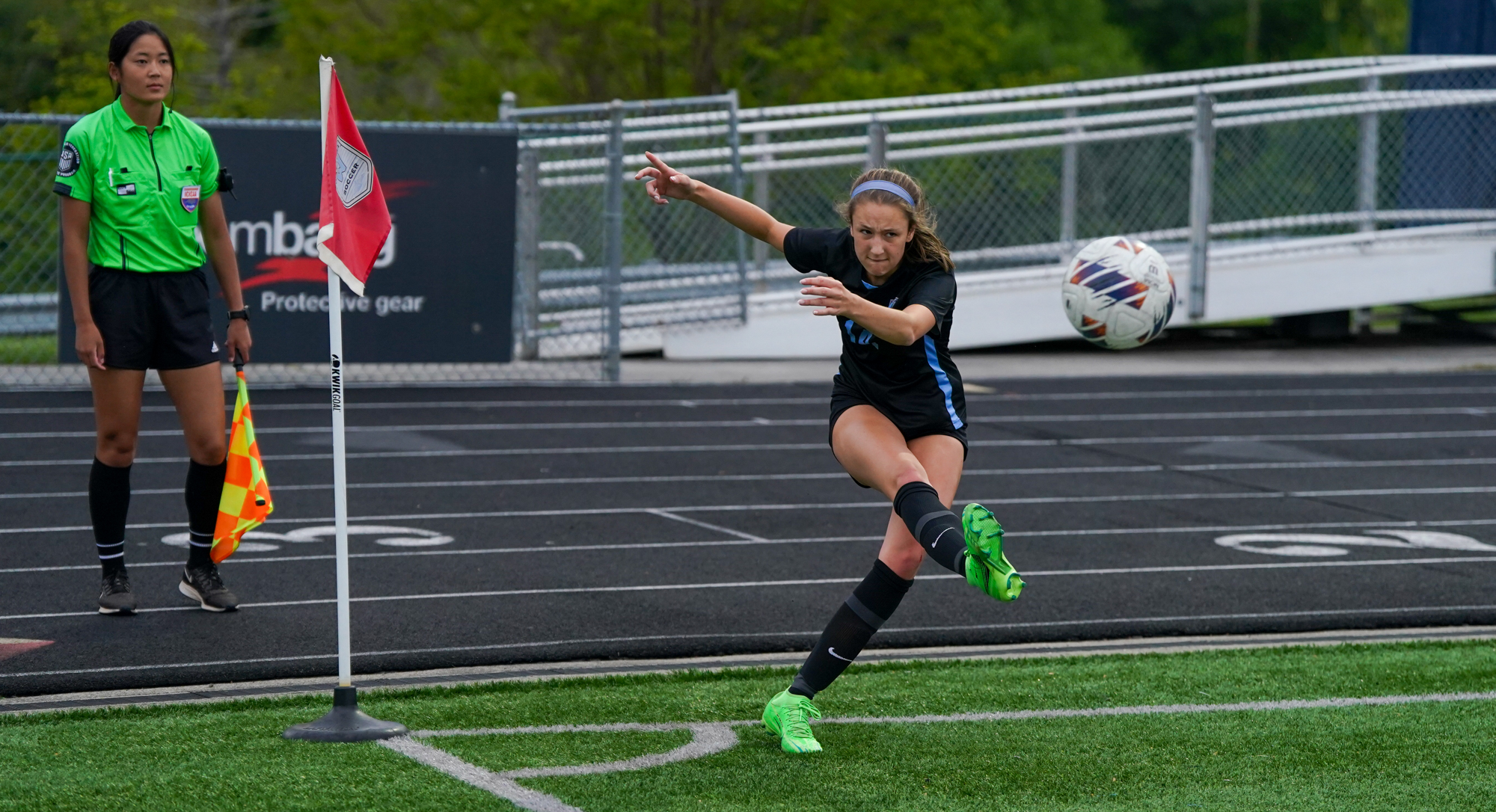
    Mattie Durham was Watauga’s not-so-secret weapon with several well-placed corner kicks in Round 1 of the state playoffs vs. Ragsdale. Photographic image by David Rogers
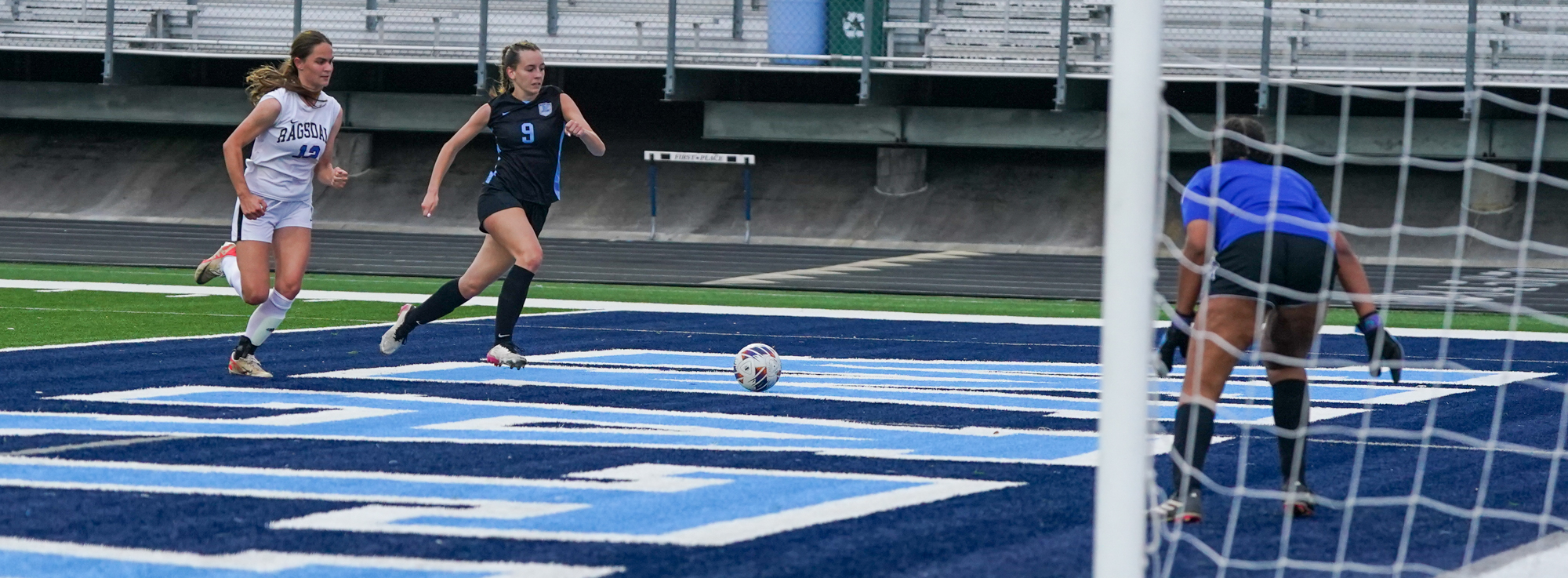
    Watauga’s Georgia Parker (9) gets one of three goals against Ragsdale in Round 1 of the state playoffs, May 13. Photographic image by David Rogers
    Hannah Graham (25) maneuvers past Ragsdale on May 13. Photographic image by David Rogers
    Hannah Graham (26) receives a Watauga pass and settles the ball on May 13 vs. Ragsdale in Round 1 of the state playoffs. Photographic image by David Rogers
    Watauga’s Hannah Graham (26) on attack vs. Ragsdale in Round 1 of the state playoffs. Photographic image by David Rogers
    Mattie Durham with another well-placed corner kick sets up a Watauga attack on goal. Photographic image by David Rogers
    It is going to be another goal for Georgia Parker (9) vs. Ragsdale in Watauga’s 9-0 win in the first round of the state playoffs. Photographic image by David Rogers
    Don’t mind me, but my fancy footwork is going to take this ball around behind you on attack. Photographic image by David Rogers
    Gooooaaaaaalll! Photographic image by David Rogers
    Watauga senior Katie Durham sizes up the Ragsdale goalkeeper…
    … then pummels the ball into the back of the net for one of two second half goals on May 13 in Round 1 of the state playoffs. Photographic images by David Rogers

  • The Wild, Wild West… College Basketball Style

    By David Rogers. BLOWING ROCK, N.C. — History often repeats itself and not necessarily in a good way.

    Perspective

    Back in 1889, the U.S. Congress authorized President Benjamin Harrison to proclaim a two-million-acre area in Oklahoma as “open for settlement.” It set the stage for what became the Oklahoma Land Rush in which settlers could claim 160 acres of otherwise public land and gain legal title to it if they met certain conditions.

    There were few rules. Settlement of the long-withheld lands of Indian Territory prompted all manner of prospective settlers to hitch their teams to wagons, load their families and worldly goods, or saddle their fastest horses. Large accumulations of would-be settlers were chomping at the proverbial bit to claim ownership of the land, once permitted. Then, on April 22, 1889, permission to enter the region was granted. More than 50,000 people rushed in, aiming to claim for themselves 160 acres of what had been dubbed, “Unassigned Lands.”

    From the outside, it looked to be more chaotic than an organized way to transfer ownership of real estate. Besides the Native Americans being pushed aside, there were many cases of settlers sneaking into the region ahead of the event’s official date, all to get a head start in claiming prime parcels. Not surprisingly, greed also proved a catalyst for claim jumping and often violence. It is a short calculation to understand that demand outweighed supply in a big way: two million acres divided by 160 means that only 12,500 parcels were available. From the outset, a large majority of those 50,000 settlers were destined to come away empty handed.

    As the Oklahoma Historical Society puts it, “April 22, 1889, was a day of chaos, excitement and utter confusion.”

    A Modern-Day ‘Rush’

    Only a few years ago there was a vigorous debate on university campuses: Should student athletes be compensated for their talents and services beyond a college scholarship?

    Critics pointed to the multi-billion-dollar industry that had become college athletics, particularly in football and men’s basketball, suggesting that creating wealth on the backs of student athletes — with restrictions on what they could and could not do — was simply unfair. A college scholarship, whether full or partial, was simply not enough when the student athlete was contributing to the enrichment of the institutions and their administrators, including the coaches in so many cases.

    Should there be limits to player (and school) greed?

    Fast forward and college athletics have become the “Wild Wild West,” in some ways similar to the Oklahoma Land Rush of yesteryear with nothing in the way of real rules. By some reports, more than 3,000 players were in the college basketball transfer portal by the May 1 deadline.

    At the deadline for athletes to enter their names in the portal, only four of the 362 NCAA Division I colleges and universities did NOT have one or more players enter the portal. Not surprisingly, Army and Navy were two of those institutions with probable military commitments tied to each player’s education. The other two schools were Kansas and Marquette.

    Making Sense of Chaos

    It is hard to make sense of the current chaotic environment for player recruitment and retention. Players are likely to enter the portal with hopes of cashing in on a recent good season, getting paid by a new school. Maybe they are motivated by the promise for more playing time. Some make a move for a perceived higher profile stage to play on: a better-known basketball school with a history of sending players to the NBA or, in the case of football, to the NFL. Still others might want to spend a year playing closer to their hometown.

    For certain, there is little sense of loyalty to team chemistry or last season’s accomplishments:

    • Duke made the Elite Eight of the NCAA Division I Men’s Basketball Championships and still had seven players enter the transfer portal.
    • Illinois won the Big 10 and made the Elite Eight, but their roster for 2024-25 is a turnstile, with six players entering the portal and going other places (Indiana, West Virginia [2], Memphis, and two uncommitted as of this date) and five newcomers for next season (from Arizona, Louisville, Evansville, Notre Dame and Mercer).
    • Auburn won the SEC but one of its top young guards is transferring to in-state rival Alabama.
    • Appalachian State had an historic season, winning a school record 27 games and the Sun Belt Conference regular season title before losing in the semifinals of the conference tournament. Almost immediately, eight players (including five of the highest profile athletes in the Mountaineers’ 2023-24 nine-man rotation entered the transfer portal.

    And these are just a few of a myriad number of similar stories.

    Research and analysis of High Country Sports suggests there are four contributing NCAA developments over the recent past serving to make the current environment uncharted — and some say “nonsensical” — territory:

    • The creation of the Transfer Portal, facilitating the process by which student athletes can transfer schools.
    • The approval of Name, Image and Likeness (NIL) compensation. In short, student athletes can now get paid.
    • Removing the requirement for a student athlete to sit out a year after transferring.
    • And finally, allowing the student athlete to transfer as many times as he or she wants during their years of college eligibility.

    And by modifying the “red shirt” eligibility criteria and liberalizing “medical red shirts,” the NCAA effectively extended those years of eligibility.

    Common $en$e?

    Today, relatively few people argue with the idea that student athletes should be able to receive compensation that goes beyond the traditional scholarship, including room and board. Especially football, basketball, and baseball have become popular entertainment channels for alumni, sponsors, students and fans of either the school or the sport. It is big business drama and the players are the actors, often simultaneously perceived as both heroes and villains.

    So while NIL seems like a natural fit for getting that compensation element accomplished, where today’s environment started to get crazy is when integrating NIL with the other three developments, which are all related to a student athlete’s ability to transfer schools in addition to getting paid.

    As one NCAA Division I basketball coach noted recently, “There are more reasons to transfer today than there are to stay at the school that first signed you. The obvious temptations to transfer are money, playing time, level of play (the exposure in playing at a higher profile program), and playing closer to home.”

    Help From Modern Technology?

    The Transfer Portal was introduced by the NCAA in 2018 as a compliance tool to help bring student athletes (wanting to transfer) together with programs wanting to recruit new players to their respective rosters, to help them find each other more readily by taking advantage of modern digital technology via the Internet. Part of the public intrigue about the Portal stems from up-to-date information not generally being accessible by the media or everyday people. Of course, that hasn’t stopped some enterprising outlets from maintaining transfer portal boards, even if the information they post on those boards is often late or incomplete.

    But…

    By itself, the Transfer Portal is innocuous. Where the NCAA may have created an uncontrollable monster is first by removing the requirement that a transferring player has to sit out a year before actually playing at a new school. Then the second rule change (just a year ago) allows the student athlete to transfer schools as many times as he or she wants during their period of eligibility.

    Together, these four NCAA initiatives created a “free agency” environment with no salary cap and no player movement restrictions. If a student athlete wants to change schools every year in order to take a better offer (i.e. more money) or seize a perceived better opportunity for more playing time, he or she can.

    For the player, a decision to enter the Transfer Portal is not without risk. Once they ask the school’s compliance officer to enter their name in the portal, the school’s obligation to offer financial aid for the previously accepted scholarship will more than likely end. What happens if another offer does not come through the portal? The full cost of the remaining years of college education falls on the player and his family.

    How long would the multi-billion dollar businessmen owning those professional franchises tolerate the chaos in player movement or the unpredictable financial outcomes?

    So, a decision to enter the portal should not be made without a lot of forethought, including a realistic self-assessment of the student athlete’s marketability.

    “For every player entering the portal,” said Dustin Kerns, the men’s basketball head coach at Appalachian State, “we genuinely wish them well and hope they find what is best for them and their respective families. That is important. But there are risks because the player may not get picked up at all, or he may have to settle for whatever is the best offer out there, even if not what he wanted or expected.”

    In what world is this not crazy?

    In short, today’s college athletics environment can be summed up as “complete free agency.” There are no rules, no restrictions and no contracts.

    Imagine a professional league like the NBA, NFL, NHL or MLB operating in such an environment. How long would the multi-billion dollar businessmen owning those professional franchises tolerate the chaos in player movement or the unpredictable financial outcomes? How long would it take the fans — their customers — to no longer care about a turnstile team roster that goes through wholesale changes, top to bottom, each season?

    Right now, college athletics can best be described as organized mayhem. The simplest answer to the problems of escalating costs and player movements may be for a school to demand that a successfully recruited player sign a contract with some sort of buyout clause. If the player wants out of the contract, either he or a potential new school buys out the contract. That makes player movement more expensive so has the potential to help alleviate the problematic chaos by diminishing transfer demand.

    College athletics has become big business and it may be time for all of the constituent interests to treat it like big business, contracts and all.

    Men’s basketball is a microcosm for the ills of college athletics because it is the most competitive, with more teams playing at the highest level of the sport. There is no “Power Four” or “Group of Five,” but 362 teams in Division I trying to get better from year to year. A great many schools don’t have a football team and focus their branding and institutional identities on basketball, rightly or wrongly. This year, 358 (or 98.9 percent) of those 362 schools are participating in the transfer portal “rush,” either giving or taking or both.

    POSTSCRIPT: A silver lining?

    If there is a silver lining to the transfer portal, NIL and today’s free agency environment, it is this: Good players may not be as motivated to declare for the NBA after playing only a year or two of college ball because in many cases they can cash in on hundreds of thousands — if not millions — of dollars through the transfer portal.
     

  • Watauga gains experience, skill in men’s volleyball state tourney

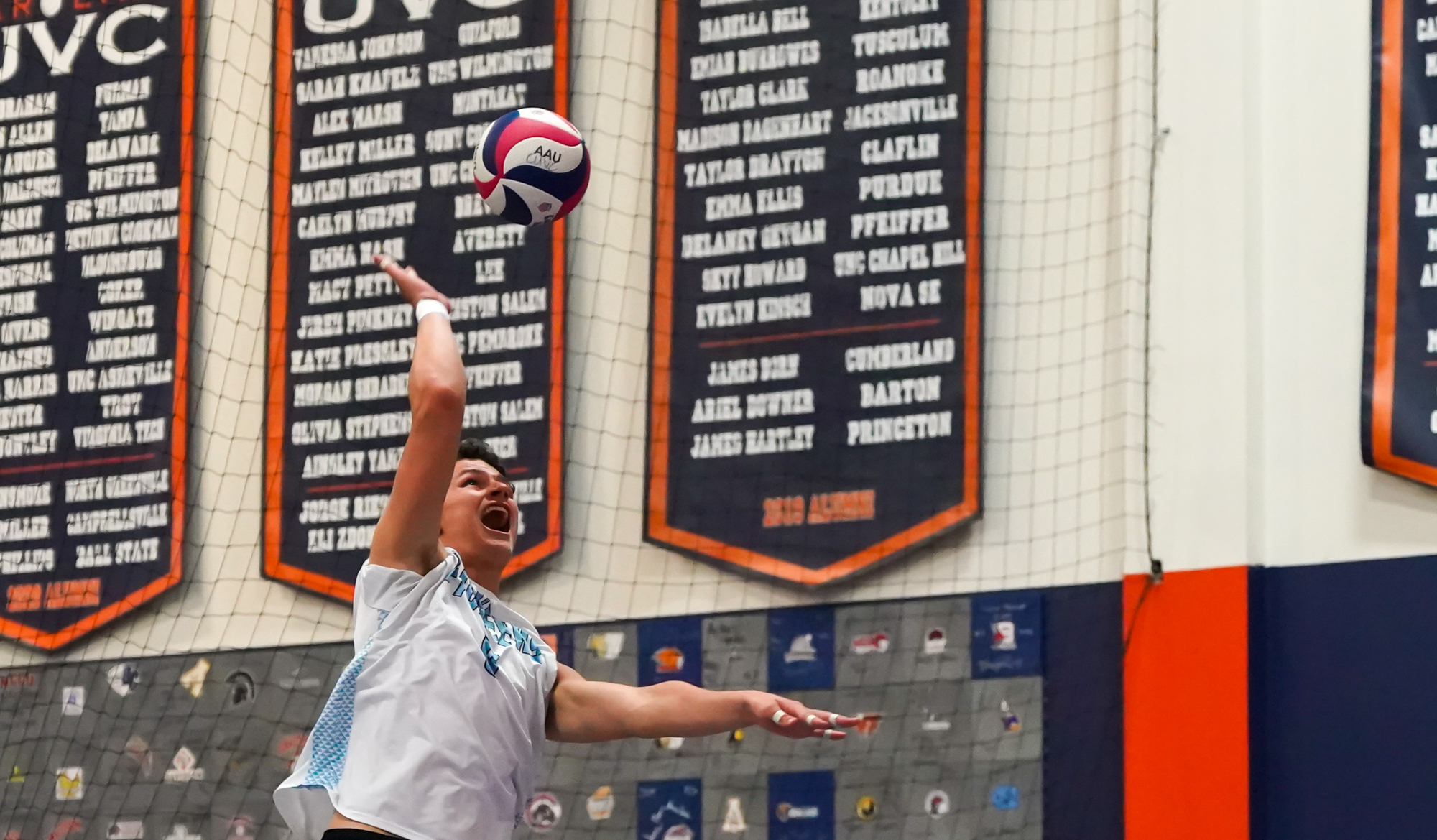
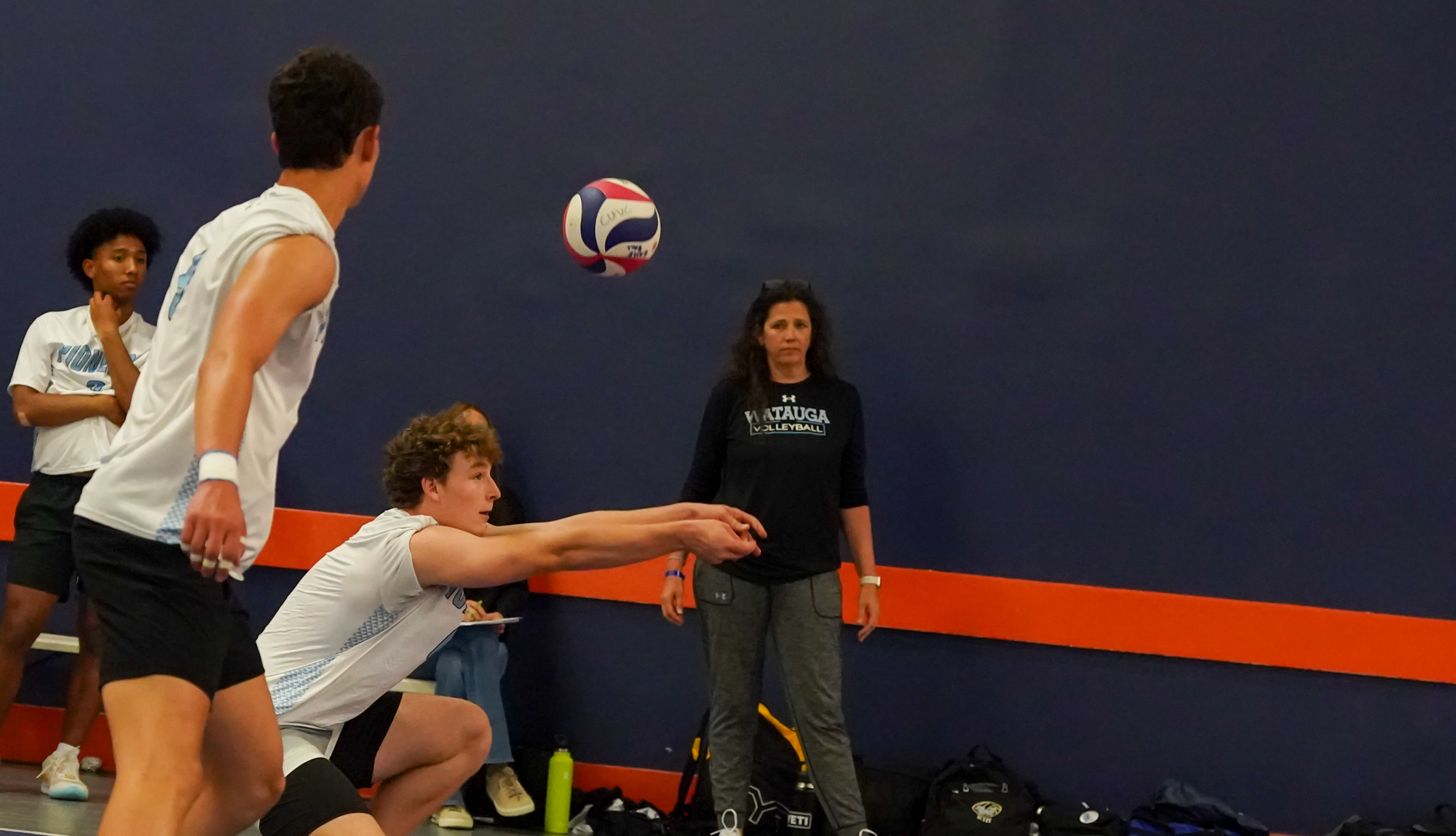
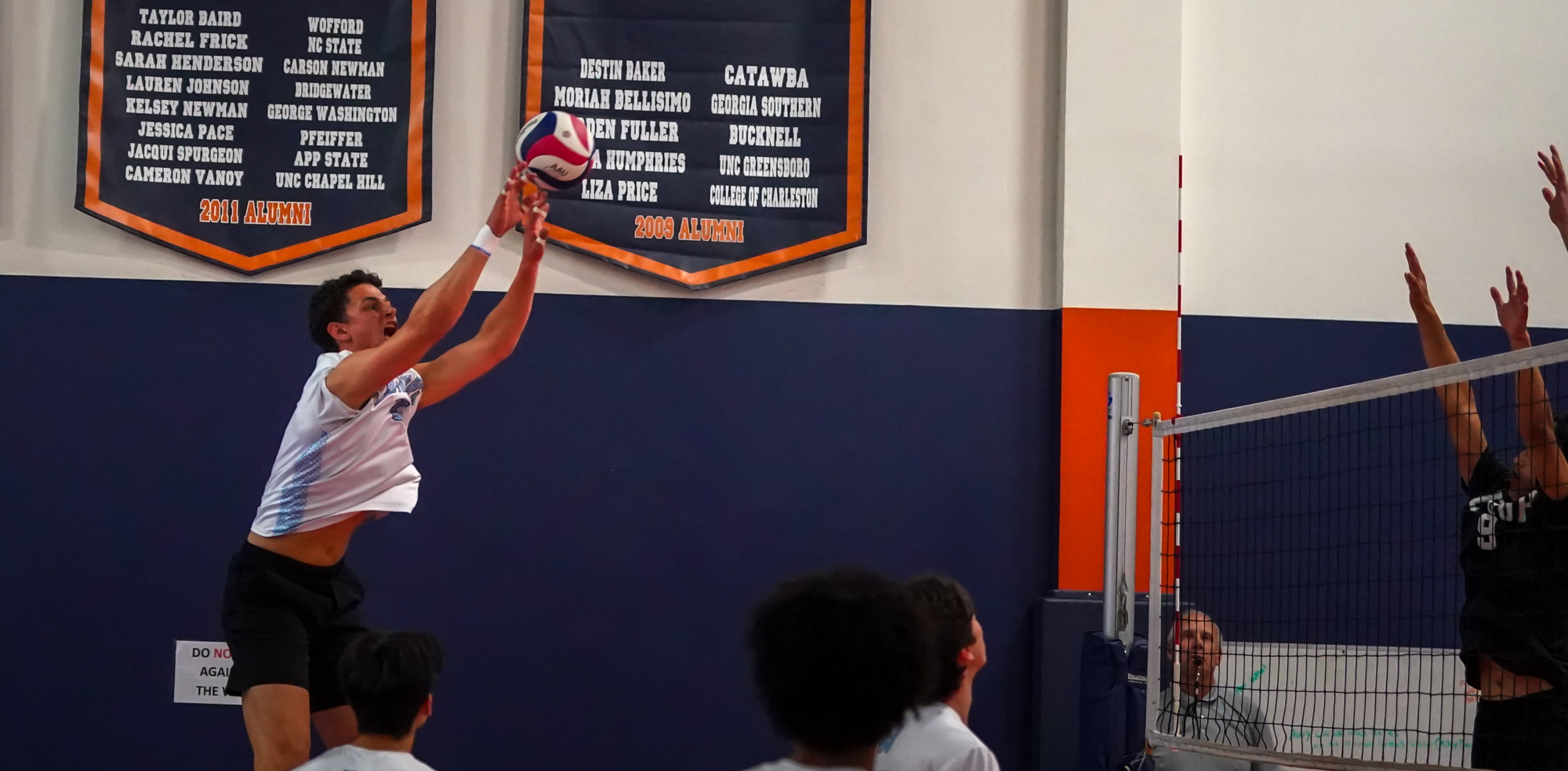
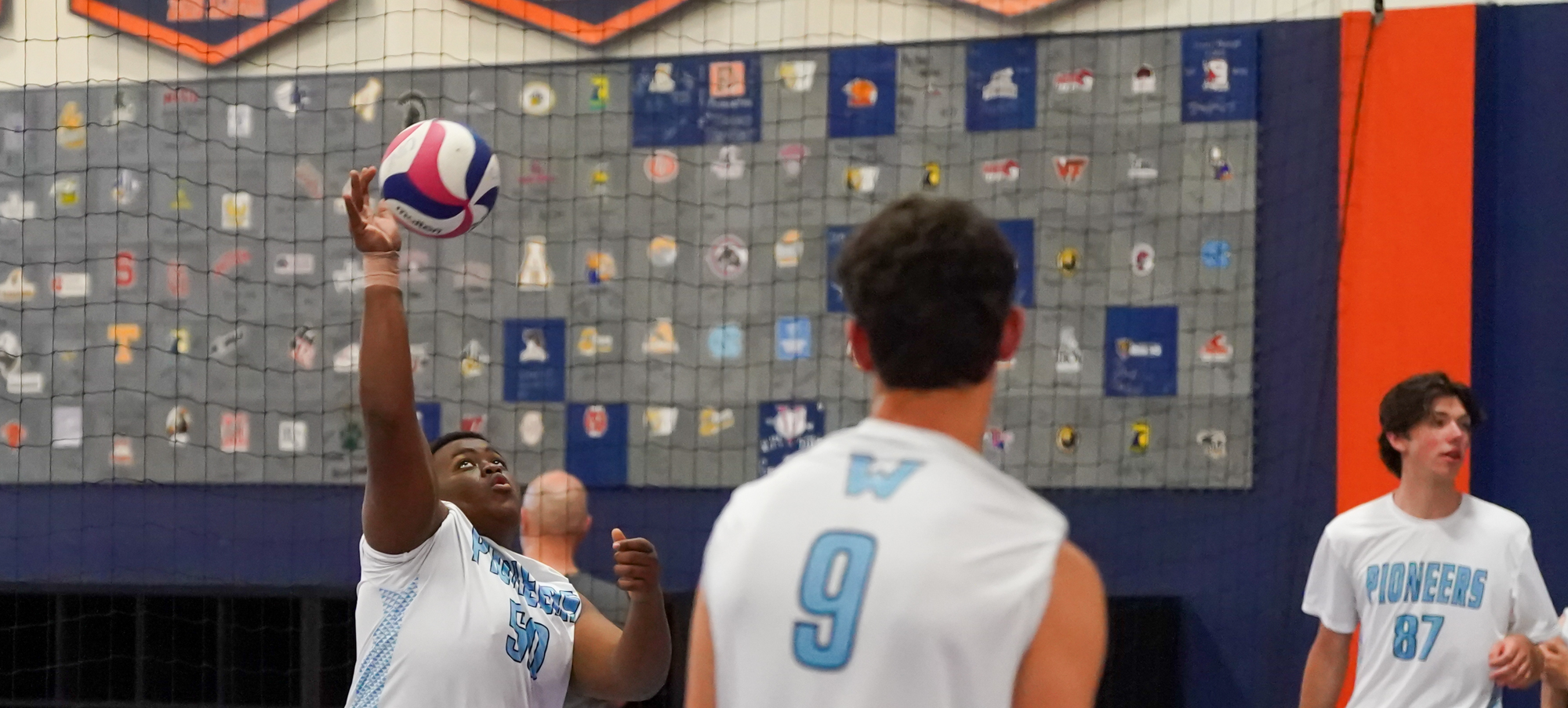
    By David Rogers. CHARLOTTE, N.C. — No matter how good the athleticism, game experience and skill development as a team and as individuals are often the difference makers between winning and losing. Still just a second year program, the Watauga High School men’s volleyball battled hard, improved a lot with each match, and gained valuable experience for future matches on May 10-11 in the North Carolina state championship tournament for men’s volleyball. Final place in the tournament standings: No. 14.


    BONUS PHOTOS at bottom of article. For best viewing on a desktop or laptop monitor, click on any image for Slide Show mode and page through them.

    Hosted by the Carolina Union Volleyball Club, the Public Schools Division featured 16 teams divided into four, 4-team pools. Based on round-robin play against the other three teams in a pool, each team advanced to either a Gold, Silver or Bronze championship round bracket.

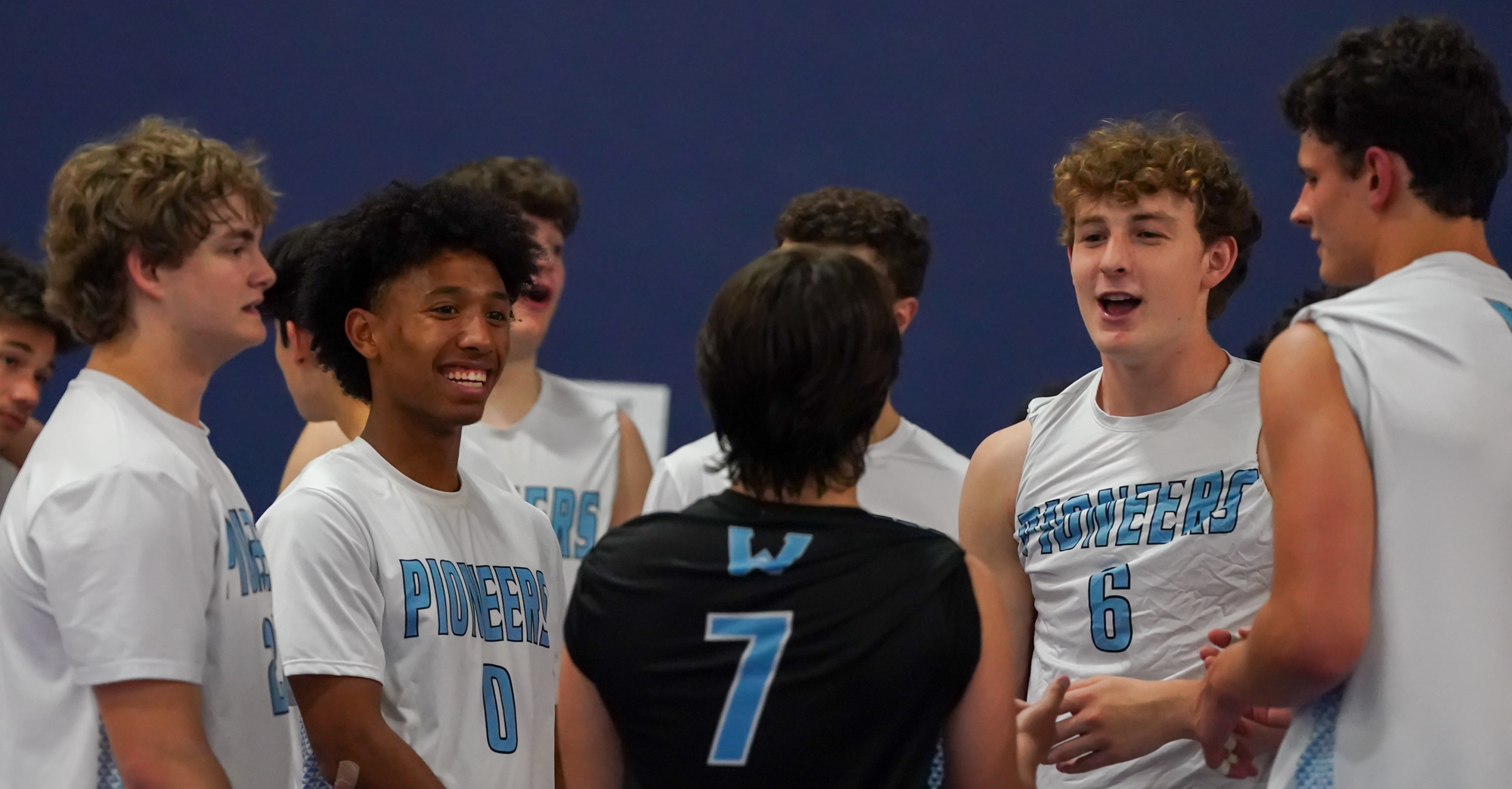
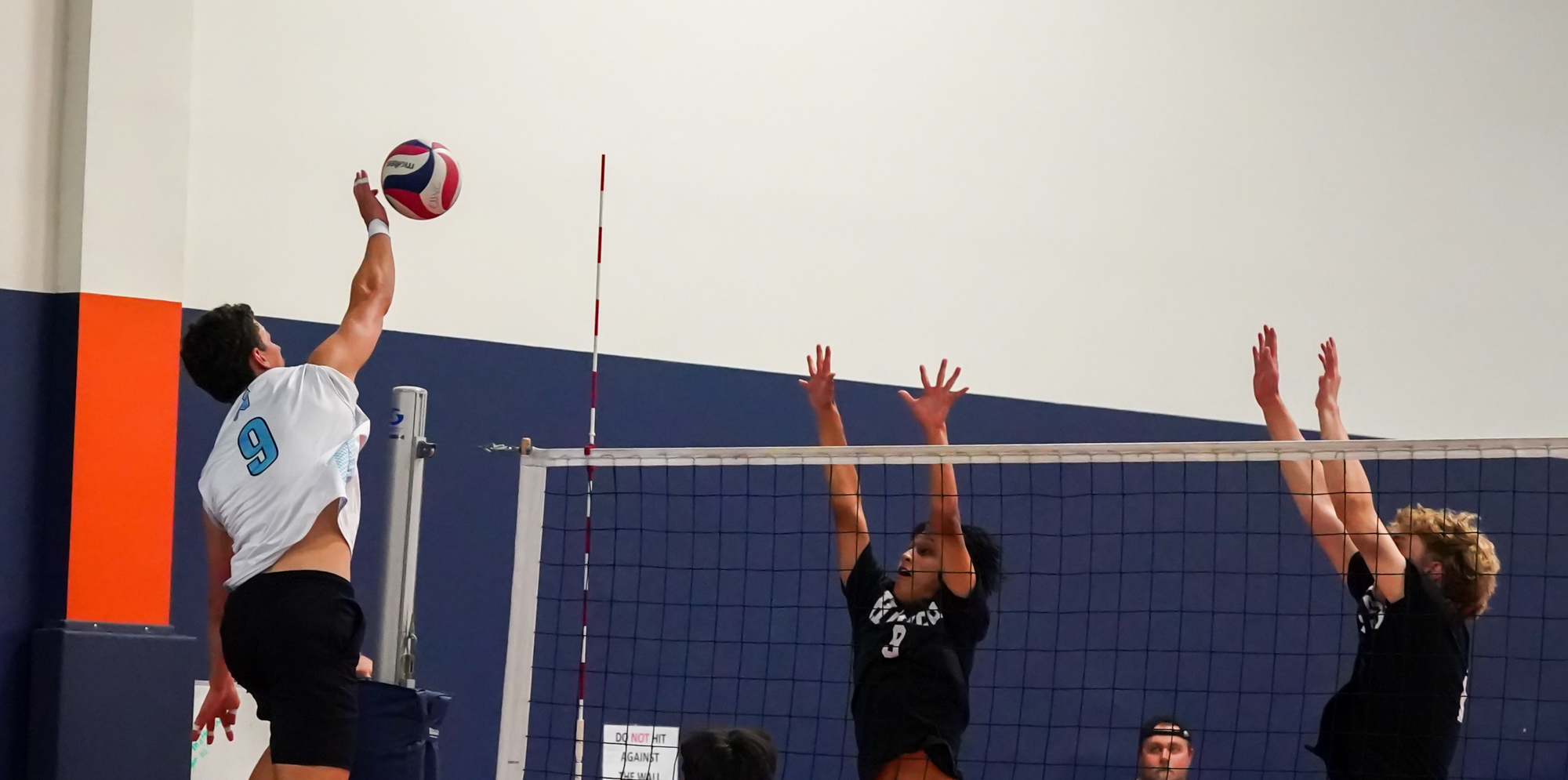
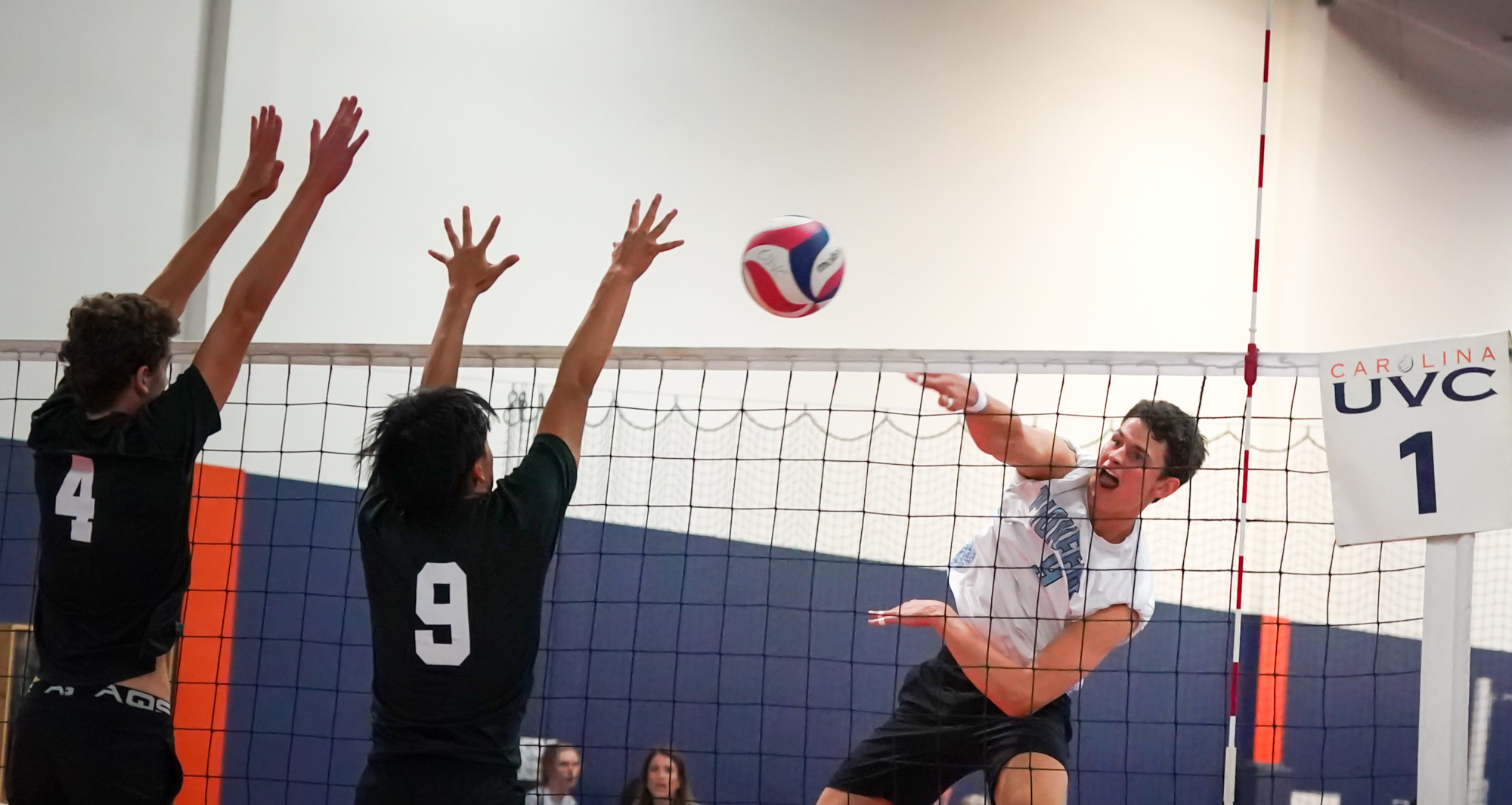
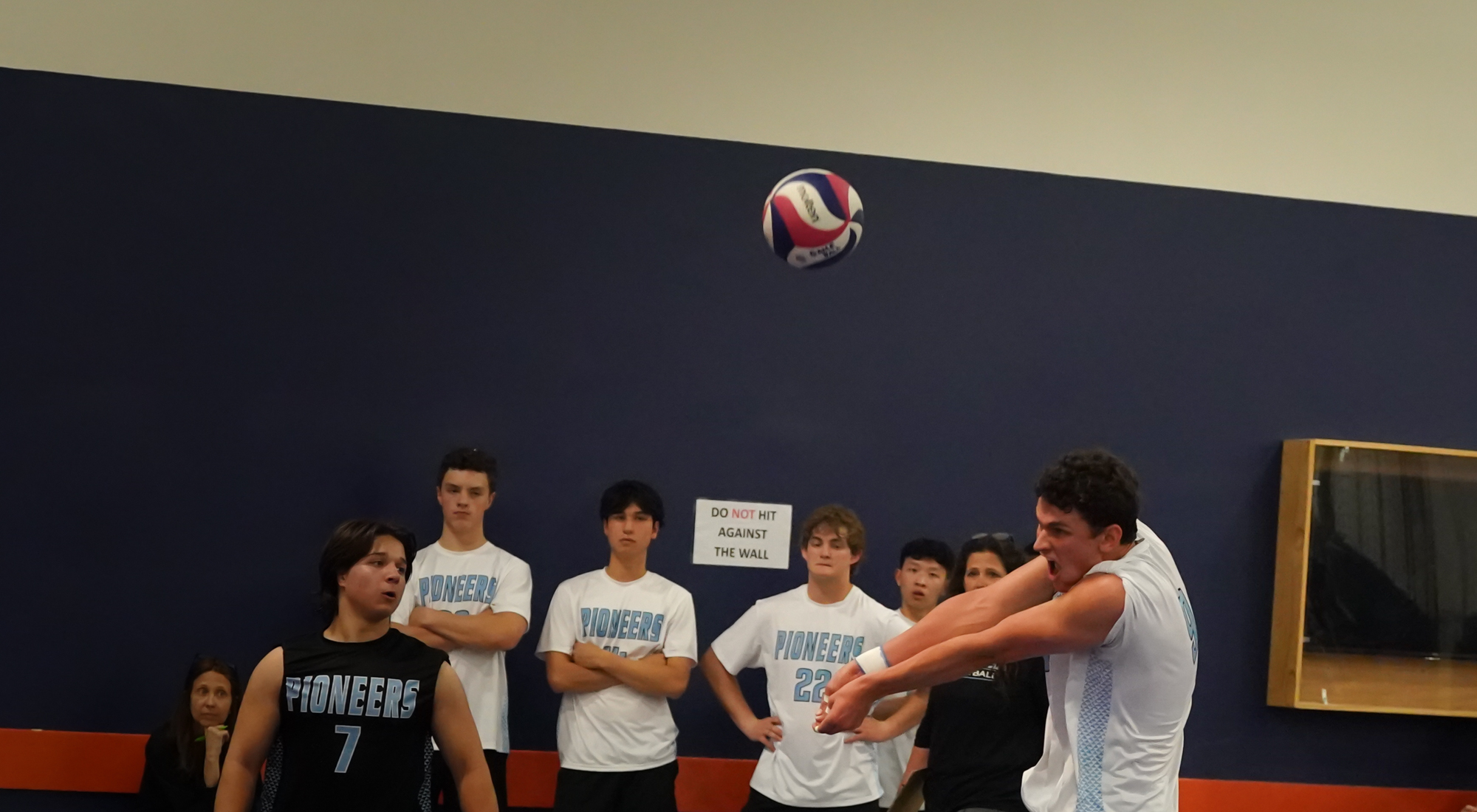
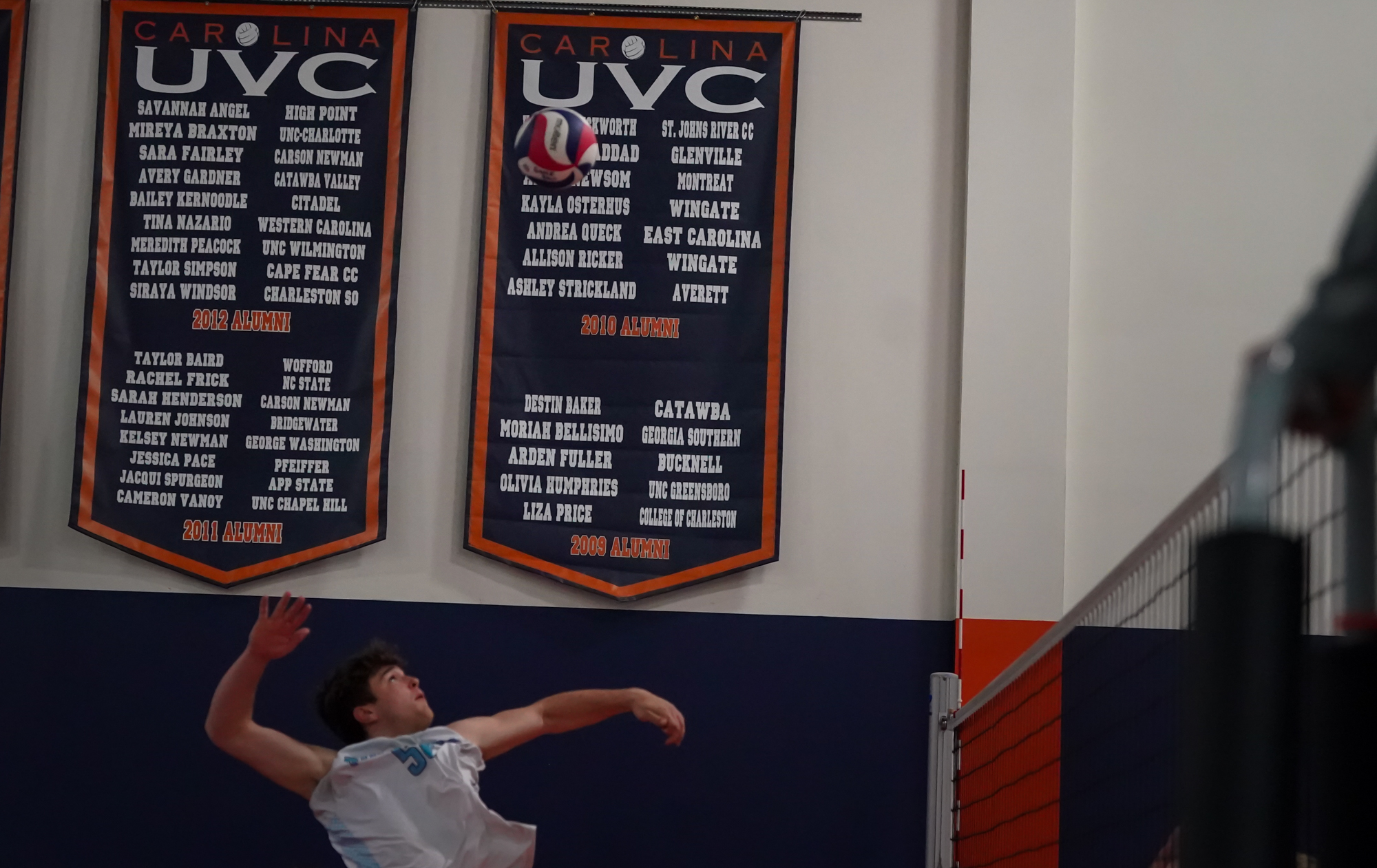
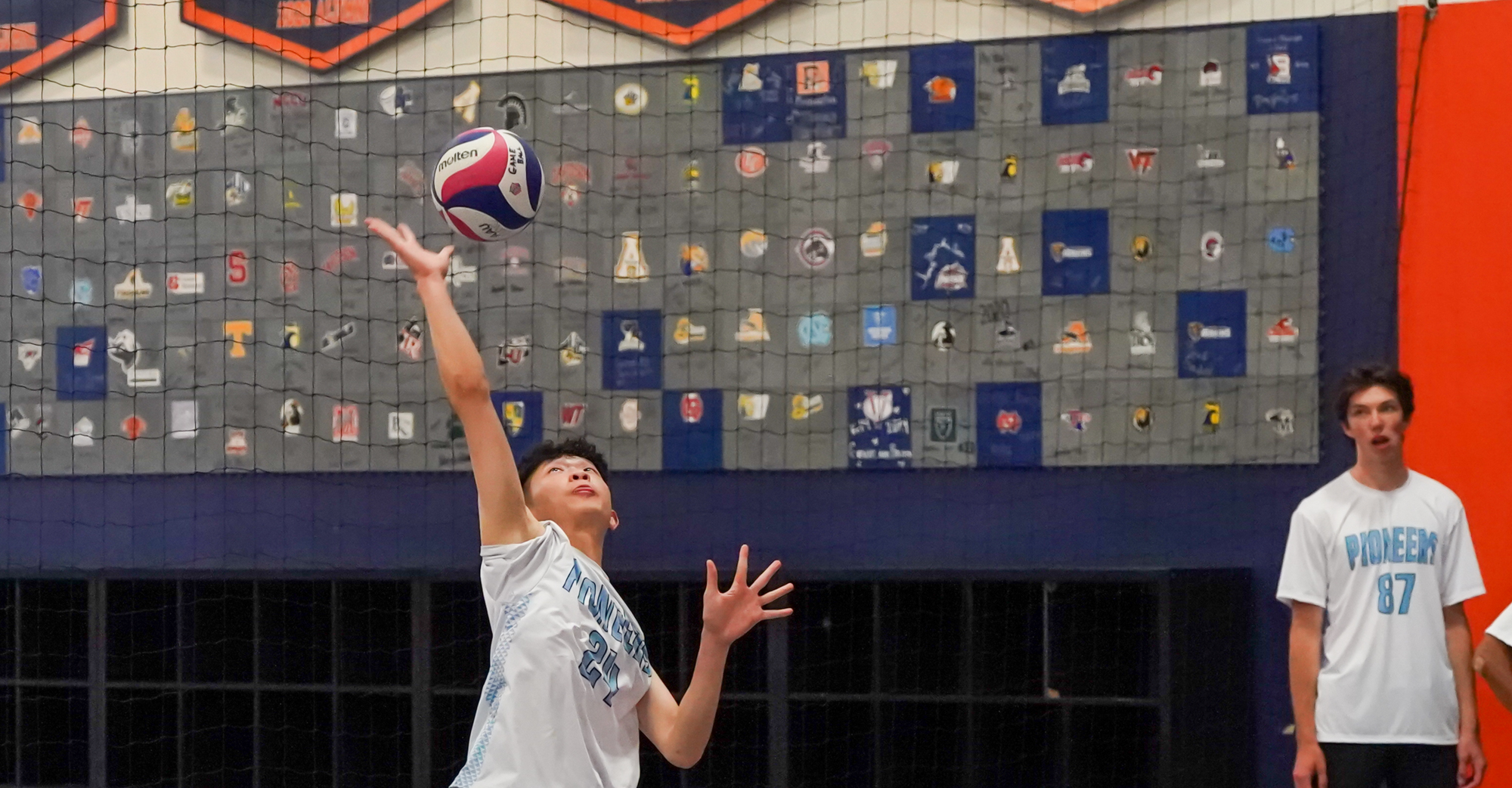
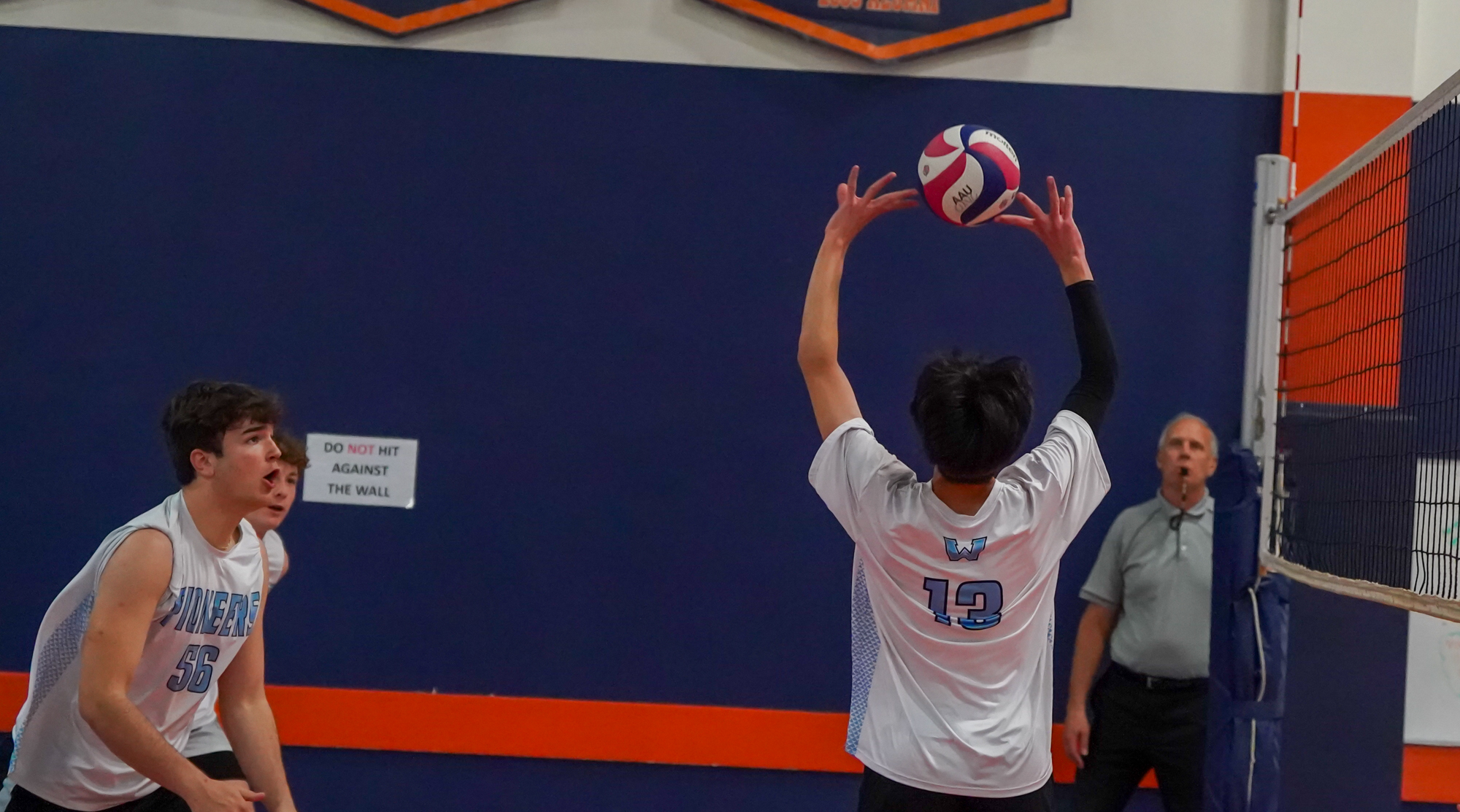
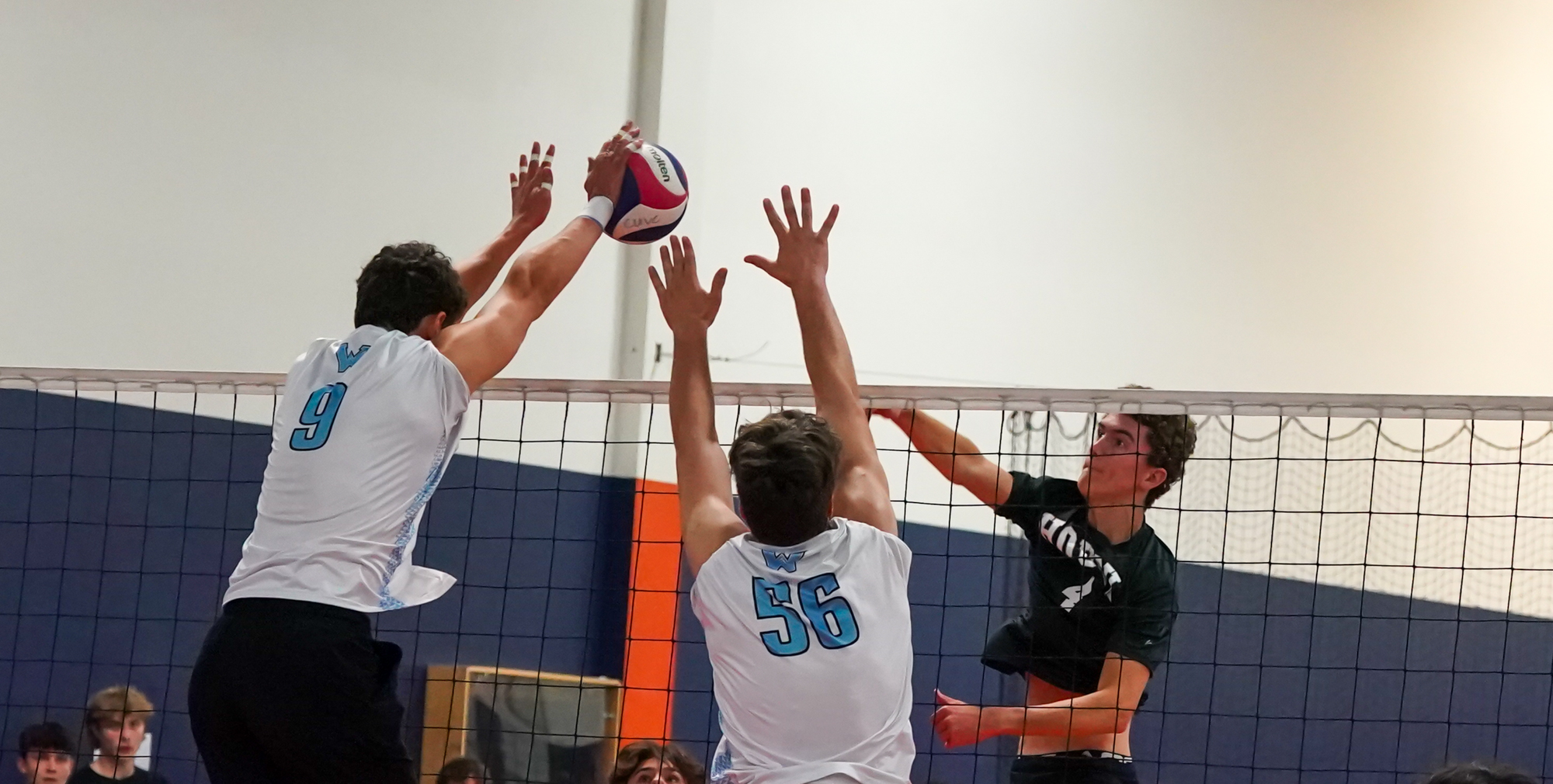
    In most state tournament matches, Watauga players knew they were the underdogs but they were having a good time — and learning with each set. Photographic image by David Rogers

    Watauga head coach Kim Pryor explained after the second match in pool play against the tourney’s No. 1 seed, Marvin Ridge, that because the Pioneers only had one opponent during the regular season (they played Ashe County several times, winning all but one), the state tournament organizers assigned the High Country’s best team as the No. 16 seed.

    Pryor knows that getting better requires not just practice but also playing against better competition.

    “Ashe County is a very good team and getting better and better, but like us they are inexperienced, too,” explained Pryor. “We haven’t had much success in getting other schools in our region to organize men’s volleyball teams and it has also been a challenge to get the better teams off the mountain to fit us into their league schedules. I am not worried about the early round seeding because if you are going to win a tournament you are ultimately going to have to play all of the best teams.”

    Watauga’s Pool 1 included Marvin Ridge, Hough and TMSA (The Math and Science Academy), all Charlotte area schools that have for the most part been playing for several years and play against each other regularly.

    The Pioneers went 0-3 in pool play so were relegated to the Bronze Division for the championship rounds, but it is worth noting they got better against each opponent. In meeting Hough, they lost 10-25, 25-20. Versus the Mavericks of Marvin Ridge, they also doubled their second round score, losing 8-25, 15-25. The two pool matches against TMSA were both very tight, losing 21-25 and 23-25.

    In the opening match of the Bronze playoff bracket, Watauga battled to a 25-20, 16-25, 15-10 win over Millbrook, from the Raleigh area. In the Bronze final, a Pioneer rally fell short in the first set, losing to Christ the King, a private Catholic high school school in Huntersville, by a score of 20-25. Watauga bounced back in the second set, winning it decisively, 25-11, but fell short in the decisive third set.

    The final standings in the Public School Division:

    • 1 – Marvin Ridge (Matches: 6-0; Sets: 12-0)
    • 2 – Reagan (5-1; 10-2)
    • T3 – Butler (3-2; 6-4)
    • T3 – Weddington (3-2; 6-4)
    • T5 – Hough (2-2; 4-4)
    • T5 – North Guilford (3-1; 6-4)
    • T5 – Union Academy (2-2; 4-4)
    • T5 – West Forsyth (3-1; 6-2)
    • 9 – TMSA (3-2; 6-5)
    • 10 – Chapel Hill (2-3; 5-8)
    • T11 – Riverside (1-3; 3-7)
    • T11 – T C Roberson (1-3; 3-7)
    • 13 – Christ the King (2-3; 5-7)
    • 14 – Watauga (1-4; 3-9)
    • 15 – Millbrook (0-4; 3-8)
    • 16 – North Henderson (0-4; 1-8)

    The final standings in the Private School Division:

    • 1 – Metrolina (4-0; 8-0)
    • 2 – Covenant Day (3-1; 6-2)
    • T3 – Freedom Christian (1-2; 2-4)
    • T3 – Liberty Prep (1-2; 2-5)
    • 5 – Woodlawn (1-2; 2-4)
    • 6 – Cary Academy (0-3; 1-6)

    BONUS WATAUGA PHOTOS